
The NIV, Pune, is the designated testing hub, with isolation protocols ready for suspected cases.
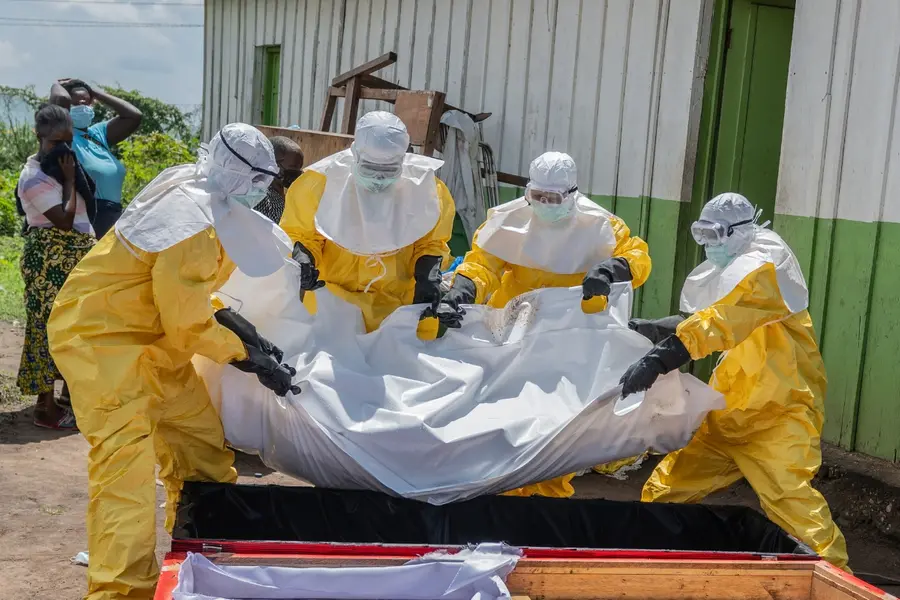
New Delhi: India’s health ministry has ordered strict surveillance and screening measures at major international transit hubs, including New Delhi’s Indira Gandhi International Airport, in response to a surging outbreak of Ebola virus disease in central Africa.
Health advisories issued by the Directorate General of Health Services (DGHS) and the Ministry of Health & Family Welfare mandate that all incoming travellers who have visited or transited through high-risk countries—specifically the Democratic Republic of the Congo, Uganda, and South Sudan—immediately report their travel history and any corresponding health changes to the Airport Health Organisation (APHO) before clearing immigration.
The operational escalation comes on the heels of the World Health Organisation (WHO) declaring the expanding African outbreak a Public Health Emergency of International Concern (PHEIC). The current epidemic, driven primarily by the Bundibugyo strain of the virus, has already accounted for hundreds of suspected cases and more than 130 deaths across the affected African provinces.
Indian health officials clarified that the domestic risk remains low and that no cases of Ebola have been detected within the country. However, authorities are acting with "abundant caution" to prevent an imported infection from spreading into high-density urban populations.
According to the official DGHS protocols posted at airport desks, passengers must immediately self-report if they present a combination of symptoms including fever, acute headache, muscle pain, profound weakness, gastrointestinal distress (vomiting/diarrhoea), sore throat, or unexplained bleeding.
Crucially, the government has instituted a 21-day monitoring mandate. Any traveller who develops these clinical symptoms within three weeks of arrival is legally instructed to seek immediate medical care and fully disclose their international travel history to healthcare providers.
Medical experts note that the Bundibugyo strain presents significant diagnostic challenges because its early clinical presentation closely mimics common tropical ailments like seasonal influenza, typhoid, and malaria. Unexplained bleeding, one of Ebola's distinguishing clinical characteristics, often occurs only in the advanced stages of the disease. Furthermore, standard approved Ebola vaccines, which were formulated to combat the more common Zaire ebolavirus strain, offer minimal to no cross-protection against the Bundibugyo variant currently spreading.
In addition to physical screening at airport border gates, India’s National Institute of Virology (NIV) in Pune has been designated as the primary laboratory for diagnostic testing and genetic confirmation. Under current standard operating procedures, any passenger exhibiting symptoms or confirming direct contact with the bodily fluids of a suspected Ebola patient will be transferred directly from the airport terminal to dedicated isolation facilities.
The health ministry has urged the public to rely strictly on official updates from the WHO and local health boards, adding that full compliance with the International Health Regulations (IHR) is critical to ensuring nationwide passenger safety.
Published: 21 May 2026, 10:13 am IST
Related Topics
Disclaimer: Kindly avoid objectionable, derogatory, unlawful and lewd comments, while responding to reports. Such comments are punishable under cyber laws. Please keep away from personal attacks. The opinions expressed here are the personal opinions of readers and not that of Mathrubhumi.
