
DMK backs the Centre’s revised delimitation draft citing seat-share safeguards, drawing sharp pushback from rivals and former allies.
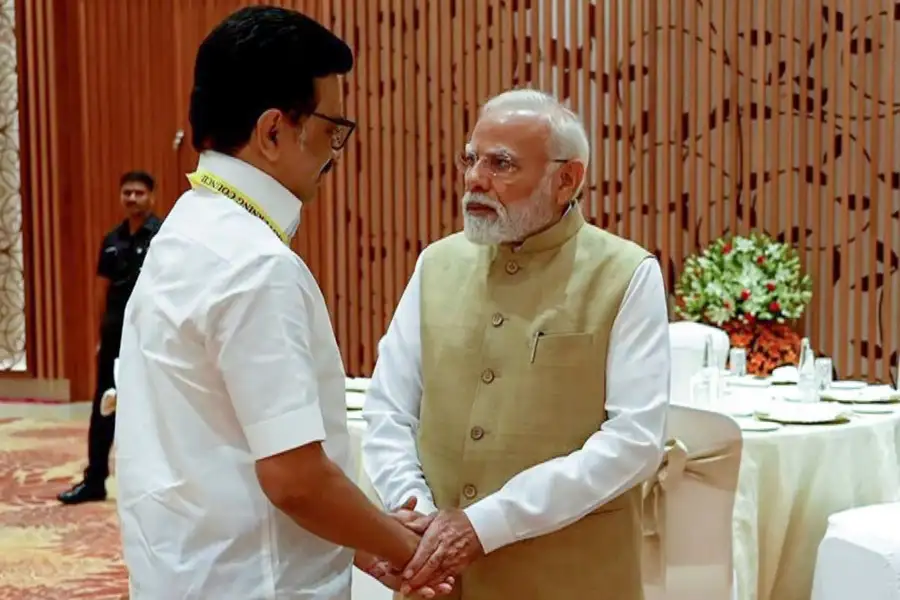
For over two years, the Dravida Munnetra Kazhagam (DMK) framed population-linked delimitation as an existential threat to Tamil Nadu’s federal rights and political voice. When in power, the party spearheaded that resistance, passing an Assembly resolution in February 2024 to maintain the 1971 Census inter-state seat ratio -convening all-party meetings in early 2025, writing to seven affected states, and building a southern Joint Action Committee—before leading protests and opposing the government’s Constitution (131st Amendment) Bill in April 2026. Yet ahead of Parliament’s special sitting starting November 30, the DMK has moved to back the revised delimitation proposal, triggering sharp pushback from Congress, former allies and Tamil Nadu’s ruling TVK while prompting INDIA bloc outreach.
Safeguards in the revised draft
DMK leaders insist the party has not abandoned its core position, arguing that the November 27 draft incorporates key conditions sought by Tamil Nadu, including a 50 per cent increase in Lok Sabha seats across states and a freeze on further delimitation until 2051. Party figures contend this structure preserves Tamil Nadu’s parliamentary seat share of roughly 7.18 to 7.2 per cent rather than penalising the state for lower population growth.
DMK representatives have also argued that a rigid “no delimitation” stance under the 84th Constitutional Amendment could lock the state into a relative disadvantage under later census data, maintaining that their demand has always been “fair delimitation”.
Shifting alliances and Tamil Nadu’s post-2026 equation
The turnaround unfolds against a sharp realignment in Tamil Nadu politics following the 2026 Assembly elections, which placed the DMK in opposition and TVK in government. Relations between the DMK and Congress have strained alongside the DMK’s exit from the INDIA bloc, even as DMK leaders rule out a formal alliance with the BJP and dismiss Congress’s outreach delegation ahead of the parliamentary sitting as a “photo op”.
Observers note that while the DMK’s past ties with the BJP date back to the NDA years of 1999–2003, its present move reflects tactical maneuvering: with TVK contesting anti-BJP space in the state yet lacking a direct role on the delimitation bill, backing the revised draft allows the DMK to claim concessions on state representation and stay central to high-stakes negotiations with the Centre.
Pushback from rivals and former allies
Critics across the political spectrum have challenged the DMK’s shift. Congress leaders, including Shashi Tharoor, have dismissed a uniform proportional increase as insufficient to counter shifts in northern political weight, while former allies such as the CPI, CPM and VCK have questioned backing a BJP-led bill and warned of broader constitutional consequences. Meanwhile, the ruling TVK has accused the DMK of compromising Dravidian principles for political leverage.
Published: 29 Nov 2026, 12:43 pm IST


ABOUT THE AUTHOR

Disclaimer: Kindly avoid objectionable, derogatory, unlawful and lewd comments, while responding to reports. Such comments are punishable under cyber laws. Please keep away from personal attacks. The opinions expressed here are the personal opinions of readers and not that of Mathrubhumi.