
Political uncertainty deepened in Tamil Nadu after speculation intensified over a possible DMK-AIADMK understanding to prevent Vijay’s TVK from forming the government despite emerging as the single largest party
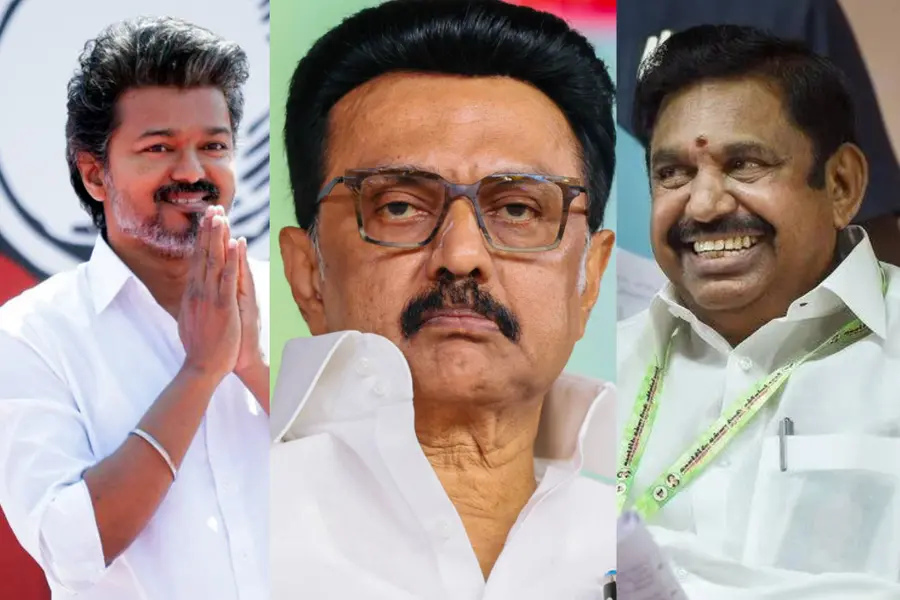
Chennai: Tamil Nadu’s post-election political drama intensified on Thursday as reports of a possible understanding between the DMK and AIADMK gathered momentum while actor-politician Vijay continued efforts to secure enough support to form the government.
Vijay’s Tamilaga Vettri Kazhagam emerged as the single largest party in the Assembly election with 108 seats, falling short of the 118 required for a majority in the 234-member House.
The DMK secured 59 seats while the AIADMK won 47, setting off intense political negotiations and speculation over possible alliance combinations.
Why is the Governor not inviting TVK to form the government?
Tamil Nadu Governor Rajendra Arlekar reportedly told Vijay during two meetings that TVK must first demonstrate majority support before being invited to form the government.
According to reports, the Governor asked Vijay to return with letters of support from at least 118 MLAs before any swearing-in process could move forward.
Raj Bhavan later stated that the “requisite majority support” necessary for government formation had not yet been established.
TVK currently has support from Congress’s five MLAs and is continuing talks with Left parties and smaller regional outfits to bridge the gap.
Why are DMK and AIADMK discussions creating controversy?
The political situation became more dramatic after reports emerged that the DMK and AIADMK were exploring possible arrangements to keep TVK out of power.
Following a legislative party meeting, the DMK authorised party president M. K. Stalin to take “emergency decisions” if required by the political situation.
The move fuelled speculation that the DMK could consider extending outside support to an AIADMK-led government headed by Edappadi K. Palaniswami.
Political observers described the possibility as unprecedented given the decades-long rivalry between the two Dravidian parties.
What did EPS tell AIADMK MLAs?
Sources said Edappadi K Palaniswami held discussions with AIADMK legislators, many of whom were staying at a resort in Puducherry amid fears of political poaching.
During the meeting, EPS reportedly urged MLAs to remain united and hinted that “good news” would emerge soon, further fuelling speculation about behind-the-scenes negotiations.
However, AIADMK leadership publicly maintained that there was no alliance with TVK and asked party legislators to stay calm over the rapidly changing situation.
How has TVK reacted?
TVK leaders have reportedly accused rival parties of attempting to block the public mandate delivered in the election.
According to party sources, TVK legislators are considering mass resignation if the DMK and AIADMK attempt to form the government together despite TVK emerging as the largest party.
Some constitutional experts and opposition leaders have also criticised the Governor’s position, arguing that majority should be tested on the Assembly floor rather than through pre-submitted support letters.
The CPI termed the Governor’s stand “inappropriate”, while VCK leader Thol. Thirumavalavan argued that inviting the single largest party first was consistent with constitutional conventions.
What happens next?
The next 48 hours are expected to be crucial for Tamil Nadu politics.
TVK is continuing efforts to secure additional support and may also explore legal options if it is denied an opportunity to prove majority on the Assembly floor.
Meanwhile, the DMK and AIADMK are weighing political risks, including possible public backlash if they attempt an unlikely partnership to prevent Vijay from becoming chief minister.
The political uncertainty has now evolved into a full-scale constitutional and political battle over who will ultimately govern Tamil Nadu after one of the state’s most dramatic election verdicts in recent history.
Published: 08 May 2026, 09:15 am IST
Disclaimer: Kindly avoid objectionable, derogatory, unlawful and lewd comments, while responding to reports. Such comments are punishable under cyber laws. Please keep away from personal attacks. The opinions expressed here are the personal opinions of readers and not that of Mathrubhumi.
