
The CWC extract suggests that the decision was framed not only around objections but also around broader considerations of national use and inclusivity.
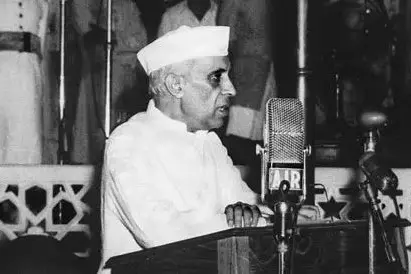
A sharp political confrontation broke out in the Rajya Sabha on Thursday over the legacy and interpretation of Vande Mataram, as Leader of the House J.P. Nadda asserted that Jawaharlal Nehru had played a direct role in altering the status of the national song.
Nadda rejected the Opposition’s charge that the debate was an attempt to vilify Nehru. Instead, he framed it as an exercise in historical honesty. “When you want, it becomes the Nehruvian age. When it doesn’t suit you, you bring in Subhas Chandra Bose and Rabindranath Tagore. If you want to take the glory, you should also take responsibility,” he said, arguing that leaders must be accountable for the decisions made under their leadership.
According to Nadda, Vande Mataram never received the place it deserved, and Nehru, then the pre-eminent figure within the Congress, was responsible. Drawing on the 1937 Nehru Archives, he said Nehru had expressed discomfort with the religious imagery in the hymn, describing the homage to the mother goddess as “absurd”. The word, Nadda claimed, reflected Nehru’s deeper reservations about merging nationalism with religious symbolism.
Nadda also referred to Nehru’s correspondence with Urdu writer Ali Sardar Jafri, where Nehru reportedly felt the song contained “too many difficult words” for the public. He further cited Nehru’s assessment that Vande Mataram was “out of keeping with modern notions”, suggesting this revealed Nehru’s modernist and secular preferences.
When Opposition leader Mallikarjun Kharge pressed him, was Nehru the Prime Minister in 1937?, Nadda clarified that Nehru was then Congress President, and that the song’s official treatment was shaped under his watch.
Jairam Ramesh publishes archival letters in response
Later in the day, Congress MP Jairam Ramesh weighed in on X (formerly Twitter), saying he intended “to clear up all the misinformation that the PM and his acolytes have been spreading.” He shared a Linktree folder containing a set of archival letters and notes by what he called “the many founding fathers of the Indian Republic”, documenting their positions on Vande Mataram.
What the CWC records actually say
Nadda pointed to the Congress Working Committee (CWC) deliberations from October 26 to November 1, 1937, stating that Muslim members had raised objections to the later stanzas of Vande Mataram, which depicted Bharat Mata as Maa Durga. On this basis, he said, the CWC decided only the first two stanzas should be used in national settings. “It was under Nehru’s influence that these stanzas were discarded,” he asserted.
However, Mathrubhumi English reviewed the original documents and highlighted the actual committee text, which reads:
“The ideology of other religious groups in India. The Committee recognise the validity of the objection raised by Muslim friends to certain parts of the song. While the Committee has taken note of such objection in so far as it has intrinsic value, the Committee wish to point out that the modern evolution of the use of the song as part of national life is of infinitely greater importance than its setting in a historical novel before the national movement had taken shape. Taking all things into consideration, therefore, the Committee recommends that wherever the Bande Mataram is sung at national gatherings only the first two stanzas should be sung, with perfect freedom to the organisers to sing any other song of an unobjectionable character, in addition to, or in the place of, the Bande Mataram Song.”
Furthermore, Mathrubhumi English also analysed the documents shared by Jairam Ramesh and included what it said was a copy of the letter allegedly sent by Nehru to Subhash Chandra Bose.
It reads: “Your letter of the 17th. Certainly, as suggested by you I shall discuss the Bande Matararn song with Dr. Tagore I do not know that any formal statement is necessary by the Working Committee but we should be clear in our own minds. Ihave managed to get an English translation of Ananda Math and I am reading it at present to get the background of the song. It does seem that this background is likely to irritate the Muslims Further there is the difficulty of the language which is not understood by most people. I do not understand it without the help of a dictionary. There is no doubt that the present outcry against Bande Mataram is to a large extent a manufactured one by the communalists. At the same time there does seem some substance in it and people who are communalistically inclined have been affected by it. Whatever we do cannot be to pander to communalists' feelings but to meet real grievances where they exist. I have decided now to reach Calcutta on the 25 morning. This will give me time to see Dr. Tagore as well as other friends.”
The CWC extract suggests that the decision was framed not only around objections but also around broader considerations of national use and inclusivity.
The Opposition accused Nadda of selectively presenting history and politicising a national symbol. Nadda maintained that Vande Mataram embodies unity and sacrifice and deserves its rightful prominence.
Published: 11 Dec 2025, 03:24 pm IST
Related Topics
Disclaimer: Kindly avoid objectionable, derogatory, unlawful and lewd comments, while responding to reports. Such comments are punishable under cyber laws. Please keep away from personal attacks. The opinions expressed here are the personal opinions of readers and not that of Mathrubhumi.
