
More than 1,000 people were reportedly detained in Delhi ahead of a CJP-led protest. With Section 163 of the BNSS in force, questions have emerged over the extent of police powers, the legality of preventive detentions and the constitutional right to peaceful assembly.
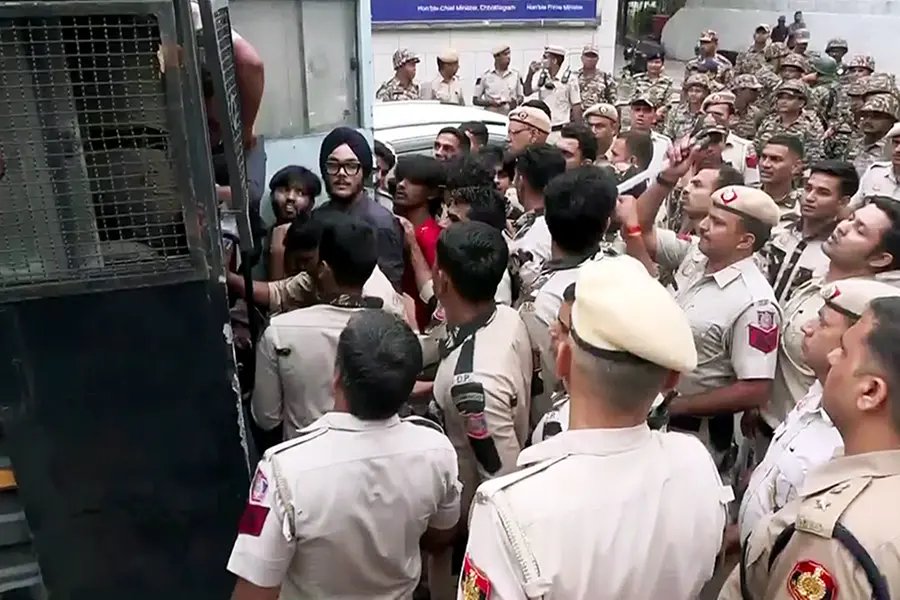
New Delhi: More than 1,000 people were detained across the national capital on Saturday as Delhi Police moved to prevent a protest called by the Cockroach Janta Party (CJP) at Jantar Mantar, raising questions over the extent of its powers to restrict demonstrations and detain people before an assembly takes place.
The crackdown on October 10 saw protesters, political leaders, activists, lawyers and journalists detained at multiple locations, including routes leading to the protest venue. CJP founder Abhijeet Dipke and party leaders Ashutosh Ranka and Saurav Das were detained after arriving at Delhi airport, according to reports.
The demonstration was called to demand the resignation of Chief Election Commissioner Gyanesh Kumar over alleged irregularities in the Special Intensive Revision (SIR) of electoral rolls.
Delhi Police had denied permission for the demonstration, citing the short notice given by the organisers and alleged violations during a previous protest. Authorities had also prepared extensive security arrangements, including blocking points and designated detention centres.
Also read | Where are Abhijeet Dipke, Saurav and Ashutosh? CJP says 3 leaders remain untraceable after 12 hours
Section 163 of the Bharatiya Nagarik Suraksha Sanhita (BNSS), which empowers executive magistrates to issue preventive orders in urgent cases involving potential danger or public disorder, had been imposed in the New Delhi district ahead of the demonstration.
However, the existence of a prohibitory order does not automatically settle the legality of every detention made during its enforcement. The police must have a lawful basis for restricting an individual's liberty, and the circumstances of each detention remain relevant.
What does Section 163 of the BNSS allow?
Section 163 of the BNSS, which replaced Section 144 of the Code of Criminal Procedure (CrPC) in July 2024, empowers a District Magistrate, Sub-Divisional Magistrate or another specially authorised Executive Magistrate to issue written orders in urgent cases involving a potential threat to public order or safety.
Also read | ‘Concerned by mass detentions’: UN human rights body urges India to protect peaceful assembly
The provision can be used to direct individuals or groups to refrain from specified acts where the magistrate considers the restriction necessary to prevent obstruction, danger to human life or safety, disturbance of public tranquillity, rioting or affray.
An order may apply to a particular individual, people residing in a specified area or the public generally when visiting that area. In emergencies, it can also be issued without giving prior notice.
Ordinarily, an order under Section 163 cannot remain in force for more than two months. The state government may extend it for a further period of up to six months if the statutory conditions are met.
In Delhi, the provision was invoked ahead of the CJP's planned demonstration. The police also refused permission for the gathering, citing the late submission of the application.
However, Section 163 is primarily a preventive measure. It empowers authorities to impose restrictions to address an anticipated threat; it does not, by itself, create an unrestricted power to detain everyone suspected of intending to participate in a prohibited demonstration.
When can police detain protesters?
A key distinction is whether a person is being prevented from joining an assembly, temporarily held under a lawful preventive power or formally arrested in connection with an alleged offence.
Section 170 of the BNSS permits a police officer who knows of a design to commit a cognisable offence to arrest the person concerned without a warrant if the officer believes the offence cannot otherwise be prevented.
The provision also states that a person arrested under it cannot be detained for more than 24 hours unless another provision of the law authorises further detention.
The police may also take action when a person allegedly disobeys a lawful prohibitory order. Section 223 of the Bharatiya Nyaya Sanhita (BNS) deals with disobedience to an order duly promulgated by a public servant.
However, the application of these provisions depends on the facts. Authorities would need to establish the legal basis for the action taken against a particular individual rather than rely solely on the fact that a protest had been prohibited.
The distinction is particularly significant when people are intercepted before reaching a demonstration, detained at their homes or taken into custody at an airport.
If a person is formally arrested, constitutional and statutory safeguards apply. Article 22 of the Constitution generally requires the arrested person to be informed of the grounds of arrest, allowed to consult and be defended by a lawyer, and produced before a magistrate within 24 hours, excluding necessary travel time.
A person who is only temporarily prevented from proceeding to a protest may be in a different legal position from someone formally arrested. Nevertheless, the label used by the police does not, on its own, determine whether the restriction of liberty was lawful.
What has the Supreme Court said about the right to protest?
The Constitution guarantees freedom of speech and expression under Article 19(1)(a) and the right to assemble peacefully and without arms under Article 19(1)(b). These rights are subject to reasonable restrictions on constitutionally recognised grounds, including public order.
The Supreme Court has repeatedly held that the right to protest is protected but not absolute. Authorities can regulate demonstrations, including their location and manner, to balance protesters' rights with public safety and the rights of other citizens.
In its 2018 judgment, the Supreme Court considered restrictions on demonstrations at Jantar Mantar and the repeated use of Section 144 of the CrPC to prohibit public meetings and assemblies in parts of central Delhi.
The court recognised peaceful protest as a fundamental right and directed the authorities to develop a mechanism allowing demonstrations to be regulated without causing undue disturbance to residents and offices in the area.
The judgment is relevant to the current controversy because Section 163 of the BNSS is the successor to Section 144 of the CrPC.
The ruling does not give organisers an unconditional right to hold a demonstration at any location or without permission. It does, however, underline the need to balance public order with the constitutional right to peaceful assembly.
The legality of the October 10 operation would therefore depend on the scope and basis of the prohibitory order, the reasons for denying permission, the conduct of those detained and the legal authority relied on for each detention.
Published: 11 Oct 2026, 06:42 am IST
ABOUT THE AUTHOR

Related Topics
Disclaimer: Kindly avoid objectionable, derogatory, unlawful and lewd comments, while responding to reports. Such comments are punishable under cyber laws. Please keep away from personal attacks. The opinions expressed here are the personal opinions of readers and not that of Mathrubhumi.