
The Court emphasised that the burden lies on the party seeking maintenance to demonstrate a genuine financial need.
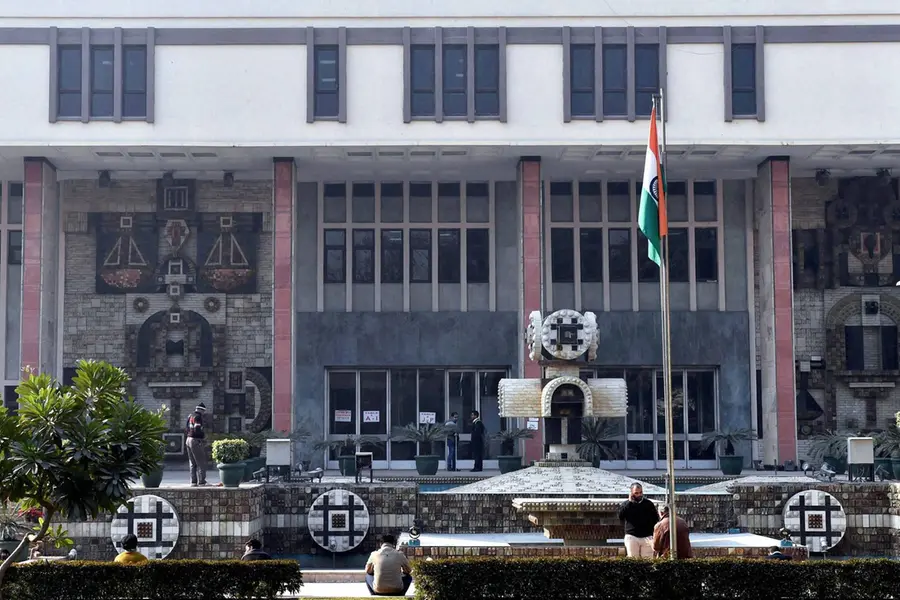
New Delhi: The Delhi High Court has held that alimony cannot be granted to a spouse who is financially self-sufficient and independent, reinforcing the principle that maintenance under the Hindu Marriage Act (HMA) is a measure of social justice, not a mechanism for wealth equalisation.
According to a report by Bar and Bench, the Court emphasised that the burden lies on the party seeking maintenance to demonstrate a genuine financial need.
Also Read

A Division Bench comprising Justices Anil Kshetarpal and Harish Vaidyanathan Shankar made the observation while upholding a family court decision that denied permanent alimony to a woman and granted divorce to her husband on the grounds of cruelty.
“It is a settled principle that permanent alimony is intended as a measure of social justice and not as a tool for enrichment or equalising the financial status of two capable individuals,” the Bench noted.
The couple in question had both previously been divorced before marrying in January 2010. However, they separated within 14 months. The husband is a practising advocate, while the wife holds a senior position as a Group A officer in the Indian Railway Traffic Service (IRTS).
The husband alleged that he was subjected to mental and physical cruelty, including abusive language, demeaning text messages, denial of conjugal rights, and humiliation in both professional and social settings. The wife denied the accusations and levelled counter-allegations of cruelty against the husband.
During the proceedings, the family court found merit in the husband’s claims and dissolved the marriage. It also took note of the fact that the wife had demanded ₹50 lakhs as a financial settlement in exchange for agreeing to the divorce. This demand was confirmed through her affidavit and reiterated during cross-examination. The court declined to grant this amount.
The High Court, upon review, upheld the family court’s findings. It remarked that when a spouse, while appearing to contest the dissolution of marriage, simultaneously demands a large financial settlement, it suggests that their resistance is not based on a desire for reconciliation or preservation of the marital relationship, but rather on monetary gain.
The Court also found that the wife had used degrading language against the husband, including vulgar insults directed at his mother and remarks questioning his legitimacy—conduct that the Bench held amounted to mental cruelty.
The High Court finally ruled against awarding alimony, noting that the woman, being a senior government officer with a substantial income, is financially independent and not entitled to maintenance under the provisions of the law.
Published: 19 Oct 2025, 09:54 am IST
Disclaimer: Kindly avoid objectionable, derogatory, unlawful and lewd comments, while responding to reports. Such comments are punishable under cyber laws. Please keep away from personal attacks. The opinions expressed here are the personal opinions of readers and not that of Mathrubhumi.