
The Delhi High Court has questioned the Centre on why goods and services tax on air purifiers cannot be reduced, citing worsening air quality
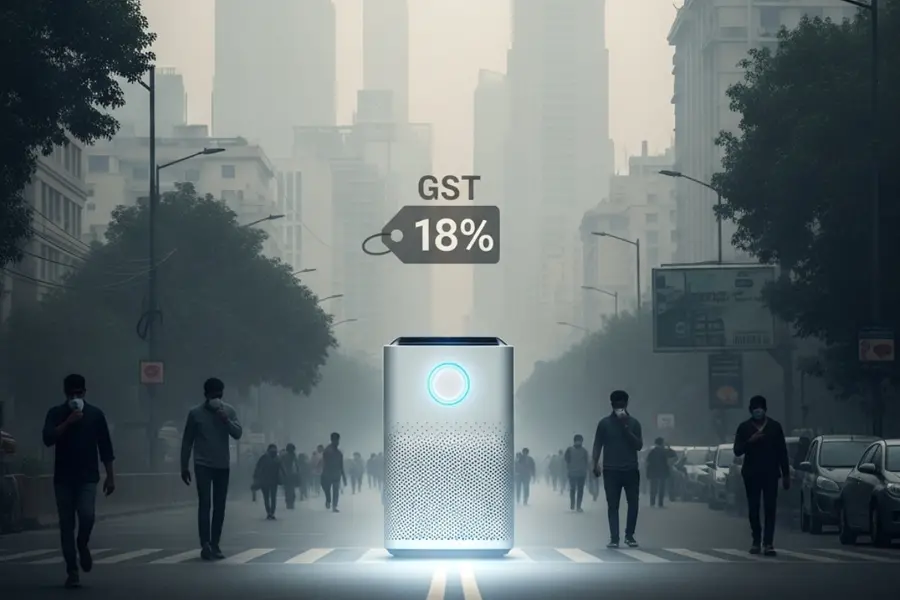
New Delhi: The Delhi High Court raised the issue while hearing a public interest litigation highlighting the severe air pollution in Delhi and surrounding regions. The bench noted that air quality has reached alarming levels and questioned why air purifiers continue to attract 18 per cent GST despite the public health emergency.
What did the court say about affordability?
Also Read

The bench observed that air purifiers are priced between ₹10,000 and ₹60,000, making them inaccessible to a large section of the population. The court questioned why GST could not be reduced to five per cent so that the devices become affordable for ordinary citizens dealing with hazardous air quality.
What was the Centre’s response in court?
Representing the Centre, Additional Solicitor General N Venkataraman said GST is a federal levy decided collectively by the GST Council, which includes the Union finance minister and representatives of all states and union territories. He argued that GST decisions cannot be taken unilaterally and require consensus.
The Centre sought 10 days to file a detailed counter affidavit, stating that voting in the GST Council has to be done physically and not through video conferencing. The government told the court that the matter had been discussed at the highest level, including an urgent meeting involving the finance minister.
The ASG told the court that the petition raised broader issues beyond GST, including matters involving the Health Ministry, which is not a party to the case. He also claimed the petition was “loaded” and suggested there could be commercial interests behind it, cautioning that any immediate intervention could open a “pandora’s box”.
What is the petitioner’s main argument?
Petitioner Kapil Madan argued that air purifiers should not be treated as luxury items during an “extreme emergency crisis” caused by pollution. He contended that air purifiers qualify as medical devices under existing notifications and should therefore fall under the five per cent GST slab.
The bench said it could not conclude that air purifiers were wrongly taxed without examining the Centre’s response. It noted that the issue requires detailed deliberation and should be considered by the appropriate roster bench after the counter affidavit is filed.
The court granted the Centre 10 days to file its reply and listed the matter for further hearing on January 9. Earlier, it had directed the GST Council to meet at the earliest to consider lowering or abolishing GST on air purifiers, given the ongoing air quality emergency.
Why is this case significant?
The case brings attention to the public health impact of air pollution and raises questions about whether essential devices like air purifiers should be taxed as consumer goods or treated as medical necessities during environmental emergencies.
(With PTI inputs)
Published: 26 Dec 2025, 04:04 pm IST
Related Topics
Disclaimer: Kindly avoid objectionable, derogatory, unlawful and lewd comments, while responding to reports. Such comments are punishable under cyber laws. Please keep away from personal attacks. The opinions expressed here are the personal opinions of readers and not that of Mathrubhumi.