
Delhi Police has announced extensive security preparations ahead of the CJP protest on October 10, including a deployment of more than 20,000 personnel, over 300 CCTV cameras and 12 detention centres. Permission for the proposed demonstration at Jantar Mantar has been denied.
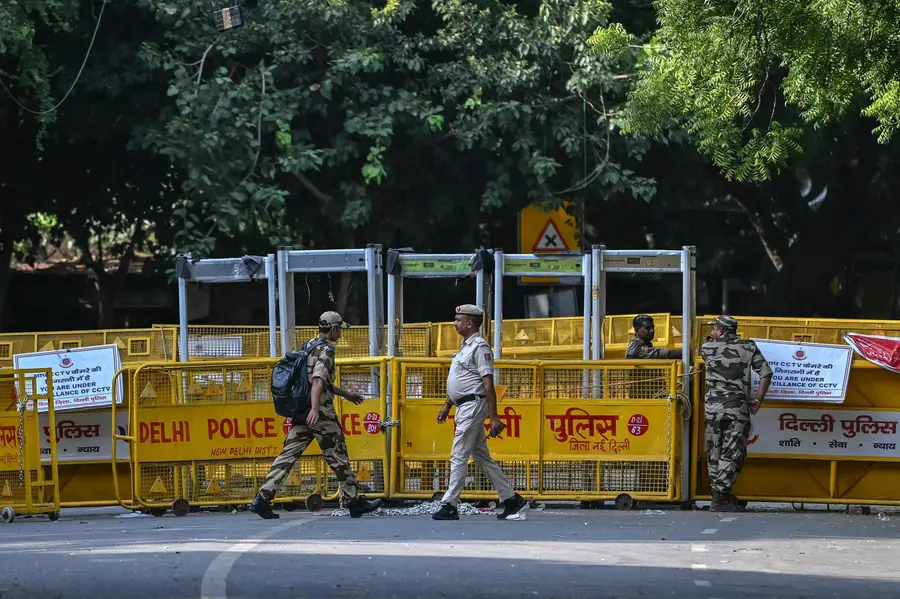
New Delhi: Delhi Police has planned a large-scale security operation ahead of the CJP protest scheduled for October 10. More than 20,000 security personnel are expected to be deployed across New Delhi, central Delhi and the national capital’s borders. Police have denied permission for the proposed demonstration at Jantar Mantar, citing procedural requirements, previous law-and-order concerns and the potential impact of large gatherings on security and traffic.
The arrangements are intended to prevent unauthorised gatherings, maintain public order and restrict access to sensitive areas of the New Delhi district. Senior police officers have briefed personnel assigned to the operation, instructing them to remain professional, exercise restraint and avoid reacting to attempts to provoke them.
6,500 personnel to guard sensitive zone
Police have identified an area with a radius of approximately 1.5 kilometres as highly sensitive. The zone includes Jantar Mantar, Janpath, the Election Commission of India headquarters and Delhi Police headquarters. More than 6,500 personnel are expected to be deployed within this area.
At least seven layers of barricades have been installed on roads leading towards Jantar Mantar. Loudspeakers have also been placed at sensitive locations to broadcast recorded announcements informing people that permission for the protest has not been granted. The announcements urge people not to raise slogans or engage in violence, damage public property or assault police personnel.
12 detention centres prepared
Delhi Police has prepared 12 detention centres for people who may be detained during the operation, according to sources cited in the report. Police have stated that unauthorised gatherings will not be permitted and that people arriving in the capital to participate in the demonstration could face police action.
Senior officers have instructed personnel to exercise maximum restraint and handle the situation professionally. The briefing reportedly included lessons from an earlier CJP protest, with officers asked to maintain discipline even if demonstrators attempt to provoke them.
The instructions also covered situations involving individuals identifying themselves as independent journalists. According to the report, officers were briefed on how to respond if anyone claiming to be a journalist attempts to provoke personnel or create a confrontation.
More than 300 cameras and 100 recording personnel
Surveillance forms a major part of the security plan. More than 300 CCTV cameras with audio and video capabilities have reportedly been installed at sensitive locations across the New Delhi district. Body cameras are also being deployed for senior police officers, including those of the rank of Additional Commissioner of Police and above.
Around 100 photographers and videographers have reportedly been engaged to record the protest and the police response in real time. The footage is expected to document events and could be used as evidence if law-and-order violations occur.
The emphasis on recording the operation comes amid criticism and social media discussions about the police response to previous demonstrations. Senior officers are expected to remain present during the operation and make decisions according to the situation on the ground.
Home Secretary asks states to coordinate with Delhi Police
Union Home Secretary Govind Mohan has written to police chiefs of states and Union Territories, asking them to coordinate with Delhi Police ahead of the proposed demonstration.
The letter reportedly referred to intelligence inputs suggesting that CJP members could attempt to enter Delhi despite restrictions. States and Union Territories were asked to strengthen coordination among intelligence agencies, border-monitoring authorities and Delhi Police, share information and take precautionary measures to maintain public order.
Delhi Police has also launched an awareness campaign through community centres, mosques and resident welfare associations. The campaign seeks to inform residents that permission for the October 10 protest has been denied and that people travelling to New Delhi to participate could face police action.
Hotels and accommodation providers asked to remain vigilant
Police are checking hotels, lodges and other accommodation facilities in and around New Delhi and central Delhi. Operators have reportedly been advised to inform the authorities if they notice people staying at their properties with plans to participate in the demonstration.
Instructions have also been issued to Airbnb operators and property owners to remain vigilant. These measures form part of the broader effort to monitor the arrival and movement of people who may be travelling to the capital for the protest.
No application received for Ramlila Maidan
Delhi Police has said it has not received an application seeking permission to hold the demonstration at Ramlila Maidan. Organisers would have to submit a formal request before the competent authorities could examine it and make a decision.
The clarification comes amid questions about whether the proposed protest could be shifted from Jantar Mantar to another location. For now, police have maintained that the demonstration has not been authorised at the originally proposed site.
Police focus on restraint and public communication
The security plan places emphasis on police conduct, discipline and the recording of events. Senior officers have instructed personnel to maintain restraint and act professionally throughout the operation.
Delhi Police has also issued an open letter to residents appealing for cooperation and emphasising that police personnel are members of families and communities. The force says its priority is to maintain law and order and prevent disruption in the New Delhi district during the protest.
What the security plan means
The scale of the deployment reflects the authorities’ preparations for a potentially large demonstration in a sensitive part of the capital. The combination of layered barricades, surveillance cameras, detention centres and coordination with state police indicates that officials are preparing to control access to the protest area and respond to possible gatherings at multiple locations.
The denial of permission at Jantar Mantar raises questions about how the authorities will balance public-order considerations with the right to peaceful assembly. The legal and administrative basis for restricting a demonstration, the availability of alternative venues and the conduct of police personnel are likely to remain central issues.
The extensive use of cameras and recording teams could provide a detailed record of interactions between police and demonstrators. Such footage may help establish what occurred during specific incidents, although its value will depend on how the recordings are preserved, reviewed and made available when required.
The operation’s outcome will depend not only on the number of personnel deployed but also on whether restrictions are enforced lawfully, police exercise restraint and any incidents are documented transparently.
Published: 09 Oct 2026, 09:16 pm IST
ABOUT THE AUTHOR

Related Topics
Disclaimer: Kindly avoid objectionable, derogatory, unlawful and lewd comments, while responding to reports. Such comments are punishable under cyber laws. Please keep away from personal attacks. The opinions expressed here are the personal opinions of readers and not that of Mathrubhumi.