
Despite the current spike, Delhi's average AQI this year shows an improvement compared to last year.
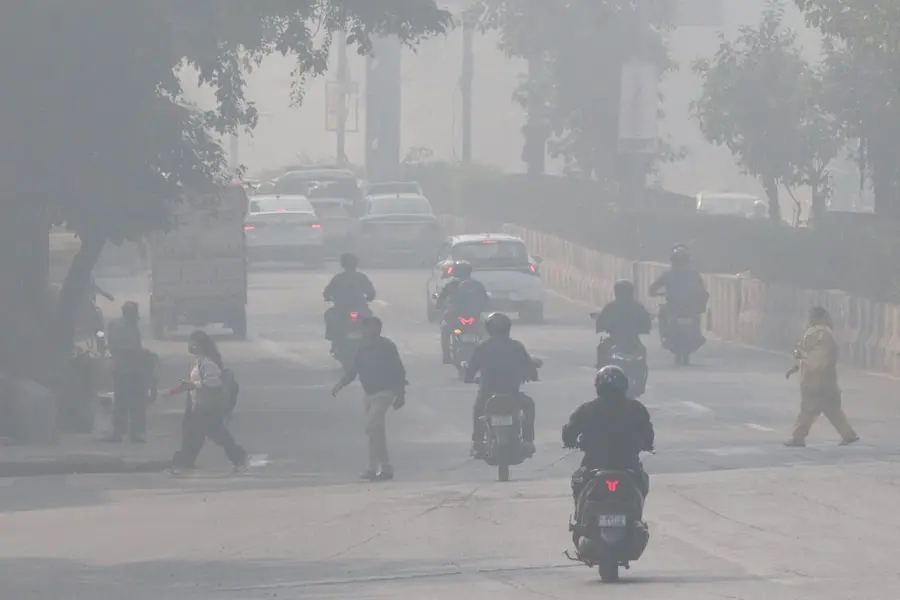
New Delhi: Delhi’s air quality remained in the ‘severe’ category on Wednesday, with the overall Air Quality Index (AQI) touching 413 at 8 am, according to data from the Central Pollution Control Board (CPCB). The Graded Response Action Plan (GRAP) Stage III continues to be in force across Delhi and the National Capital Region (NCR).
Most monitoring stations in the capital reported alarming pollution levels, with AQI readings exceeding 400 in several areas. Wazirpur recorded the highest AQI of 459, categorised as ‘severe’, while NSIT Dwarka logged the lowest at 215, falling under the ‘poor’ category.
Other key stations showing ‘severe’ air quality included Alipur (431), Anand Vihar (438), Ashok Vihar (439), Aya Nagar (405), Bawana (451), Chandni Chowk (449), Jahangirpuri (446), Mundka (442), Rohini (442) and RK Puram (432). A few places, such as DTU Delhi (373), IGI Airport T3 (395), Dilshad Garden (307), Lodhi Road (309), and Najafgarh (384), remained in the ‘very poor’ range.
The Commission for Air Quality Management (CAQM) invoked Stage III restrictions under GRAP after Delhi’s AQI shot up from 362 on Monday to 425 on Tuesday. Officials attributed the spike to calm winds, stable atmospheric conditions, and unfavourable weather patterns.
In response to the escalating pollution, Chief Minister Rekha Gupta announced that schools up to Class 5 will function in hybrid mode to reduce children’s exposure to toxic air.
Despite the current spike, the Ministry of Environment, Forest and Climate Change said Delhi’s average AQI from January 1 to November 9 this year stands at 175—an improvement from 189 recorded during the same period last year. Average PM2.5 and PM10 levels for the period are 75 µg/m³ and 170 µg/m³, respectively, compared to 87 µg/m³ and 191 µg/m³ last year.
With inputs from ANI
Published: 12 Nov 2025, 10:12 am IST
Related Topics
Disclaimer: Kindly avoid objectionable, derogatory, unlawful and lewd comments, while responding to reports. Such comments are punishable under cyber laws. Please keep away from personal attacks. The opinions expressed here are the personal opinions of readers and not that of Mathrubhumi.
