
Delhi’s air turns deadly again — AQI crosses 400 in multiple zones, choking the capital in a toxic haze.
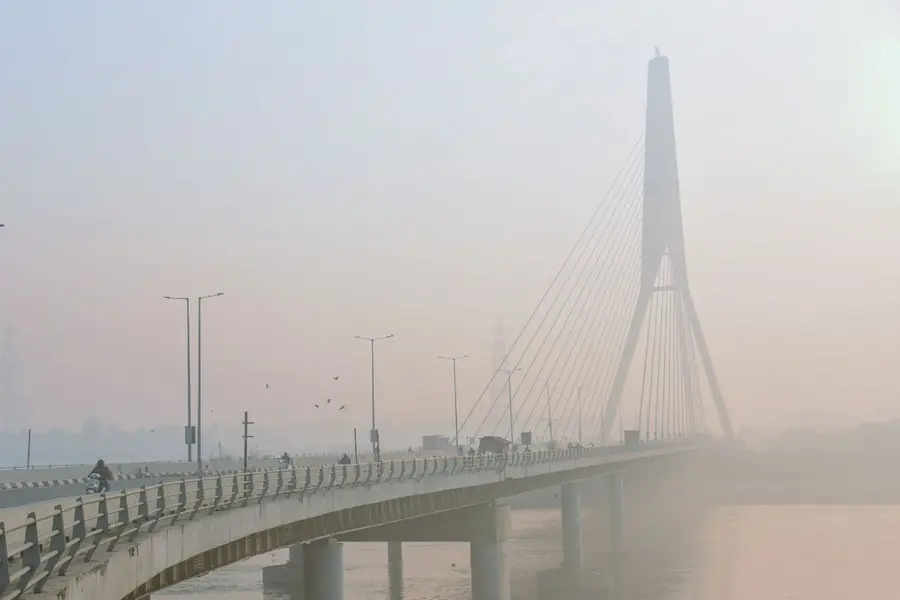
Delhi woke up to a thick layer of smog and dangerously toxic air on Tuesday, as the city’s overall Air Quality Index (AQI) shot up to 421 at 7 am — falling into the ‘severe’ category, according to data from the Central Pollution Control Board (CPCB).
Several parts of the national capital reported alarming pollution levels, with AQI readings crossing the 400-mark, putting millions at health risk.
Bawana recorded the highest AQI at 462, followed by RK Puram (446), Patparganj (438), Alipur (442), and Sonia Vihar (433). Anand Vihar (412) and Chandni Chowk (416) also reported severe air quality, as toxic haze blanketed the city.
Tuesday’s air quality marked a sharp deterioration from Monday, when the AQI stood at 345 in the ‘very poor’ category.
According to CPCB standards, any AQI reading above 400 is classified as ‘severe’, meaning the air is hazardous and can affect even healthy people, with serious health impacts on those with pre-existing conditions.
Residents described the conditions as unbearable. “This is not fog, this is pollution,” said Rahul, a Delhi resident. “We are facing breathing problems and eye irritation. Crackers were burst, and stubble smoke from Punjab adds to the misery. The government must act immediately.”
The Graded Response Action Plan (GRAP) Stage 2 remains in effect across Delhi-NCR, which includes restrictions on construction, use of diesel generators, and other pollution sources.
Interestingly, despite the worsening air, data shows a decline in stubble burning incidents this year. Between September 15 and November 9, Punjab recorded 4,062 fire events, down 35% from last year, while Haryana reported a 65% decline.
The Ministry of Environment, Forest and Climate Change noted that Delhi’s average AQI this year (Jan–Nov) is 175, slightly better than 189 last year, with lower PM2.5 and PM10 levels.
However, experts warn that with winter setting in and winds weakening, pollution is likely to worsen in the coming days — unless immediate, coordinated action is taken.
Published: 11 Nov 2025, 09:10 am IST
Related Topics
Disclaimer: Kindly avoid objectionable, derogatory, unlawful and lewd comments, while responding to reports. Such comments are punishable under cyber laws. Please keep away from personal attacks. The opinions expressed here are the personal opinions of readers and not that of Mathrubhumi.
