
Delhi is already struggling with poor air quality ahead of Diwali, but reports of firecrackers being openly sold in markets have raised fresh concerns. The Supreme Court has taken note of the alleged violations and asked the Centre, Delhi government and police to ensure that its restrictions are followed.
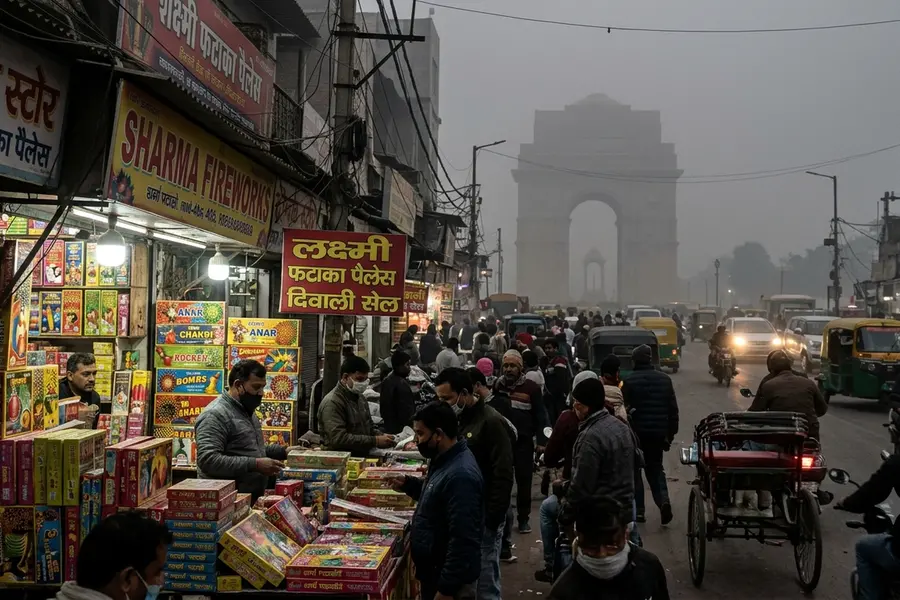
New Delhi: Delhi's air pollution problem has taken another turn ahead of Diwali. Despite restrictions on firecracker sales, reports of different varieties of crackers being openly sold in markets have reached the Supreme Court.
On Tuesday, November 3, the court expressed concern over the reports and asked the Centre to look into the matter. A bench of Justices M M Sundresh and Prasanna B Varale referred to a newspaper report that included photographs of firecrackers being sold in shops across Delhi.
The report claimed that both licensed and unlicensed firecrackers were available, including products with and without QR codes. These sales appeared to be taking place despite the restrictions announced by the court.
"There’s a photograph and they say that notwithstanding yesterday’s order, everything is available in the shops. Please look into it," Justice Sundresh told Additional Solicitor General Aishwarya Bhati, who was appearing for the Centre.
The court asked the Centre, Delhi government and police to take steps to ensure that its directions were followed.
Delhi pollution raises concerns ahead of Diwali
The development comes as Delhi continues to deal with poor air quality. With Diwali approaching, the possible use of firecrackers has added to concerns about pollution in the capital.
Vehicles, construction dust, industrial emissions, crop-residue burning and weather conditions are among the factors affecting air quality in Delhi and the surrounding areas.
The reported sale of conventional firecrackers has raised questions about whether the restrictions are being properly implemented. While the court has allowed the sale of certain certified green crackers for a limited period, other varieties remain prohibited.
What are the Supreme Court's firecracker restrictions?
On November 2, the Supreme Court allowed the sale of certified green firecrackers at designated locations in Delhi-NCR ahead of Diwali.
The court also specified the timings during which people can burst firecrackers on November 7 and 8.
The permitted timings are:
- Morning: 6 am to 7 am.
- Evening: 8 pm to 10 pm.
The temporary permission will end on November 8, and a complete ban will come into effect again from November 9.
Only certified green firecrackers are allowed under the temporary arrangement. Conventional crackers and products that do not meet the required certification standards are not permitted.
What are green crackers?
Green crackers are designed to reduce emissions and particulate matter compared with conventional firecrackers. They are developed and certified under prescribed standards.
The Supreme Court has allowed only certified products to be sold during the permitted period. Their packaging must carry the required QR code so that buyers and authorities can verify their authenticity.
The court has also prohibited the sale of firecrackers joined in series, commonly known as 'ladis', and crackers containing barium.
Why has the court raised concerns?
The latest reports suggest that restrictions on paper may not be enough if shops continue selling prohibited products.
The availability of crackers without proper certification or QR codes also makes it difficult for buyers to identify whether a product meets the required standards.
The Supreme Court's intervention has therefore brought the focus back to the responsibility of authorities to monitor markets, check illegal sales and ensure that only permitted products are available.
Delhi's pollution battle goes beyond Diwali
Delhi's air pollution is not caused by firecrackers alone. Vehicle emissions, construction activities, industrial pollution, waste burning and seasonal crop-residue burning also contribute to the problem.
However, firecracker emissions can add to the pollution burden during the festive period.
The Supreme Court's latest intervention highlights an important issue: restrictions can make a difference only when they are properly enforced.
With Diwali approaching, the immediate challenge for authorities is to prevent the sale of prohibited firecrackers and ensure that the temporary permission for green crackers is followed.
For Delhi, tackling pollution will require more than seasonal restrictions. Regular monitoring and action against different sources of pollution will remain important even after the festival is over.
Published: 03 Nov 2026, 03:23 pm IST


ABOUT THE AUTHOR

Disclaimer: Kindly avoid objectionable, derogatory, unlawful and lewd comments, while responding to reports. Such comments are punishable under cyber laws. Please keep away from personal attacks. The opinions expressed here are the personal opinions of readers and not that of Mathrubhumi.