
Cyclone Arnab is approaching Andhra Pradesh with winds forecast to reach 140 kmph. Authorities have activated disaster preparations, several states face heavy-rain warnings, and Indian Railways has cancelled eight trains and altered two others.
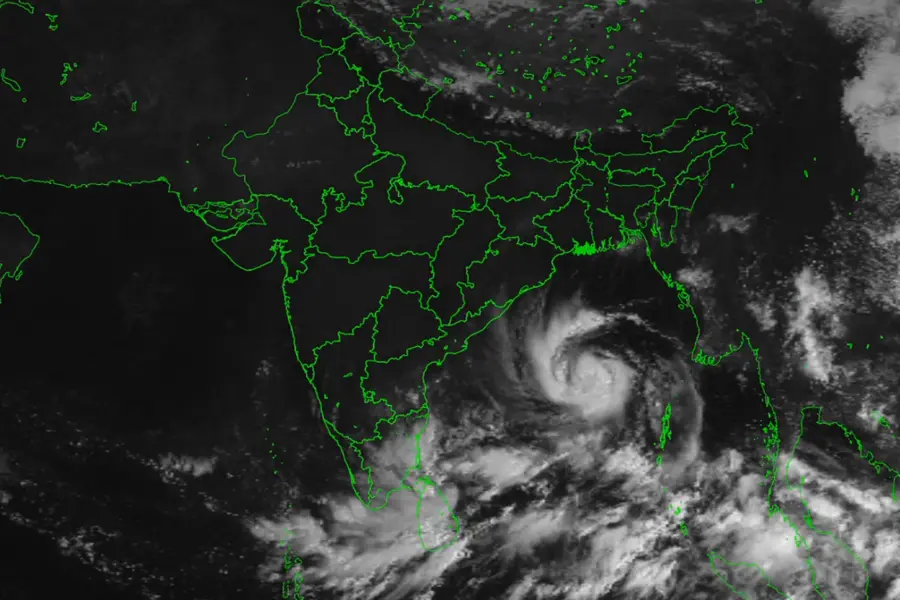
Hyderabad: Cyclone Arnab is moving towards the Andhra Pradesh coast, prompting authorities to issue alerts, prepare rescue teams and suspend several train services ahead of its expected landfall on Wednesday, October 28.
The India Meteorological Department (IMD) said the cyclonic storm was located over the east-central and adjoining west-central Bay of Bengal at 5.30 am on Monday. It was around 650 km east-southeast of Visakhapatnam and moving westwards at approximately 15 kmph.
The storm is forecast to intensify into a severe cyclonic storm by Monday night and a very severe cyclonic storm on Tuesday. According to the IMD forecast cited in the reports, it is expected to cross the Andhra Pradesh–Yanam coast between Bapatla and Visakhapatnam, close to Yanam.
The system could bring sustained winds of 115–125 kmph, with gusts reaching 140 kmph. Authorities are preparing for possible flooding, power disruptions, damage to infrastructure and interruptions to transport services.
Centre alerts states and prepares rescue teams
The Centre has stepped up preparedness in Andhra Pradesh, Odisha, Telangana, Chhattisgarh and Puducherry. Authorities in other regions have also been asked to remain vigilant because of the possibility of heavy rainfall.
Cabinet Secretary T. V. Somanathan chaired a meeting of the National Crisis Management Committee to review preparations and coordinate response measures. The National Disaster Response Force (NDRF) and State Disaster Response Forces have deployed teams or kept additional personnel on standby.
The Army, Navy, Air Force and Indian Coast Guard have also kept their rescue and relief teams ready. The Ministry of Home Affairs, National Disaster Management Authority and IMD are monitoring the situation in coordination with state authorities.
Fishermen have been advised not to venture into the sea between October 26 and 29.
Andhra Pradesh prepares coastal districts
Andhra Pradesh Chief Minister N. Chandrababu Naidu has directed officials to maintain round-the-clock vigilance, establish district-level control rooms and issue regular warnings to residents of coastal villages.
Fishing boats have been asked to return to shore. Officials are also arranging for pregnant women nearing their delivery dates to be moved to hospitals in advance.
The state has positioned 10 NDRF teams, while 16 additional teams have been kept on standby nationally. Visakhapatnam authorities have alerted rescue personnel, the Navy and the Coast Guard.
The Energy Department has kept 25,000 electric poles and other essential materials ready to respond to possible damage to power infrastructure.
Odisha identifies vulnerable districts
Odisha has identified six southern districts as particularly vulnerable: Ganjam, Gajapati, Rayagada, Malkangiri, Koraput and Nabarangpur.
Chief Minister Mohan Charan Majhi has assigned eight ministers to oversee preparedness. NDRF teams, the Odisha Disaster Rapid Action Force, fire services and police personnel have been positioned in vulnerable areas.
The state government has also prohibited fishing and restricted tourist access to hills, waterfalls and dams in the six districts as a precaution.
Heavy rain forecast across eastern and central India
The cyclone’s effects are expected to extend beyond Andhra Pradesh and Odisha.
The IMD has forecast heavy rainfall in parts of West Bengal between October 28 and 30. South 24 Parganas, Purba Medinipur, Paschim Medinipur, Jhargram, Bankura and Purulia are among the districts expected to receive heavy rain.
Darjeeling, Kalimpong, Alipurduar and Jalpaiguri may also experience heavy rainfall on October 29 and 30. A landslide warning has been issued for Darjeeling. Light to moderate rain is forecast in Kolkata, Howrah, Hooghly and other parts of south Bengal.
Heavy to very heavy rainfall is also forecast in parts of Telangana and Chhattisgarh. Jharkhand, Bihar, eastern Uttar Pradesh, Vidarbha and eastern Madhya Pradesh could receive heavy rain over the coming days. The Andaman Islands are also likely to experience rainfall on October 26 and 27.
Fishermen along the West Bengal coast have been advised to stay ashore from October 26, with squally winds forecast to reach 35–45 kmph and gust up to 55 kmph.
Cyclone warning signals have been raised at nine ports across Tamil Nadu and Puducherry, including Chennai, Nagapattinam, Cuddalore, Karaikal, Pamban and Thoothukudi.
Cyclone Arnab train cancellations: full list
Indian Railways has cancelled eight train services and changed the starting or terminating points of two others as a precaution ahead of the cyclone.
South Coast Railway said the changes were made in the interest of passenger safety.
| Train number and service | Cancellation dates |
|---|---|
| 18515 Visakhapatnam–Kirandul Night Express | October 29 to November 4 |
| 18516 Kirandul–Visakhapatnam Night Express | October 29 to November 4 |
| 58538 Visakhapatnam–Koraput Passenger | October 27 to 30 |
| 58537 Koraput–Visakhapatnam Passenger | October 28 to 31 |
| 18512 Visakhapatnam–Koraput Intercity Express | October 30 |
| 18511 Koraput–Visakhapatnam Intercity Express | October 31 |
| 58501 Visakhapatnam–Kirandul Passenger | October 27 to 30 |
| 58502 Kirandul–Visakhapatnam Passenger | October 27 to 30 |
Two trains with changed operations
- 18447 Bhubaneswar–Jagdalpur Hirakhand Express: Services departing from October 27 to 30 will be short-terminated at Rayagada instead of continuing to the usual destination.
- 18448 Jagdalpur–Bhubaneswar Hirakhand Express: Services departing from October 28 to 31 will originate at Rayagada instead of Koraput.
Passengers travelling on affected routes should check the latest railway announcements before leaving for the station, as further operational changes may be announced depending on the cyclone’s movement.
Why is the cyclone called Arnab?
The name Arnab was proposed by Bangladesh and is included in the regional cyclone-naming system maintained under the World Meteorological Organisation and United Nations Economic and Social Commission for Asia and the Pacific framework.
Cyclone names are selected in advance from lists contributed by countries in the region, including India, Bangladesh, Pakistan and Sri Lanka. Using distinct names helps meteorological agencies, governments and the public identify storms and communicate warnings more clearly.
What to watch before landfall
The main concerns are the cyclone’s intensity, the exact location where it crosses the coast and the amount of rainfall it brings inland. Strong winds can damage power lines and buildings, while heavy rain can cause flooding, disrupt roads and affect railway operations.
The response involves more than evacuations. Authorities must also protect essential services, prepare hospitals, move fishing boats to safety and ensure that rescue teams can reach affected communities. Rail cancellations and port warnings are precautionary measures intended to reduce risks to passengers and maritime workers.
Residents in potentially affected areas should follow official IMD forecasts and instructions from local administrations. Fishermen should observe the sea warnings, and passengers should verify train status with Indian Railways before travelling.
Published: 26 Oct 2026, 05:26 pm IST
ABOUT THE AUTHOR

Related Topics
Disclaimer: Kindly avoid objectionable, derogatory, unlawful and lewd comments, while responding to reports. Such comments are punishable under cyber laws. Please keep away from personal attacks. The opinions expressed here are the personal opinions of readers and not that of Mathrubhumi.