
CPM veteran and former Jadavpur candidate Bikash Ranjan Bhattacharya’s appearance for former Trinamool MLA Aditi Munshi and her husband in an alleged disproportionate assets case has triggered political chatter, with even sections within the Left camp questioning the optics.
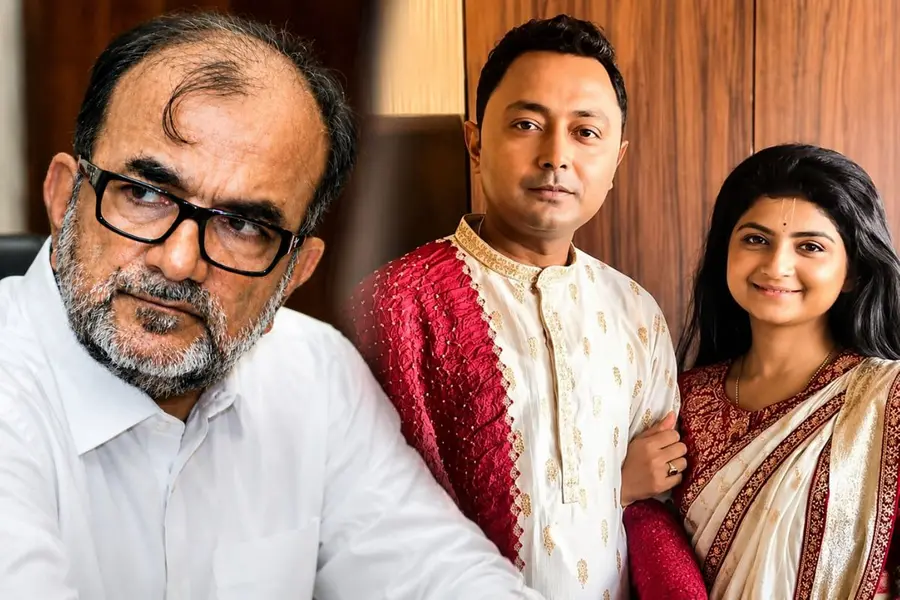
Senior CPM leader and veteran lawyer Bikash Ranjan Bhattacharya has landed at the centre of a political debate after appearing for former Trinamool Congress MLA of Rajarhat-Gopalpur Aditi Munshi and her husband, BMC councillor Debraj Chakraborty, in an alleged disproportionate assets case.
The development has sparked discussions across Bengal's political circles, with the courtroom appearance drawing attention not only because of the case itself but also due to Bhattacharya’s long-standing image as a strong critic of corruption and his political association with CPM.
The Calcutta High Court on Friday verbally requested the state not to take any coercive action against Munshi and Chakraborty till June 19 while hearing their anticipatory bail plea in the assets case.
The state, represented by Additional Advocate General Rajdeep Mazumder, opposed the plea and alleged that the couple had accumulated properties far beyond their disclosed sources of income.
According to the state’s submissions, the couple allegedly disposed of properties through benami transactions, gifts, and devaluation of assets to avoid reflecting their actual holdings and to submit a "cleaner affidavit of assets" during elections.
However, the legal proceedings soon acquired a political dimension.
Trinamool Congress MP and lawyer Kalyan Banerjee took an indirect swipe at Bhattacharya through a post on X, questioning how a lawyer who often positions himself against corruption could appear for leaders facing serious allegations.
Without naming Bhattacharya, Kalyan wrote that a ‘distinguished lawyer’ who projects himself as being against corruption had represented a former Trinamool MLA and her husband despite allegations against them.
He also referred to Bhattacharya’s previous legal arguments in high-profile cases and suggested that legal practice was being used as a ‘shield’ to take different positions in different situations.
Bhattacharya, however, rejected the criticism and maintained that the case he appeared in had no connection with corruption itself.
He argued that the matter before the court concerned specific legal questions and not political narratives surrounding the allegations.
The development has also reportedly generated conversations within Left circles, with some party leaders privately expressing discomfort over the optics of the move.
Others, however, defended Bhattacharya, saying his role as a lawyer should not be mixed with his political identity and arguing that he has a history of taking independent legal positions.
This is not the first time Bhattacharya's legal appearances have triggered debate. In the past, too, his role in politically sensitive cases had raised eyebrows within sections of the Left.
For now, the legal battle may be in court, but the political debate surrounding who stands with whom appears set to continue outside it as well.
Published: 23 May 2026, 01:00 pm IST
Related Topics
Disclaimer: Kindly avoid objectionable, derogatory, unlawful and lewd comments, while responding to reports. Such comments are punishable under cyber laws. Please keep away from personal attacks. The opinions expressed here are the personal opinions of readers and not that of Mathrubhumi.
