
India's IndiGo meltdown was not a sudden shock but a predictable system failure that multiple stakeholders overlooked.
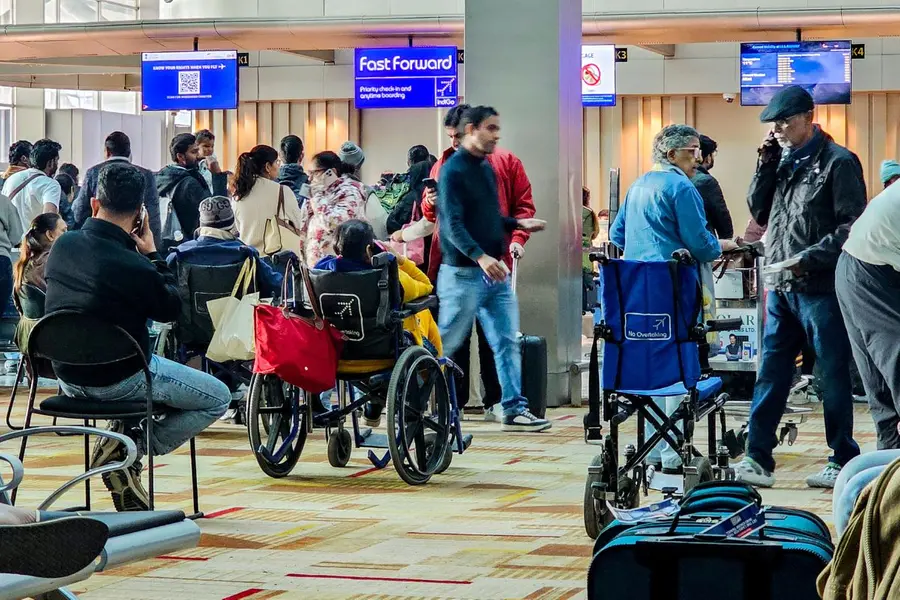
India has just witnessed one of its worst airline disruptions in recent years, more than 2,000 IndiGo flights cancelled since Tuesday, airports overflowing with stranded passengers, last-minute fare spikes, and ministers and officials scrambling for road and rail alternatives. But behind the chaos lies one simple question no one stopped to ask in time. Could this meltdown have been prevented?
The answer is yes, but only if early warning signals had been recognised and acted upon with seriousness.
Early warning signal #1:
Crew fatigue was building for months
For months, pilots across Indian carriers have been highlighting one recurring issue, increasing roster pressure and fatigue. This was in plain sight, it appeared in internal scheduling complaints, WhatsApp groups, and even the domestic airline ecosystem’s general chatter. India’s aviation market is growing faster than trained manpower and IndiGo, with more than 60% market share, is bearing the biggest load.
Fatigue does not become a crisis overnight. It builds up slowly, flight by flight, duty hour by duty hour. A system under silent stress eventually shows cracks and that’s exactly what played out now, when a small disruption triggered a massive network collapse.
The missed signal - No one asked whether IndiGo’s manpower planning had the buffers to support such a massive network. Without enough rested pilots, even a tiny deviation pushes the schedule into a spiral.
Early warning signal #2:
IndiGo’s network is too big to fail, but too big to reset quickly
IndiGo operates around 2,300 daily flights in normal conditions. When a carrier of this size faces even a slight crew shortfall, resetting the network is extremely complex. Aircraft start ending up in the wrong cities, duty hours don’t match the schedule, and rotations break down.
In other words, IndiGo’s scale is both its strength and its vulnerability.
A large airline needs strong operational resilience especially backup crews, flexible fleet allocation and strong predictive tools for disruptions. Most global carriers with similar scale like Delta, Emirates, Southwest have invested heavily in network recovery planning, simulation tools and crew buffers. Their logic is simple, the bigger you are, the faster chaos spreads when something breaks.
The missed signal - India allowed the country’s aviation ecosystem to become heavily dependent on one airline’s smooth running without ensuring that the airline itself had enough resilience layers to manage a large-scale shock.
Early warning signal #3:
Regulatory oversight reacted but it did not foresee
DGCA stepped in only after the crisis went public. A four-member inquiry panel was set up. A show-cause notice was issued. A 24×7 control room was activated. These actions were necessary, but they were reactive.
A core function of a regulator is early detection of spotting stress patterns before they turn into nationwide disruptions. Crew fatigue trends, duty rostering complaints, sudden spikes in leave, or last-minute schedule changes are all red flags. Globally, regulators track these indicators closely to anticipate breakdowns.
In India’s case, the indicators existed. But the system lacked a structured predictive oversight model, something aviation leaders worldwide describe as the future of safety and operations.
The missed signal: No mechanism to detect network stress early, even though data existed that could have triggered pre-emptive intervention.
Who actually ignored all the above signals? Is it the responsibility of just IndiGo management?
Definitely not. It is a shared responsibility. There is no single villain in this crisis. The failure was systemic and shared. IndiGo’s management did not fully assess the rising fatigue and staffing gap before it spiralled. Regulators did not foresee the growing operational imbalance in India’s biggest airline. Government policy planners focused more on growth and capacity expansion than crisis-readiness and passengers, too, became too reliant and comfortable with one airline, because market dominance made alternative choices limited.
Every layer in the system overlooked the possibility of a large-scale meltdown until it actually happened.
Is IndiGo’s operational resilience as good as its global peers?
IndiGo runs one of the world’s most efficient low-cost operations on normal days. But resilience is tested not on normal days, it is tested on bad days.
Compared to global peers’ crew buffer ratios are smaller in India. Many world airlines maintain 12–15% reserve crew; Indian carriers typically operate with tighter margins.
Network recovery tools used internationally are mostly AI-based rotation modelling, dynamic crew swaps and crisis simulators. These are still evolving in India.
Weather, ATC, and congestion stress in India are higher than in many western markets, meaning the system needs more buffers, not fewer. Apart from the above, market concentration is far higher here. When Delta or Emirates face disruptions, other strong carriers absorb some load. In India, if IndiGo collapses temporarily, the entire market collapses with it.
In short IndiGo is efficient but not yet resilient at a global benchmark level.
Could this crisis have been prevented? Yes, if India adopted a systems mindset
A systems-thinking review shows the crisis was predictable as the crew fatigue was rising, with limited buffers network, over-dependency on one airline and no national contingency protocol.
And thus, we learnt our lesson in a hard way. India’s aviation ecosystem must shift from reaction to prevention. This means better data monitoring, mandatory buffers, early-alert systems, and a national crisis SOP.
Because in aviation, prevention is not just cheaper but it is the only real protection passengers have.
Published: 07 Dec 2025, 07:50 pm IST
Related Topics
Disclaimer: Kindly avoid objectionable, derogatory, unlawful and lewd comments, while responding to reports. Such comments are punishable under cyber laws. Please keep away from personal attacks. The opinions expressed here are the personal opinions of readers and not that of Mathrubhumi.
