
The Centre has asked Parliament to reconvene from November 30, with the sittings likely to conclude by December 3. Congress has questioned the timing and called a parliamentary strategy meeting for Friday amid speculation over delimitation and women's reservation bills.
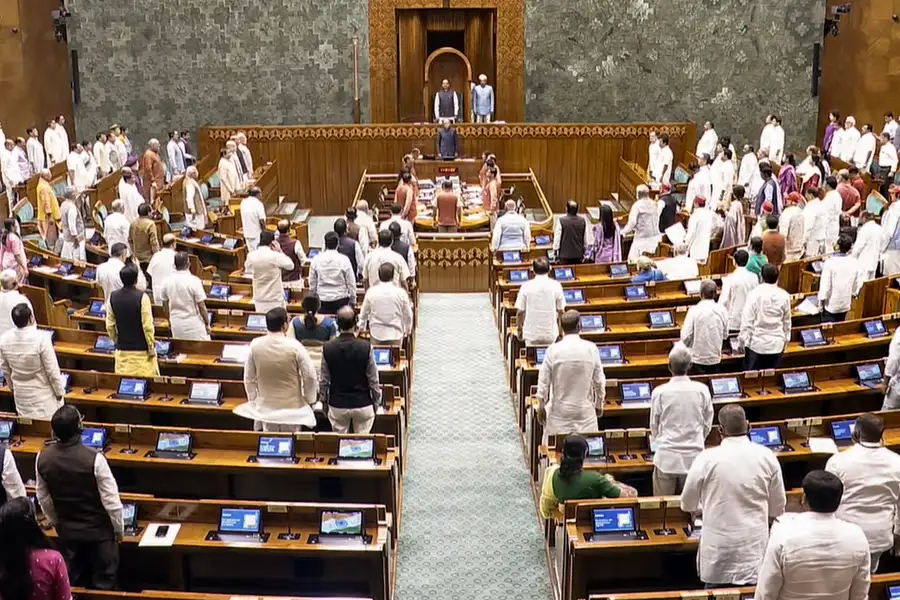
New Delhi: The Congress on Thursday questioned the Centre's decision to reconvene Parliament for a short sitting from November 30, with senior party leaders objecting to the timing and the government's approach. The party will hold a meeting of its parliamentary strategy committee on Friday, November 27, to discuss its response ahead of the proceedings.
The Union government has requested Lok Sabha Speaker Om Birla and Rajya Sabha Chairman CP Radhakrishnan to reconvene the two Houses on separate dates. Parliamentary Affairs Minister Kiren Rijiju said the Lok Sabha had been requested to meet on November 30, while the Rajya Sabha would reconvene on December 2.
The sittings may conclude on December 3, depending on the requirements of government business, Rijiju said in a post on X on Thursday.
The government has described the proposed proceedings as being for essential government business. However, the announcement comes amid speculation that the Centre could bring forward the Delimitation Bill and a Constitution Amendment Bill linked to the implementation of 33 per cent reservation for women in the Lok Sabha and state legislative assemblies.
The government has not officially confirmed whether these proposed legislations will be taken up during the sittings.
Congress objects to timing of Parliament sitting
Senior Congress leader and MP Manish Tewari criticised the government's decision, arguing that a special sitting should not be used as a substitute for a regular Winter Session.
"This request mocks the institution of Parliament. It is time for the Winter Session of Parliament to convene," Tewari said.
He added that a special session was meant to be convened during the inter-session period and should not replace a regular parliamentary session.
The Congress is scheduled to hold its parliamentary strategy committee meeting on November 27 to discuss its approach to the upcoming proceedings.
CPI(M) MP John Brittas also criticised the proposed sitting, alleging that the government's approach to mergers, takeovers and political realignments could be aimed at securing support for delimitation legislation.
Brittas argued that women's empowerment should not be used as a justification for what he described as electoral engineering. He also questioned the potential financial cost of the proposed sitting.
His remarks reflect opposition concerns that changes to parliamentary representation through delimitation could have significant political and regional consequences.
What the government has announced
According to Rijiju, the government has requested the presiding officers of both Houses to reconvene Parliament to transact essential government business.
The proposed schedule is:
- November 30: Lok Sabha to reconvene.
- December 2: Rajya Sabha to reconvene.
- December 3: Proceedings in both Houses may conclude, depending on business requirements.
The announcement follows a gap of more than 100 days since the Monsoon Session was adjourned sine die on August 13. The session had not been formally prorogued, according to reports.
Union Cabinet meeting scheduled for Friday
The Union Cabinet is also scheduled to meet at 1 pm on Friday, November 27, according to the reports provided. The meeting comes ahead of Parliament's proposed reconvening, with delimitation and women's reservation legislation expected to be among the key issues under discussion.
The Tribune has reported that the government is preparing draft legislation linked to delimitation and women's reservation. However, the precise legislative agenda for the parliamentary sittings has not been officially announced.
Why delimitation is at the centre of the political debate
The proposed parliamentary sitting has drawn attention because of the possible link between delimitation and the implementation of women's reservation.
The Constitution (106th Amendment) Act, 2023, commonly known as the Women's Reservation Act, provides for 33 per cent reservation for women in the Lok Sabha and state legislative assemblies. Its implementation is linked to a future delimitation exercise following the first census conducted after the Act's commencement.
Delimitation involves redrawing constituency boundaries and determining the allocation of seats based on population-related criteria. Any change in the distribution of parliamentary seats could have implications for the political representation of different states.
Opposition parties have raised concerns about the possible impact on states that have made progress in population control. Their argument is that states which successfully implemented family planning measures should not be disadvantaged in the distribution of parliamentary representation.
The Congress has previously said it is not opposed to delimitation itself but wants safeguards and discussions with all political parties before any exercise is undertaken. The party has also called for clarity on the government's proposal.
The immediate issue, therefore, is not just the timing of Parliament's reconvening but also the details of any legislation the government may introduce. Until the Centre formally announces its agenda and places the proposed bills before Parliament, their contents and the government's legislative plans remain uncertain.
Published: 26 Nov 2026, 09:07 pm IST


ABOUT THE AUTHOR

Disclaimer: Kindly avoid objectionable, derogatory, unlawful and lewd comments, while responding to reports. Such comments are punishable under cyber laws. Please keep away from personal attacks. The opinions expressed here are the personal opinions of readers and not that of Mathrubhumi.