
The CIA analysis describes how the Emergency had reshaped India’s political landscape by concentrating power in Indira Gandhi’s hands...
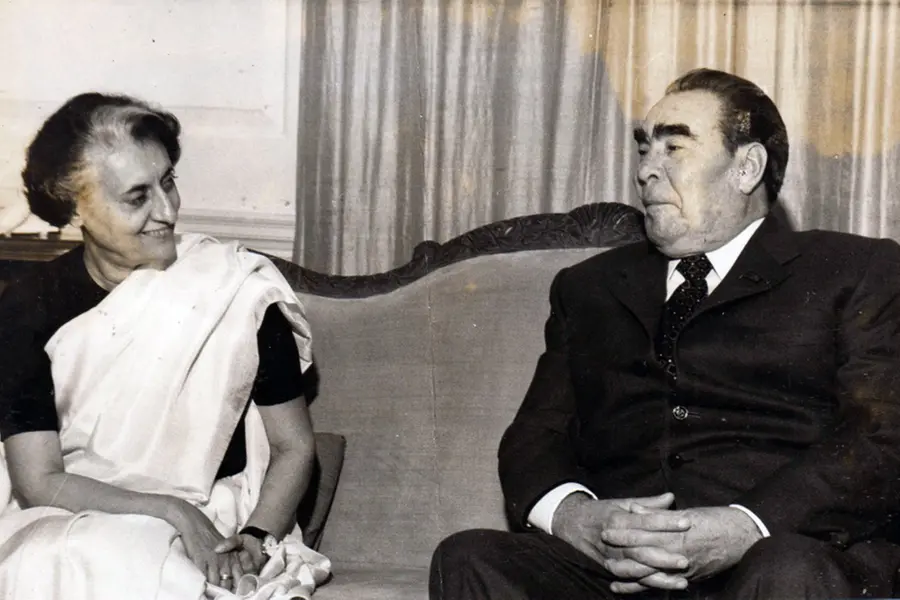
As India observes 50 years since the declaration of the National Emergency, a recently declassified CIA intelligence memorandum has revealed how the Soviet Union exerted influence over Indian politics during that period, particularly through its relationship with the Communist Party of India (CPI). The document, titled 'India: Present Scene, Future Prospects', was prepared on 24 May 1976 and was only declassified decades later.
The interagency intelligence memorandum, now available through the CIA’s Freedom of Information Act (FOIA) reading room, states that the CPI’s alignment with Prime Minister Indira Gandhi was not just coincidental, but reportedly directed by Moscow.
“Relations with the Soviet Union remain close, based in part on New Delhi's present reliance on Soviet military and economic assistance, but also on general agreement regarding the most important international issues. For their part, the Soviets openly praised Gandhi's decision to impose the emergency last summer. They have instructed the Communist Party of India (CPI), an informal ally of Gandhi's, to continue to support the prime minister on most issues,” the document reads.
When Gandhi imposed the Emergency in 1975, the CPI broke away from the rest of the Opposition and supported the move, unlike the CPM, which strongly opposed the Emergency.
The document also claimed that the Emergency had reshaped India’s political landscape by concentrating power in Indira Gandhi’s hands and sidelining dissenting voices.
It observed that CPI’s support would remain firm unless Indira veered sharply away from socialism or faced severe economic collapse, developments the CIA deemed unlikely at the time.
Personality cult
The report highlights the growing “personality cult” around Gandhi, noting: “In both government and party, Gandhi has made it clear that she wants individuals whose loyalty to her is beyond question. Development of a personality cult around the prime minister has been one of the more prominent features of the emergency.” It contrasts, the document says, Gandhi’s leadership with that of her father, Jawaharlal Nehru, who “rejected setting himself beyond criticism, fearing it would lead to dictatorship,” and who championed “the politics of consensus.”
India and Emergency
The document claims that most Indians seem to have accepted the national emergency. "The upturn in the Indian economy since the emergency was declared in June 1975, even though the emergency played only a minor role in it, has worked in Gandhi's favour. The largest fall harvest in history, due to a good monsoon last year, combined with tight monetary policies started in 1974, has kept food available and prices down for urban workers. Many Indians applaud the government's energetic drive against economic crimes, such as hoarding and black marketeering, and its efforts to reduce corruption and improve the functioning of the civil service. Businessmen are generally pleased by the curb on strikes and by the government's relatively favourable action toward the private sector. The rural landlords are pleased by the government's emphasis on discipline and with the high priority accorded to agriculture," an extract from the document reads.
The CIA’s observation, made at the height of the Cold War in the 1970s, adds a new layer to the understanding of foreign influence and internal political realignments during the Emergency (1975–77), one of the most controversial periods in independent India’s political history.
Published: 25 Jun 2025, 12:37 pm IST
Related Topics
Disclaimer: Kindly avoid objectionable, derogatory, unlawful and lewd comments, while responding to reports. Such comments are punishable under cyber laws. Please keep away from personal attacks. The opinions expressed here are the personal opinions of readers and not that of Mathrubhumi.
