
Congress veteran P Chidambaram has demanded to know “which portion” of Professor Ali Khan Mahmudabad’s tweet warranted arrest
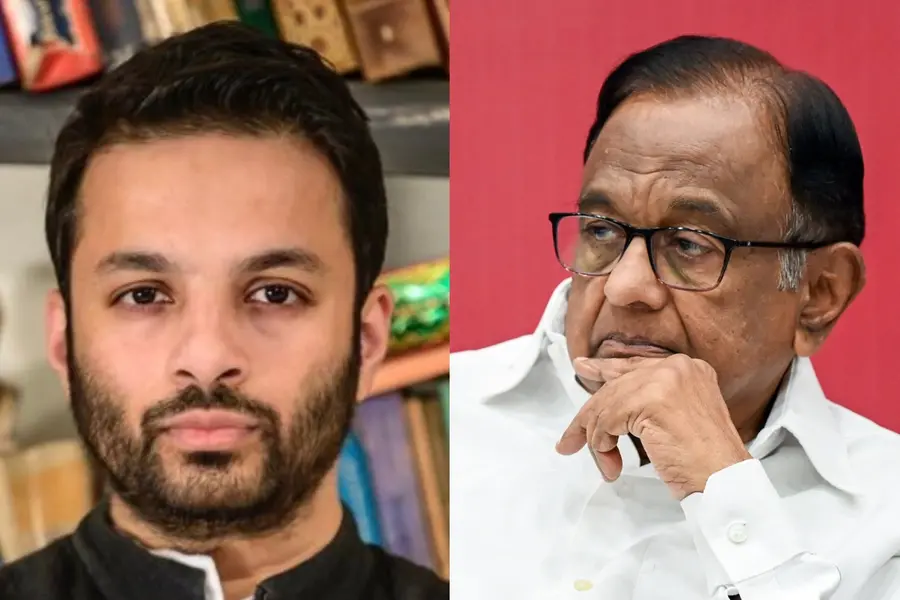
New Delhi: Ashoka University professor Ali Khan Mahmudabad spent a second night in police custody on Monday after Haryana Police arrested him for an X (formerly Twitter) post about Operation Sindoor, the cross-border strikes India carried out on 7 May in Pakistan and Pakistan-occupied Kashmir.
The detention has drawn sharp criticism from opposition leaders, free-speech advocates and academics, and will receive an urgent hearing in the Supreme Court this week.
The arrest
Police officers from Haryana’s Sonepat district, assisted by Delhi Police, picked up the 40-year-old political-science scholar at his South Delhi residence around 6 am on Sunday. They seized his phone and laptop before producing him in Tis Hazari courts, where a duty magistrate granted 48 hours of police custody to extract electronic evidence.
Two first information reports (FIRs) had been registered the previous evening under Indian Penal Code (IPC) sections 153-A (promoting enmity) and 505(2) (statements conducing to public mischief), along with section 13 of the Unlawful Activities (Prevention) Act (UAPA), which criminalises activities “prejudicial to the sovereignty and integrity of India.”
What he wrote
Mahmudabad’s 12 May post, still visible on his account at press time, warned that “counter-terror operations must never dull our moral compass; state power is answerable to the Constitution.” Haryana’s State Women’s Commission chair Renu Bhatia complained that the remarks “belittled women officers involved in Sindoor and stoked communal disharmony,” prompting police to open the case.
Supreme Court intervention
On Monday morning senior advocate Kapil Sibal mentioned Mahmudabad’s habeas-corpus petition before Chief Justice B. R Gavai and Justice Augustine George Masih, calling the tweet a “patriotic statement.” The bench agreed to list the matter for hearing on 20 or 21 May.
Political backlash
Former finance minister P Chidambaram led the criticism, asking in an X post: “Which portion of the statement did Haryana Police find objectionable and violative of law? Will someone from Haryana Police please enlighten us?” A clutch of student groups and faculty members at Ashoka University issued separate statements demanding the professor’s release and the repeal of “draconian” sedition-style statutes.
University response
Ashoka University said it was “ascertaining details of the case” and would “co-operate fully with police and local authorities.” Classes in the Political Science department were shifted online on Monday, and several faculty members wore black badges in protest.
Legal landscape
Criminal-law experts note that UAPA prosecutions for social-media commentary are rare and require the state to prove intent to threaten national integrity. If investigators fail to file a charge-sheet within 90 days, the accused may seek “default bail.” The police remand ends Tuesday evening, when prosecutors must either seek further custody or move Mahmudabad to judicial detention.
Mahmudabad’s detention comes amid a string of arrests across India over online comments on security operations and communal violence. Critics say the trend chills academic debate; the government insists it is safeguarding national unity during wartime. Operation Sindoor itself remains politically charged: the government hails the precision strikes as a decisive blow against terror infrastructure, while some commentators call for independent oversight of civilian impact.
The Supreme Court’s ruling later this week will decide whether the professor can return to campus or remain behind bars as the investigation proceeds.
Published: 19 May 2025, 06:45 pm IST
Related Topics
Disclaimer: Kindly avoid objectionable, derogatory, unlawful and lewd comments, while responding to reports. Such comments are punishable under cyber laws. Please keep away from personal attacks. The opinions expressed here are the personal opinions of readers and not that of Mathrubhumi.
