
The Indian Armed Forces successfully neutralised most of these drones through a combination of kinetic and non-kinetic means
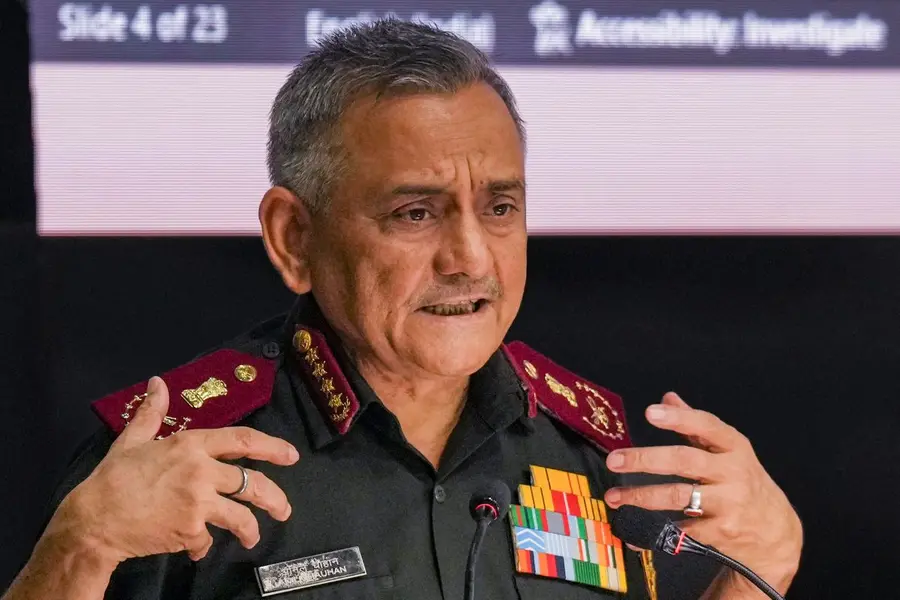
New Delhi: Chief of Defence Staff General Anil Chauhan emphasised on Wednesday that India must invest in and develop homegrown military capabilities to ensure its security, highlighting their critical role in both offensive and defensive operations. Speaking at an event in Delhi's Manekshaw Centre, General Chauhan asserted that relying on foreign technologies compromises preparedness, hinders production scaling, and leads to shortages of vital spare parts for sustained operations.
General Chauhan cited Operation Sindoor, launched on May 7, as a clear example of the importance of indigenous systems. He noted that the operation demonstrated the crucial role of indigenously developed counter-Unmanned Aircraft Systems (UAS), specifically built to suit India's unique terrain and operational requirements.
"Operation Sindoor has shown us why indigenously developed counter-UAS systems built for our terrain and our needs are crucial," General Chauhan stated. He further elaborated that dependence on foreign technologies weakens India's military readiness and makes its tactics predictable to adversaries due to the publicly known capabilities of these systems.
He also pointed out that during Operation Sindoor, on May 10, Pakistan deployed unarmed drones and loitering munitions, which failed to inflict any damage on Indian military or civil infrastructure. The Indian Armed Forces successfully neutralised most of these drones through a combination of kinetic and non-kinetic means, with some even recovered largely intact.
General Chauhan also discussed the evolving nature of drone warfare, describing their development as evolutionary but their employment as revolutionary in modern warfare. He observed that as the understanding of drone deployment and scope increased, the Army began utilising them in a revolutionary manner, as seen in various conflicts.
During his visit, the Chief of Defence Staff also toured an exhibition at the Manekshaw Centre showcasing the indigenisation of critical components for UAV and C-UAS systems that are currently imported from foreign original equipment manufacturers (OEMs).
With inputs from ANI
Published: 16 Jul 2025, 11:07 am IST
Related Topics
Disclaimer: Kindly avoid objectionable, derogatory, unlawful and lewd comments, while responding to reports. Such comments are punishable under cyber laws. Please keep away from personal attacks. The opinions expressed here are the personal opinions of readers and not that of Mathrubhumi.
