
The judgment comes in response to the Tamil Nadu government's appeal against the Madras High Court's decision to invalidate a March 2024 government order concerning reservation benefits for religious converts.
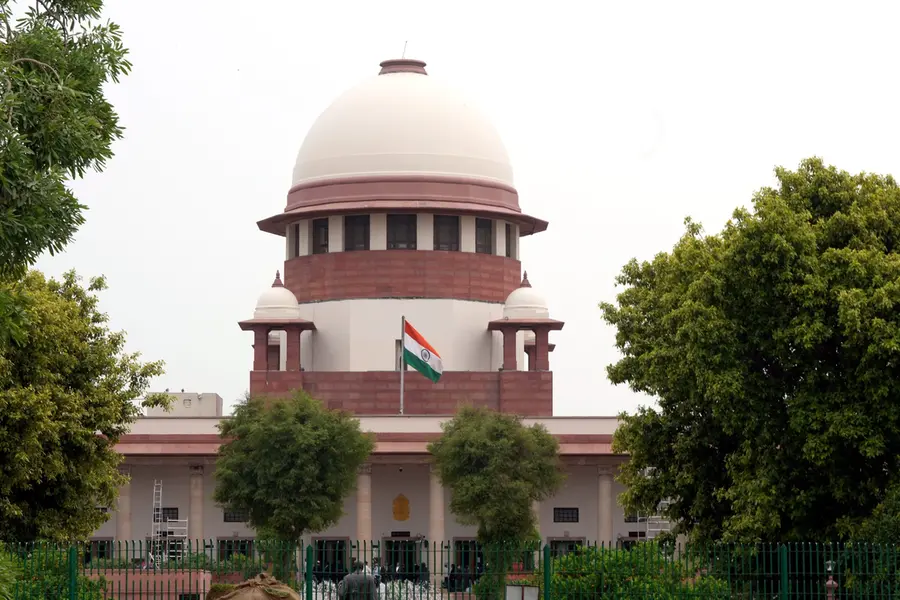
New Delhi: The Supreme Court on Thursday ruled that individuals converting from Hinduism to another religion cannot claim reservation under Article 16(4) of the Constitution solely on the basis of caste-related social backwardness associated with their status before conversion.
A bench comprising Justices Prashant Kumar Mishra and Shree Chandrashekhar delivered the judgment while considering the Tamil Nadu government's challenge to a Madras High Court ruling that had struck down the state's reservation policy for converts to Islam, according to legal news portal LiveLaw.
The apex court held that religious conversion does not automatically make an individual eligible for reservation benefits available to a particular notified Backwards Class community.
“Conversion to a non-Hindu social order doesn't by itself confer membership of any particular backward caste community,” the court observed, according to LiveLaw.
The ruling addresses the question of whether individuals who belonged to socially backward communities before converting to another religion can continue to claim reservation benefits based solely on their earlier caste status.
The bench clarified that social backwardness associated with a person's caste or community before conversion is not, by itself, sufficient to establish eligibility for reservation under Article 16(4) after conversion.
The court also referred to the Constitution (Scheduled Castes) Order, 1950, which restricts Scheduled Caste recognition to individuals professing Hinduism, Sikhism or Buddhism.
Under the Order, a person professing a religion other than these three cannot be recognised as belonging to a Scheduled Caste for the purposes of the constitutional framework.
The judgment comes in response to the Tamil Nadu government's appeal against the Madras High Court's decision to invalidate a March 2024 government order concerning reservation benefits for religious converts.
Under the order, individuals converting to Islam from Backward Classes (BC), Most Backward Classes (MBC), Denotified Communities (DNC) and Scheduled Castes (SC) were eligible to be classified as Backward Class Muslims (BCM) for reservation purposes.
Tamil Nadu has a separate 3.5 per cent reservation for Backward Class Muslims within its existing reservation framework.
The government order sought to extend eligibility under this category to individuals converting to Islam from the specified communities.
However, the Madras High Court struck down the order as unconstitutional, prompting the state government to challenge the decision before the Supreme Court.
The apex court's ruling reinforces the distinction between a person's social background before religious conversion and their eligibility for reservation under a legally recognised backward class category after conversion.
The judgment is expected to have implications for the implementation of reservation policies concerning religious converts in Tamil Nadu.
Importantly, the ruling does not establish a blanket prohibition on reservation benefits for all religious converts. Rather, it addresses the claim that an individual's pre-conversion caste status, by itself, establishes eligibility for reservation under Article 16(4).
Published: 15 Oct 2026, 11:23 am IST
ABOUT THE AUTHOR

Related Topics
Disclaimer: Kindly avoid objectionable, derogatory, unlawful and lewd comments, while responding to reports. Such comments are punishable under cyber laws. Please keep away from personal attacks. The opinions expressed here are the personal opinions of readers and not that of Mathrubhumi.