
Following the conclusion of the New Delhi summit, the chairship of BRICS will pass to China for the next gathering.
New Delhi: Prime Minister Narendra Modi on Sunday warned that growing international tensions are having a significant impact on the lives of ordinary people, as he called for stronger systems to help countries respond to sudden global crises.
Speaking at the concluding day of the two-day 18th BRICS Leaders' Summit at Bharat Mandapam, New Delhi, Modi said modern crises can quickly spread across borders and affect countries far beyond where they begin.
The summit brought together leaders from BRICS member states, including Chinese President Xi Jinping, Russian President Vladimir Putin and Iranian President Masoud Pezeshkian.
Addressing Sunday’s open session on "Resilience, Innovation, Cooperation and Sustainability", Mr Modi pointed out that modern crises quickly spread across borders.
"Today, the number of tensions in the world is constantly rising, having a significant and widespread negative impact on the lives of ordinary people," Modi said. "Pandemics, climate disasters, and supply chain disruptions have demonstrated that in today's interconnected world, no crisis remains confined to a single region. Therefore, we have placed special emphasis on enhancing resilience within the BRICS group. It is equally essential to identify challenges in a timely manner, remain prepared for them, and take immediate action."
Reflecting on India's chairship of the bloc, which began on 1 January 2026, the Prime Minister noted that member states had turned their shared vision into real progress. "Under India's presidency, we have focused our efforts on four pillars: resilience, innovation, cooperation, and sustainability," he stated. "I am pleased that, with your cooperation and support, we have been able to transform our shared vision into a win-win situation."
To turn these words into practical help for citizens, the summit agreed on concrete steps. Member nations established a new BRICS Integrated Early Warning System to detect and manage infectious disease outbreaks. They also finalised Early Warning Data Integration Guidelines for disaster management, alongside a new logistics supply chain framework to keep goods moving smoothly during emergencies. For young entrepreneurs, a BRICS incubator network will link up tech startups across member nations.
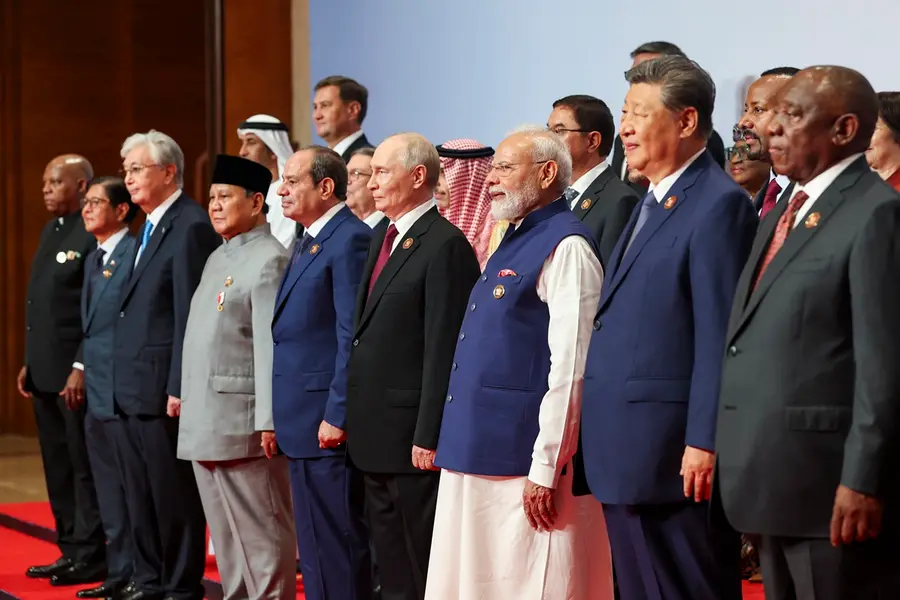
Modi also cautioned leaders against the "weaponisation of technology and critical minerals", warning that restricting these vital resources harms global progress. Before discussions began on Sunday, leaders gathered for an official family photograph, with Mr Modi standing at the centre alongside President Putin and President Xi.
Global Ggovernance Reform
The groundwork for Sunday's talks was laid during Saturday's opening sessions. Chairing a meeting on inclusive global governance, Modi made a strong case for developing countries, noting that the Global South often faces the brunt of international crises while being left out of major policy choices.
He stressed that developing nations must shift from being a "rule-taker to a rule-shaper". To achieve this, Modi urged that global bodies like the United Nations Security Council must reform to mirror modern world realities. He declared that the Global South must convert the "pyramid of privilege" into a "platform of partnership".
To help smaller nations build influence, India proposed practical training programmes in legal expertise and negotiation skills for young diplomats across the region. Pointing to the crucial role of sea transport, Modi also proposed setting up a Seafarers Emergency Support Network to protect commercial sailors during sudden crises.
Summing up his vision for global reform, Modi remarked that "as our future is shared, the right to shape that future must also be shared - from voice to impact, from privilege to partnership."
New Delhi Declaration
Saturday's deliberations ended with all member nations unanimously adopting the landmark New Delhi Declaration. Modi praised the agreement in a series of online posts, calling the outcome a sign of a BRICS grouping that is "wider in reach and stronger in purpose". He added that the declaration makes cooperation "more practical, development-oriented and responsive to the aspirations of the BRICS nations".
The declaration takes a clear stand on major global challenges. Leaders expressed deep concern over rising violence in West Asia, calling for restraint to avoid wider conflict. The bloc reaffirmed its firm support for a two-state solution to the Israeli-Palestinian conflict, pushed for stronger international backing for Palestine, and reminded Israel of its legal duty to allow humanitarian aid into Gaza.
BRICS leaders also voiced strong opposition to economic pressure tactics. The group demanded an immediate end to unilateral economic sanctions and expressed grave concern over rising protectionist policies. They warned that unexpected tariff hikes and trade barriers disguised as environmental measures are hurting developing economies and breaking essential supply chains.
Bilateral Engagements
India's presidency comes at a historic moment for the grouping, which now includes 11 full member states and 10 official partner nations. The core group of Brazil, Russia, India, China, and South Africa has expanded to include Egypt, Ethiopia, Indonesia, Iran, Saudi Arabia, and the United Arab Emirates. Partner countries including Malaysia, Vietnam, Nigeria, Kazakhstan, and Cuba also participated in the summit.
Together, the expanded bloc accounts for nearly 49.5 per cent of the global population, 40 per cent of world GDP, and 26 per cent of international trade.
Taking advantage of the gathering, Modi scheduled a series of high-level bilateral meetings on Sunday with leaders from South Africa, Kazakhstan, the Philippines, Egypt, Burundi, Uganda, and Nigeria. These talks build on side meetings held on Saturday, including discussions between Egyptian President Abdel Fattah El-Sisi and Russian President Putin, as well as South African President Cyril Ramaphosa's visit to the 'Bharat Innovates' exhibition.
Following the conclusion of the New Delhi summit, the chairship of BRICS will pass to China for the next gathering.
Published: 13 Sept 2026, 12:05 pm IST
Related Topics
Disclaimer: Kindly avoid objectionable, derogatory, unlawful and lewd comments, while responding to reports. Such comments are punishable under cyber laws. Please keep away from personal attacks. The opinions expressed here are the personal opinions of readers and not that of Mathrubhumi.
