
PM Modi held 15 bilateral meetings, notably advancing border talks with China and reinforcing partnerships with Russia.
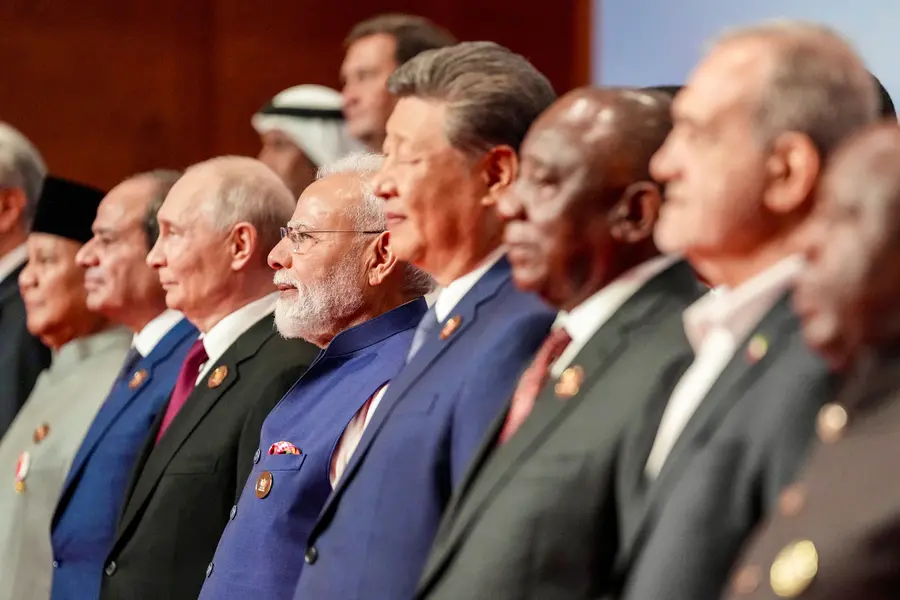
India won a diplomatic victory by rallying an 11-member group, torn asunder by differences of opinion on various issues, to sign a joint declaration at the 18th BRICS Summit, which it hosted this month in New Delhi.
India was able to forge consensus on a 140-paragraph declaration titled “Building for Resilience, Innovation, Cooperation and Sustainability” without diluting the concerns of the group’s diverse members. Prime Minister Narendra Modi, chairing BRICS for a fourth time, presided over a summit that many had expected to fracture along fault lines over Ukraine, Gaza, Iran and sanctions in West Asia.
By the time the last motorcade rolled out of the capital, India’s diplomatic managers had reason to celebrate. For a bloc that has often struggled to speak with one voice, this was seen as a diplomatic win for the host and for Modi personally. The smooth organisation of the meeting, attended by leaders including Vladimir Putin, Xi Jinping and Iran’s Masoud Pezeshkian, added to India’s diplomatic stature.
The declaration expressed deep concern over escalating tensions, urged maximum restraint, called for the protection of civilian and IAEA-safeguarded peaceful nuclear facilities, and demanded the uninterrupted flow of trade, supply chains and energy. It also criticised unilateral sanctions and tariff and non-tariff measures inconsistent with international law or World Trade Organisation rules, saying they would reduce global trade and worsen inequality.
The declaration encouraged dialogue over confrontation, language that Iran and the UAE, despite their tense relations, could endorse. By not naming or overtly condemning the United States or Israel, India positioned itself as a bridge-builder rather than a partisan. It also addressed Ukraine by urging that disputes be resolved through dialogue, consultation and diplomacy, without naming either Ukraine or Russia. Thus, on both the Ukraine conflict and the US-Israel war on Iran, the summit preferred principled but non-accusatory language, a necessary compromise for BRICS unity.
A recurring theme over the two days was the push to deepen economic integration among Global South economies. The declaration backed faster, cheaper and safer cross-border payment arrangements; greater use of local currencies in trade and investment; WTO reform; and the Strategy for BRICS Economic Partnership 2030. Leaders also opposed carbon border adjustment mechanisms, seen as a swipe at the European Union’s carbon tax, calling such measures protectionism dressed as environmental policy that disproportionately burdens developing economies.
Energy security emerged as another pillar, with the declaration calling for uninterrupted energy flows from diversified sources, resilient supply chains and explicit protection of critical energy infrastructure, including cross-border pipelines and routes. It recognised a broad energy mix, renewables, bioenergy, fossil fuels, nuclear energy, hydropower, hydrogen and storage, rather than prescribing a single transition path.
Closely linked was a warning against the “weaponisation” of critical minerals and technology. In his closing remarks, Modi cautioned that turning strategic resources and technologies into instruments of coercion could stall shared prosperity. Many observers saw this as a pointed reference to China’s dominance over rare-earth and critical-mineral supply chains.
Chinese President Xi Jinping, on his first visit to India in seven years, used the summit to unveil a five-point initiative covering open-source and inclusive AI; trade and investment facilitation; digital-industry cooperation; intelligent manufacturing; and science and technology talent development. India responded with visible caution, signalling that it would support collaboration but was in no hurry to embrace tariff cuts or open-market commitments that could give Chinese goods and technology freer entry.
Russian President Vladimir Putin proposed that BRICS accelerate work on an independent reinsurance mechanism and a joint grain market, arguing that the bloc had already built alternative channels for capital, labour and technology that could function regardless of outside pressure. The proposal, aimed at insulating trade, particularly shipping and energy exports, from Western-controlled insurance and sanctions regimes, was left for member states to take up voluntarily, with no firm implementation timeline announced.
Beyond the plenary sessions, India also gained from substantial bilateral diplomacy: 15 meetings in roughly 72 hours, with leaders ranging from Ethiopia’s Abiy Ahmed Ali and Malaysia’s Anwar Ibrahim to Xi Jinping, Putin and Iran’s Masoud Pezeshkian, as well as a meeting with UN Secretary-General António Guterres.
Modi and Xi held a substantive bilateral meeting and pledged renewed efforts to resolve their long-running border dispute, alongside talks on trade normalisation. Modi’s meeting with Putin reviewed cooperation in trade, defence, energy, space and skill mobility, and reaffirmed the India-Russia partnership.
With Pezeshkian, Modi stressed dialogue in West Asia, freedom of navigation and the safety of seafarers. With Abu Dhabi Crown Prince Sheikh Khaled bin Mohamed bin Zayed Al Nahyan, discussions highlighted strategic technology, energy and a proposed $11.5 billion greenfield aluminium investment in Odisha.
With South Africa, talks covered trade, mining, critical minerals, infrastructure, food security and digital technology. These were diplomatic advances rather than a single dramatic breakthrough, but collectively they reinforced India’s role as a trusted partner across competing geopolitical camps.
The New Delhi Declaration builds on the 17th BRICS Summit, held in Rio de Janeiro in 2025. That summit framed BRICS around strengthening Global South cooperation, more inclusive and sustainable governance, multilateralism, IMF and WTO reform, climate action and development finance. It also expressed concern over the rise in unilateral tariffs, while Putin proposed an independent BRICS settlement and depository system to expand trade in national currencies. The New Delhi Declaration carries that groundwork further, adding sharper language on critical minerals, technology weaponisation and West Asian de-escalation—issues that Rio’s text had not yet had to confront.
The principal takeaway is that India transformed a potentially divided summit into a usable consensus. It did not resolve the wars in Ukraine or West Asia, nor did it establish a BRICS currency or common market. Its success lay in more realistic diplomacy: maintaining unity amid disagreement, articulating Global South concerns and creating pathways for cooperation without sacrificing national sovereignty.
(The views expressed are personal. They do not necessarily reflect Mathrubhumi's stand.)
Published: 18 Sept 2026, 06:24 pm IST
Related Topics
Disclaimer: Kindly avoid objectionable, derogatory, unlawful and lewd comments, while responding to reports. Such comments are punishable under cyber laws. Please keep away from personal attacks. The opinions expressed here are the personal opinions of readers and not that of Mathrubhumi.
