
Delhi`s air quality severely impacted post-Diwali with AQI reaching `very poor` and `severe` levels. Authorities consider emergency measures, including GRAP-II implementation.
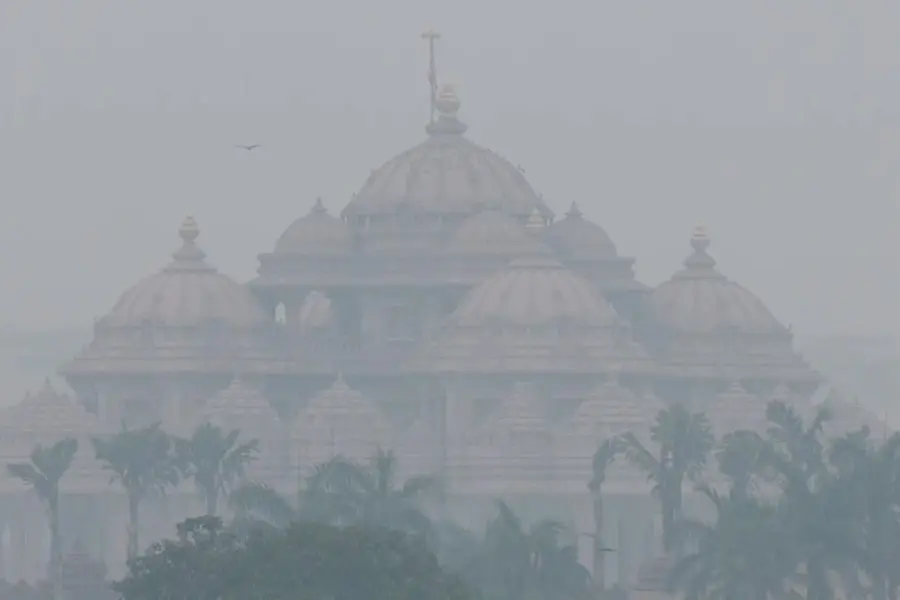
New Delhi: Residents of the national capital woke up on Wednesday to a thick layer of smog, a grim aftermath of Diwali celebrations, with air quality dropping to dangerous levels. At 5:30 a.m., the Air Quality Index (AQI) stood at 345, placing it in the 'very poor' category, according to data from the Central Pollution Control Board (CPCB).
Despite restrictions imposed by the Supreme Court on firecrackers, widespread violations were reported across Delhi and the National Capital Region (NCR) on Diwali night, contributing to the pollution spike.
On Tuesday, several monitoring stations recorded AQI levels exceeding 500, classified as 'severe'. The 24-hour average AQI climbed to 351, up from 345 on Monday.
The pollution spike comes as no surprise, as Delhi has historically grappled with worsening air quality during the post-monsoon and winter months. Low wind speeds, combined with emissions from firecrackers and stubble burning in neighbouring states like Punjab and Haryana, contribute significantly to the toxic haze that envelops the city.
To tackle the deteriorating conditions, the Commission for Air Quality Management (CAQM) has hinted at triggering Stage II of the Graded Response Action Plan (GRAP). Measures under GRAP-II include:
- A ban on diesel generator use (except for essential services)
- Stricter construction and demolition controls
- Enhanced dust suppression
- Special task forces in pollution hotspots to regulate traffic and emissions
Data from the CPCB over the past four years confirms that Diwali 2025 ranks among the most polluting in recent memory. The figures underscore a worrying pattern, a recurring plunge in breathable air quality directly linked to unchecked firecracker usage.
Meanwhile, on Tuesday, with particulate matter (PM) 2.5 concentrations averaging 488 micrograms per cubic meter (µg/m3) post Diwali, city doctors reported a rise in cases of respiratory issues, eye irritation, flu, as well as joint pain among others.
As the smog thickens, health experts have once again urged citizens, particularly children, the elderly, and those with respiratory conditions, to limit outdoor exposure and wear protective masks when necessary.
IANS inputs
Published: 22 Oct 2025, 07:47 am IST
Related Topics
Disclaimer: Kindly avoid objectionable, derogatory, unlawful and lewd comments, while responding to reports. Such comments are punishable under cyber laws. Please keep away from personal attacks. The opinions expressed here are the personal opinions of readers and not that of Mathrubhumi.
