
A sudden alliance U-turn by Congress days before BMC polls has stunned Mumbai workers, triggered internal anger, and reshaped the civic battle.
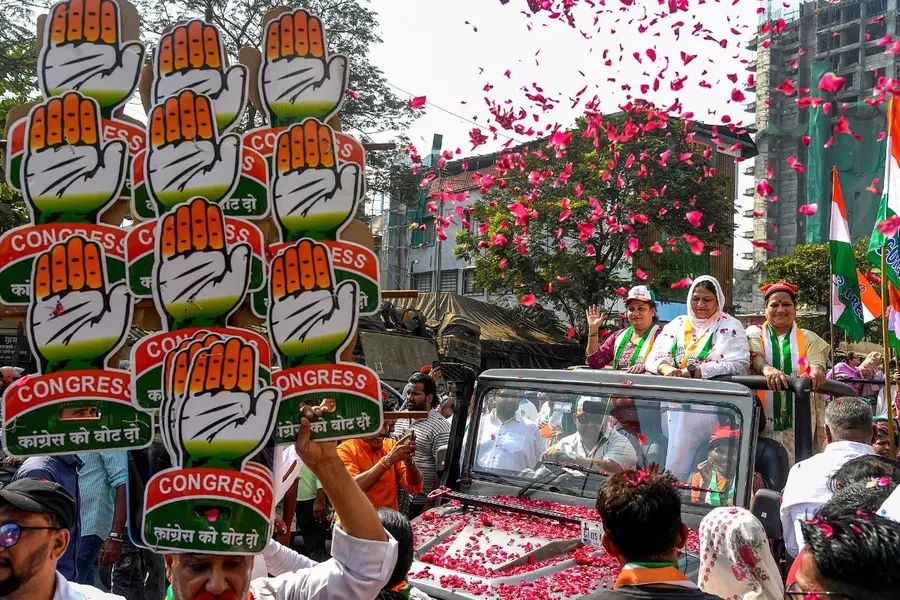
With barely days left before nominations close for the January 15 Brihanmumbai Municipal Corporation (BMC) elections, the Congress has sprung a dramatic pre-poll surprise—one that has rattled its own Mumbai cadre and exposed deep anxieties within the party’s urban organisation.
After repeatedly declaring that it would contest all 227 BMC wards on its own, the Congress abruptly reversed course on Sunday, opting instead for a last-minute alliance with smaller parties.
The party sealed a seat-sharing pact with Prakash Ambedkar-led Vanchit Bahujan Aghadi (VBA), allotting it 62 wards, while the Rashtriya Samaj Paksha (RSP) received 10 seats and the Republican Party of India (Gavai faction) was given two.
What has particularly unsettled local Congress leaders is not just the timing of the decision but the nature of the seat distribution. Several of the wards handed over to alliance partners lie in areas traditionally considered Bharatiya Janata Party (BJP) strongholds, where Congress leaders had been preparing their own candidates. The sudden transfer of these seats, without extensive consultation with city-level leadership, has left many party workers “stunned” and demoralised, party sources told local media.
“The decision to give away so many wards, especially in areas like Prabhadevi-Mahim where there is no significant Dalit concentration, to a civic newcomer like the VBA is beyond comprehension,” a senior state Congress leader said, reflecting widespread discontent within the Mumbai unit.
For many in the party, the episode has revived old complaints about centralised decision-making and the Congress’ chronic struggle to assert itself in urban Maharashtra. “For years, Congress politics here remained within fixed frameworks and despite alliance ties, the party often played a secondary role,” the leader added.
Defending the move, Mumbai Congress president Varsha Gaikwad said the alliance was rooted in a shared ideological commitment to “protecting democracy and safeguarding the Constitution”. She said the coalition would focus on issues affecting Mumbai’s residents and announced that a joint manifesto would be released soon.
Congress spokesperson Sachin Sawant also sought to frame the alliance as a long-term political investment. The leadership, he said, wanted to “take along like-minded parties and strengthen secular forces”, adding that the strategy “may pave the way for future politics in Maharashtra”.
The tie-up marks a sharp departure from Congress’ earlier public stand that it would go solo in the BMC elections. The sudden U-turn comes amid rapidly shifting political equations in Maharashtra’s civic arena, including the reunion of the Thackeray brothers and intense manoeuvring among rival Nationalist Congress Party factions.
While the Congress leadership appears to be betting on tactical alliances to consolidate non-BJP votes, party workers fear the move underscores organisational weakness rather than strength. Many see the decision as an admission that the party lacks the confidence to directly counter the BJP–Eknath Shinde-led Sena alliance on its own turf.
By partnering with the VBA, RSP and others, the Congress is attempting to stitch together a broader secular front—even at the cost of unsettling its own rank and file and tearing up its traditional campaign playbook.
The BJP, meanwhile, has dismissed the Congress’ alliance experiment as a face-saving exercise, claiming the party does not have enough credible candidates to field across Mumbai’s 227 wards.
Published: 30 Dec 2025, 11:55 am IST
Related Topics
Disclaimer: Kindly avoid objectionable, derogatory, unlawful and lewd comments, while responding to reports. Such comments are punishable under cyber laws. Please keep away from personal attacks. The opinions expressed here are the personal opinions of readers and not that of Mathrubhumi.
