
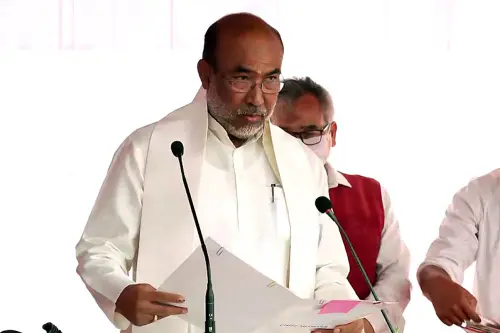
New Delhi: Manipur Chief Minister N. Biren Singh’s public apology for the communal violence in the state has elicited contrasting reactions from the Meitei and Kuki communities. While the Meitei groups welcomed the gesture as a step toward reconciliation, Kuki organizations dismissed it as insufficient and demanded the Chief Minister’s resignation.
At a press conference on Wednesday, Biren Singh expressed regret for the violence that has plagued Manipur. “I apologized as part of my sincere efforts to provide relief to the people,” he said, emphasizing his commitment to restoring peace.
Singh also took the opportunity to criticise the Congress party, accusing it of politicising his apology. He questioned Congress leader Jairam Ramesh’s criticism of the BJP, asking why previous Prime Ministers, including P.V. Narasimha Rao and I.K. Gujral, did not visit Manipur or apologize during similar communal conflicts in the 1990s.
Meitei community’s response
Leaders from the Meitei community have largely welcomed the apology. Khuraijam Athouba, spokesperson for the Coordinating Committee on Manipur Integrity (COCOMI), called it a positive step, stating, “The Chief Minister is taking responsibility, which is why he apologized.” Nando Luwang, head of the All Manipur United Clubs Organization, described the apology as an attempt by the government to restore peace and heal divisions.
Kuki Community’s Reaction
In contrast, Kuki groups have dismissed the apology, accusing the Chief Minister of failing to maintain law and order. Ginza Vualzong, spokesperson for the Indigenous Tribal Leaders Forum, demanded Singh’s resignation, stating, “The Chief Minister has been unable to ensure the safety and security of the people.” Lun Kipgen, spokesperson for the Committee on Tribal Unity, called the apology a political tactic to deflect criticism.
Historical context and political blame game
Biren Singh highlighted historical communal violence in Manipur, referencing the Kuki-Naga clashes of 1992–1997, which claimed over 1,300 lives, and the Kuki-Meitei conflicts of 1997–1998, which resulted in 350 deaths. He questioned Congress’s handling of those crises, suggesting that the party’s failures had contributed to Manipur’s ongoing tensions.
The Chief Minister’s apology has further polarised Manipur’s communities, with the Meitei groups seeing it as a step toward reconciliation and the Kuki factions demanding accountability through resignation. As political blame continues to overshadow efforts at peace, the path to restoring harmony in Manipur remains fraught with challenges.
Published: 02 Jan 2025, 08:04 am IST
Related Topics
Disclaimer: Kindly avoid objectionable, derogatory, unlawful and lewd comments, while responding to reports. Such comments are punishable under cyber laws. Please keep away from personal attacks. The opinions expressed here are the personal opinions of readers and not that of Mathrubhumi.
