
The opposition INDIA bloc accuses the Election Commission (EC) of using the SIR to benefit the ruling NDA, citing concerns about voter exclusion, particularly impacting those not listed in 2003 rolls
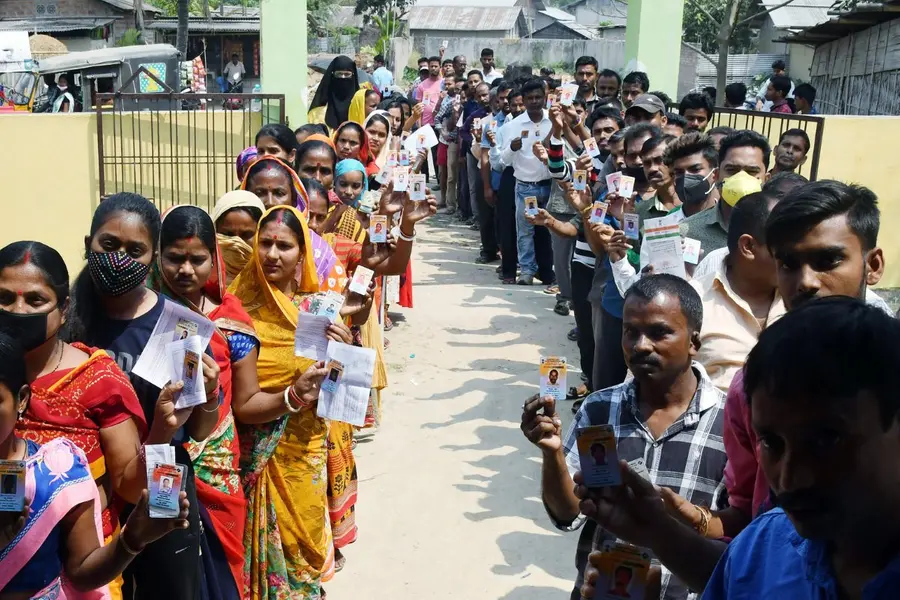
As Bihar gears up for its assembly elections later this year, the Special Intensive Revision (SIR) of electoral rolls has turned into a major political flashpoint.
While the Election Commission says it's a routine and essential update, opposition leaders allege it’s a ploy to influence the outcome of the polls.
Here’s a detailed look at what the SIR involves, why it’s facing criticism.
What is the Special Intensive Revision (SIR)?
On 24 June, the Election Commission (EC) issued a notification to begin a large-scale door-to-door verification of voter records in Bihar. This process, called the Special Intensive Revision, targets all of the state’s 8 crore voters.
Under the SIR:
- Every voter must sign enumeration forms (in duplicate) which already include their names, addresses, and photographs.
- Voters are asked to return the forms along with a new photograph and valid proof of residence.
- A key point of contention: Voters whose names were not on the 2003 electoral rolls must provide extra documents to be included.
According to the EC, the purpose of the revision is to ensure that all eligible citizens can vote. The last intensive revision in Bihar was held in 2003.
The task is being carried out by a massive network: over 1 lakh booth-level officers (BLOs), backed by 4 lakh volunteers and thousands of booth-level agents (BLAs) nominated by political parties.
Why has it sparked a political storm?
The opposition INDIA bloc, led by RJD leader Tejashwi Yadav, has strongly criticised the SIR. They claim the exercise is designed to "benefit the ruling NDA", and have taken the matter to the Supreme Court, which will hear petitions on 10 July.
Opposition parties argue that the EC is attempting to "wrongfully delete" voters who may not support the NDA, similar to what they allege happened in Maharashtra.
Tejashwi Yadav questioned the EC’s timing
“Why has this exercise been ordered only in Bihar when in 2003 a similar revision of electoral rolls was undertaken for the entire country? And why just before the assembly polls? If it was so urgent, why was the work not started immediately after last year's Lok Sabha elections?”
Support also came from CPI(ML) leader Dipankar Bhattacharya, who called the process a "logistical nightmare". He noted that it was "almost impossible to complete, by July 25, the exercise that involves more than eight crore voters, most of them living in areas that are ravaged by floods during monsoons."
What are the main worries?
Several concerns have been raised over the nature and timing of the SIR. These include:
- Why only Bihar?
Critics want to know why Bihar has been singled out for such a major exercise, especially so close to the state elections.
- Fear of targeted deletion
Opposition leaders claim the process is aimed at removing voters who may not support the NDA.
- Heavy paperwork for many
More than 3 crore people who weren’t listed in 2003 must now provide additional documents to stay on the rolls.
- New requirements for young voters
Those born after 1987 are being asked to provide parents’ date and place of birth – which many say is difficult and unnecessary.
- Common ID not accepted
Documents like Aadhaar cards or MNREGA job cards, typically accepted elsewhere, are reportedly not valid under the current process.
- Power of Electoral Officers
The authority granted to Electoral Registration Officers (EROs) to decide on "claims and objections" is seen by some as open to misuse.
There are also concerns about a clause that lets EROs refer suspected foreign nationals to the authorities under the Citizenship Act, 1955. This has caused fear in areas like Seemanchal, which borders Nepal, that certain communities might be unfairly targeted.
What is the Election Commission’s stand?
The EC has said the revision is legal and constitutional, and that it aims to make the electoral rolls more accurate and inclusive. So far, about 2.88 crore voters (roughly 36.5 percent) have been covered by the door-to-door verification.
Despite this, citizens have raised problems with how the process is being carried out.
One resident from Muzaffarpur, who asked not to be named, shared a troubling experience:
"I was aghast to see that my son's address was listed as a cremation ground ('shamshaan ghat'). My daughter-in-law's address was left blank."
The matter is now with the Supreme Court, which is set to hear a batch of petitions, including a joint plea by Congress, NCP (Sharad Pawar), Shiv Sena (UBT), Samajwadi Party, JMM, CPI, and CPI (ML), challenging the EC’s decision to conduct the SIR before the state elections.
A protest march to the EC office in Patna was also led by Congress leader Rahul Gandhi on Wednesday.
(With agency inputs)
Published: 09 Jul 2025, 04:13 pm IST
Related Topics
Disclaimer: Kindly avoid objectionable, derogatory, unlawful and lewd comments, while responding to reports. Such comments are punishable under cyber laws. Please keep away from personal attacks. The opinions expressed here are the personal opinions of readers and not that of Mathrubhumi.
