
Party sources suggested that additional decisions related to Nitish Kumar’s current role may be announced in the coming days.
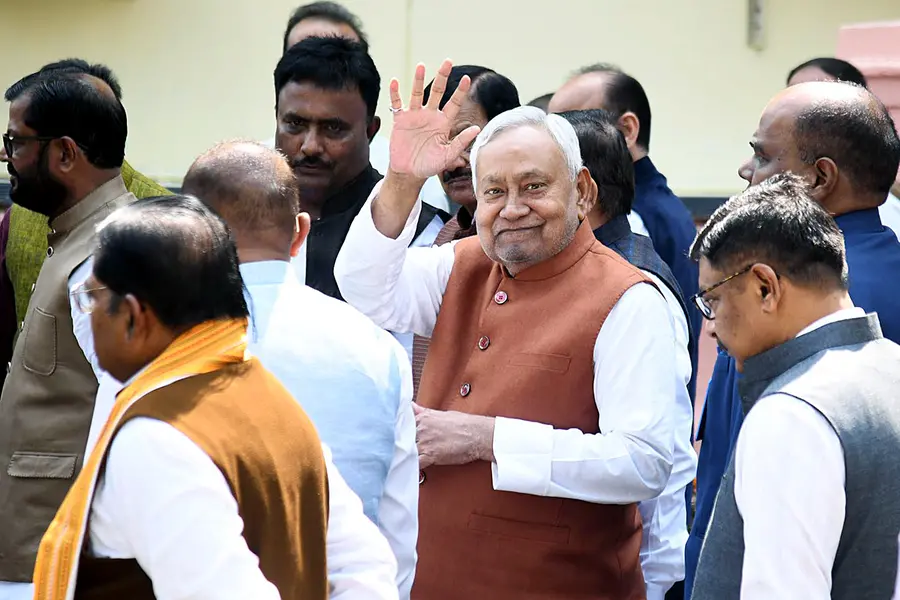
Bihar Chief Minister Nitish Kumar on Monday resigned as a Member of the Legislative Council (MLC), complying with constitutional requirements after his recent election to the Rajya Sabha. The move was formalised when JD(U) MLC Sanjay Gandhi submitted his resignation letter to the Council secretariat.
The development comes on the final day of the constitutional deadline, marking a procedural but politically significant step in Bihar’s leadership framework.
Constitutional rule triggers resignation
Nitish Kumar was elected to the Rajya Sabha on March 16, which required him to vacate his seat in the state legislature within 14 days. March 30 (Monday) was the last day to meet this requirement.
Under the Prohibition of Simultaneous Membership Rules, 1950—framed under Articles 101 and 190 of the Constitution—an individual cannot hold membership in both Parliament and a state legislature at the same time. One of the positions must be relinquished within the stipulated period.
Cabinet Minister Vijay Kumar Chaudhary confirmed the resignation, indicating that the step was in line with constitutional provisions.
Signals of wider political movement
The resignation has drawn attention within political circles, with indications that further changes could follow. Party sources suggested that additional decisions related to Nitish Kumar’s current role may be announced in the coming days.
Separately, BJP leader Nitin Nabin is also expected to resign from the Bihar Assembly. His resignation is likely to be submitted by state BJP president Sanjay Sarogi after a delay caused by official engagements in Delhi.
Both developments were anticipated as part of compliance with rules governing dual membership.
Published: 30 Mar 2026, 10:51 am IST
Related Topics
Disclaimer: Kindly avoid objectionable, derogatory, unlawful and lewd comments, while responding to reports. Such comments are punishable under cyber laws. Please keep away from personal attacks. The opinions expressed here are the personal opinions of readers and not that of Mathrubhumi.
