
The Supreme Court has rejected the Centre's plea to restrict its OBC creamy-layer ruling to future recruitments, granting relief to eligible candidates in earlier selection processes.
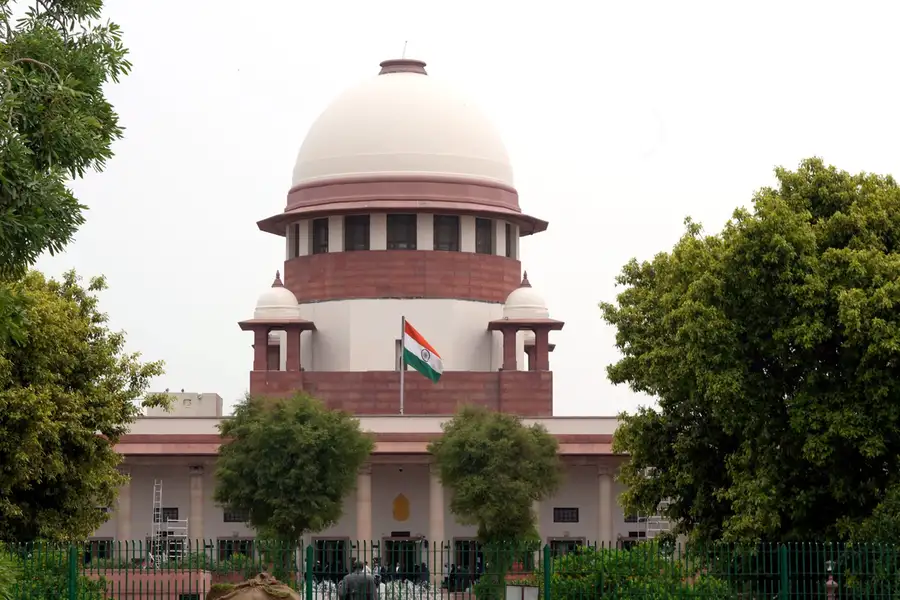
The Supreme Court has refused to let the benefits of its ruling on OBC creamy-layer classification remain confined to future recruitment exercises, clearing the way for eligible candidates in earlier selection processes to receive reservation benefits and consequential job allotments.
In a significant relief for Other Backward Classes (OBC) candidates, the court on Friday rejected the Centre's request to apply its March 11, 2026 verdict prospectively, holding that there was no convincing justification to delay its implementation.
The decision means candidates covered by the ruling can claim the benefits of the OBC non-creamy layer category in the selection processes they had participated in.
A bench comprising Justices PS Narasimha and R Mahadevan also extended the government's implementation deadline by two months, in addition to the six months it had originally been granted in March.
Why the Supreme Court rejected the Centre's plea
The Centre had approached the Supreme Court seeking the application of Article 142 of the Constitution to restrict the March verdict to future cases.
It argued that extending the ruling to previous and ongoing recruitment exercises could affect individuals who were not parties to the litigation and trigger what it described as "complete administrative chaos".
The bench, however, was not persuaded. It observed that granting relief to the candidates before it would neither disturb the seniority of other individuals nor require reopening recruitment processes and appointments already completed.
The court reiterated that the candidates qualified for OBC non-creamy layer benefits and were entitled to reservation, consequential placement, and allotment of posts.
Parents' salary cannot be the sole criterion
At the heart of the dispute is how to determine an OBC candidate's creamy-layer status when their parents work in the private sector or a public sector undertaking (PSU).
In its March 11 ruling in Union of India v. Rohith Nathan, the Supreme Court clarified that a parent's salary or employment income from a private company or PSU alone cannot determine whether their child belongs to the creamy layer.
Reaffirming this position, the bench said authorities must assess the classification in accordance with the 1993 Office Memorandum.
This requires authorities to consider the parent's post status and category alongside the prescribed income or wealth criteria, rather than relying solely on salary.
The latest order reinforces the principle that employment income alone cannot automatically disqualify an otherwise eligible OBC candidate from accessing reservation benefits.
What happens to pending OBC creamy-layer cases?
The Supreme Court also addressed the position of similarly placed candidates whose claims are currently pending before courts, tribunals or other competent authorities.
It said such claims could be examined individually on their merits, with the March judgment's interpretation of the 1993 Office Memorandum and a 2004 letter serving as the basis for consideration.
The bench clarified that it was not expressing any opinion on the outcome of these separate proceedings.
The court also referred to a December 20, 2016 communication issued by the Department of Personnel and Training.
The letter had made it clear that selections through the Civil Services Examination, 2016 were subject to the outcome of the pending appeals.
While reiterating the government's authority to formulate reservation and creamy-layer policies in accordance with constitutional principles, the bench declined to prescribe a deadline for determining equivalence between posts or consulting stakeholders.
It said these decisions fell within the executive and legislature's domain.
The court also made it clear that its directions would not unsettle completed selections, appointments, seniority arrangements or promotions, providing a degree of protection to existing service-related positions.
Published: 06 Nov 2026, 05:29 pm IST


ABOUT THE AUTHOR

Related Topics
Disclaimer: Kindly avoid objectionable, derogatory, unlawful and lewd comments, while responding to reports. Such comments are punishable under cyber laws. Please keep away from personal attacks. The opinions expressed here are the personal opinions of readers and not that of Mathrubhumi.