
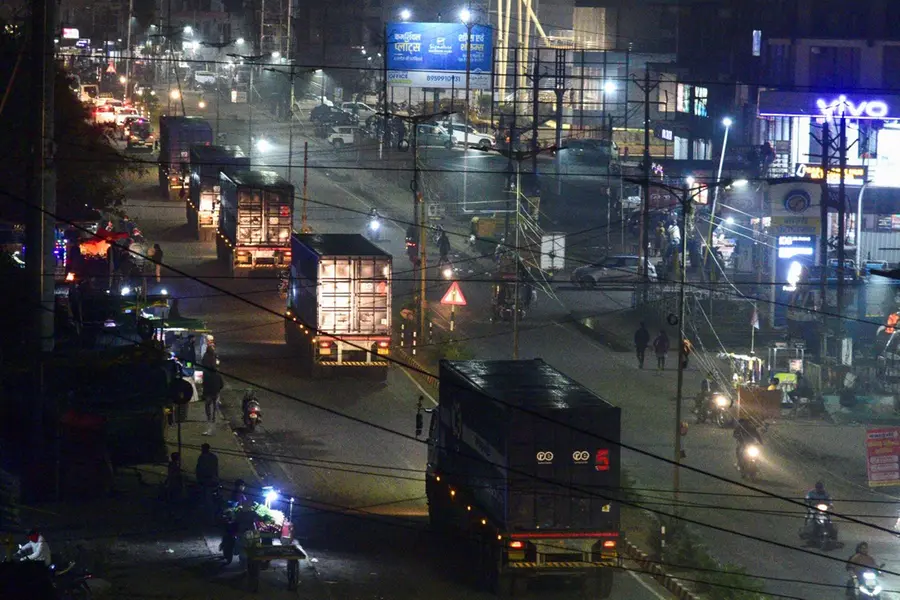
Bhopal: Amid protests and concerns over the disposal of hazardous waste from the Union Carbide factory, Madhya Pradesh Chief Minister Mohan Yadav addressed the issue on Thursday. He assured the public that the waste was not poisonous and urged that politics should not be made out of the situation. Speaking at a press conference in Bhopal, Yadav said, "Scientific studies have been carried out, and a safe technology will be used in the incineration process. Politics should not be done over this issue."
He further added that Kailash Vijayvargiya, the guardian minister of Dhar, would personally speak to the residents in Dhar to clarify that the waste "was not at all poisonous or harmful."
In a significant step, 377 tons of waste from the defunct Union Carbide factory in Bhopal was moved to Dhar district for disposal. The waste was transported on Wednesday evening in 12 sealed container trucks via a 'green corridor' to a factory in the Pithampur industrial area, about 250 km from Bhopal. The trucks arrived at the disposal unit around 4:30 am on Thursday after travelling under tight security.
Despite the official assurances, protests erupted in Pithampur, where residents voiced concerns about the safety of the waste disposal process. The protesters, led by a local organisation, argued that the disposal in Pithampur could be dangerous for both the people and the environment. They have called for a 'Pithampur Bandh' on Friday to express their opposition.
The Bhopal gas tragedy
The waste being disposed of is linked to the Bhopal gas tragedy, one of the worst industrial disasters in history. The disaster occurred on the night of December 2-3, 1984, when toxic methyl isocyanate (MIC) gas leaked from the Union Carbide pesticide factory. At least 5,479 people were killed, and many others have suffered long-term health issues since then.
40 years later, the waste from the factory site has yet to be fully cleared. The Madhya Pradesh High Court had previously expressed dissatisfaction with the slow progress of the cleanup, urging authorities to act swiftly. On December 3, 2024, the High Court set a four-week deadline for shifting the waste, warning that contempt proceedings could follow if the deadline was not met. The court also noted the "state of inertia" that had persisted for decades despite orders from higher courts.
Safety measures for waste disposal
According to Bhopal Gas Tragedy Relief and Rehabilitation Department Director Swatantra Kumar Singh, the waste will undergo incineration at the Pithampur facility. The incinerator will use special four-layer filters to prevent the release of harmful smoke into the surrounding air. Singh said, "If everything is found to be fine, the waste will be incinerated within three months. Otherwise, it might take up to nine months."
The residue, or ash, left after incineration will be thoroughly examined to ensure no harmful elements remain. If it is confirmed that the waste has been fully neutralised, the ash will be covered by a two-layer membrane and buried to prevent any contact with the soil or water.
A team of experts, under the supervision of the Central Pollution Control Board and State Pollution Control Board, will oversee the entire process, ensuring that the disposal is safe and in line with environmental standards.
Despite the reassurances from the authorities, local concerns about the safety of the disposal process remain high. The protests and the calls for a bandh in Pithampur highlight the community's apprehensions about the long-term effects of disposing of the Union Carbide waste in the region. However, the Madhya Pradesh government is moving ahead with the disposal, citing scientific evidence and expert oversight to address safety concerns.
(Agency inputs)
Published: 02 Jan 2025, 03:59 pm IST
Related Topics
Disclaimer: Kindly avoid objectionable, derogatory, unlawful and lewd comments, while responding to reports. Such comments are punishable under cyber laws. Please keep away from personal attacks. The opinions expressed here are the personal opinions of readers and not that of Mathrubhumi.
