

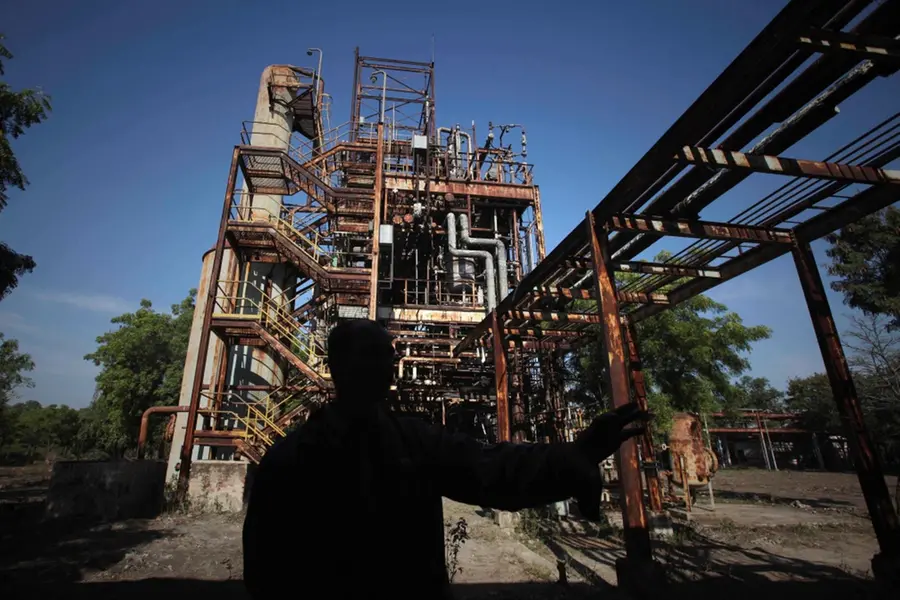
Bhopal: In a move that promises to finally address decades-long uncertainty in Bhopal, Swatantra Kumar Singh, Director of Gas Relief and Rehabilitation, spoke to Mathrubhumi English and clarified that the incineration procedure will be completely safe following the recent disposal of 337 metric tonnes of chemical waste from the Union Carbide plant in Bhopal.
Singh’s statement came after the toxic waste, which has remained a lingering threat since the infamous 1984 Bhopal gas tragedy, was transported under strict security measures to the Pithampur treatment, storage, and disposal facility (TSDF) in Madhya Pradesh.
The long-awaited operation, which saw the waste being packed in 12 special containers, was executed in compliance with the standards set by the Central Pollution Control Board (CPCB). Each container, equipped with leak-proof and fire-resistant features, was accompanied by police security, ambulances, fire brigades, and a quick response team. The transportation of the waste was conducted smoothly via a green corridor from Bhopal to Pithampur, where the incineration process is set to take place.
“We have transported 337 metric tonnes of the waste along with some other materials used during the transport. These materials included sand mixed with the waste and personal protective equipment (PPE) kits, all of which will be incinerated properly,” Singh explained to Mathrubhumi. The containers were monitored by GPS during transit to ensure their safe arrival.
Where is it being incinerated and how:
The incineration is taking place at the Pithampur facility, which has been in operation since 2006. It is one of 42 such plants across the country designed for the safe disposal of hazardous industrial waste. Singh reassured the public, saying, “The Pithampur facility operates under CPCB’s stringent guidelines. The incineration process here will break down the chemicals completely, ensuring no harmful elements are released into the air or water.”
At Pithampur, the waste is incinerated at high temperatures, effectively neutralizing the hazardous chemicals and rendering them non-toxic. The facility has the capability to safely burn chemical waste without releasing harmful by-products into the environment. Singh assured that any remaining residues after incineration will be safely disposed of in the TSDF (Treatment, Storage, and Disposal Facility) using a double composite liner system, designed to prevent contamination.
Singh also referred to the trial run conducted in 2015, when 10 metric tonnes of waste were incinerated at the Pithampur facility. According to CPCB’s findings, the process complied with national emission standards, and no harmful residues were found in the environment following the disposal.
Why did it take 40 years to clear the danger?
Singh pointed out that the delay was due to the extensive legal proceedings. He elaborated, "The High Court deliberated on different hearing dates with experts."
Concerns over health and environmental impact:
Concerns about potential health and environmental impacts were raised due to the nature of the chemical waste. Singh responded by sharing the findings of a health survey conducted by experts from AIIMS, Bhopal, and ICMR. The survey showed that the incidence of skin diseases and respiratory issues in nearby villages was within normal levels. “The percentage of the above diseases is at a normal level,” Singh stated, dismissing concerns as misleading.
Published: 02 Jan 2025, 05:16 pm IST
ABOUT THE AUTHOR
Related Topics
Disclaimer: Kindly avoid objectionable, derogatory, unlawful and lewd comments, while responding to reports. Such comments are punishable under cyber laws. Please keep away from personal attacks. The opinions expressed here are the personal opinions of readers and not that of Mathrubhumi.