
Following initial trials where 30 tonnes were burned, the remaining 307 tonnes were incinerated between May 5 and the intervening night of June 29-30
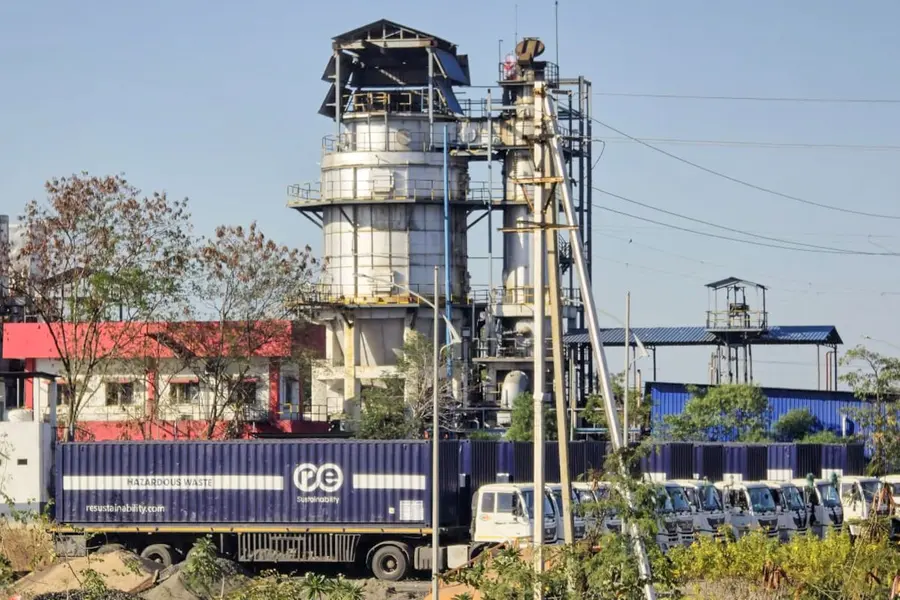
Indore: Over four decades after the devastating 1984 Bhopal gas tragedy, all 337 tonnes of hazardous waste from the now-defunct Union Carbide factory have been successfully incinerated at a specialized disposal plant in Pithampur, Madhya Pradesh. This enormous task, completed in the early hours of Monday, June 30, officially marks the closure of a dark and protracted chapter stemming from one of the world's worst industrial disasters.
The waste, which had been transported from Bhopal to the disposal unit in Dhar district's Pithampur industrial area approximately six months ago on January 2, underwent a meticulous incineration process. Following initial trials where 30 tonnes were burned, the remaining 307 tonnes were incinerated between May 5 and the intervening night of June 29-30.
The entire disposal operation was carried out under the strict supervision of technical experts from both the Central Pollution Control Board (CPCB) and the State Pollution Control Board (SPCB), adhering to directives issued by the Madhya Pradesh High Court on March 27. Officials confirmed that the incineration occurred at a maximum rate of 270 kg per hour.
Crucially, throughout the process, emissions of various gases and particles from the Pithampur plant were continuously monitored in real time by an online mechanism. All emissions were found to be within prescribed standard limits, and authorities have reported no adverse health effects on residents in surrounding areas.
The 1984 Bhopal gas tragedy, caused by the leakage of highly poisonous methyl isocyanate (MIC) gas on the night of December 2-3, killed at least 5,479 people and left thousands more maimed. Officials confirmed that the waste disposed of did not contain any MIC gas or radioactive particles, consisting instead of contaminated soil, reactor residue, and residues of pesticides like Sevin and naphthal, whose effects were scientifically found to be negligible.
According to PTI reports, the ash and other residue left after burning the 337 tonnes of waste are being safely packed and stored in a leak-proof shed. Special landfill cells, constructed scientifically, are expected to be completed by November. If all goes as planned, these treated residues will be permanently buried by December, ensuring no future environmental harm.
With inputs from PTI
Published: 30 Jun 2025, 02:50 pm IST
Disclaimer: Kindly avoid objectionable, derogatory, unlawful and lewd comments, while responding to reports. Such comments are punishable under cyber laws. Please keep away from personal attacks. The opinions expressed here are the personal opinions of readers and not that of Mathrubhumi.
