
Presumed dead for nearly three decades, a 79-year-old Uttar Pradesh man stunned his family when Bengal’s Special Intensive Revision (SIR) of electoral rolls forced him to return home, triggering an emotional reunion that reopened a forgotten chapter of their lives.
For nearly three decades, Sharif Ahmad existed only as a fading memory in his Uttar Pradesh hometown, a man the family believed had quietly slipped into death. However, on December 29, the 79-year-old walked back into Khatauli, Muzaffarnagar, not as a ghost of the past, but as a living reminder of how paperwork can resurrect a life long written off.
Sharif had left his village in 1997 after a second marriage, following the death of his first wife. What began as a move for a fresh start slowly turned into a complete disappearance. Phone calls stopped. Addresses led nowhere. Even a desperate trip to West Bengal years ago, following leads shared by his second wife, ended in silence. Over time, hope gave way to acceptance. His four daughters and extended family assumed the inevitable — Sharif Ahmad was no more.
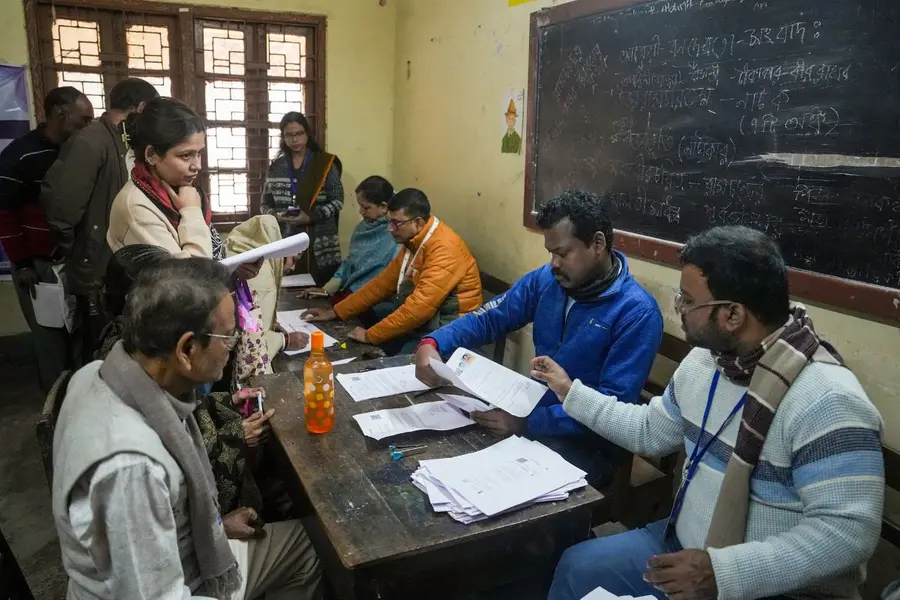
Then came Bengal’s Special Intensive Revision (SIR) of electoral rolls.
Living in West Bengal’s Medinipur district, Sharif realised he needed proof linking him to earlier electoral records to retain his voter status. The process forced him to retrace steps he had abandoned decades ago. And so, after 29 years, he returned to Muzaffarnagar — not for closure, but for documents.
The reunion was emotional and jarring. Faces had aged. Some were missing forever. During his short stay, Sharif learnt that his father, brother, and several close relatives had passed away while he was gone. Yet, for those still alive, seeing him walk back home was nothing short of miraculous.
“Seeing him after so many years was deeply moving for all of us,” said his nephew, Waseem Ahmad, who confirmed that the family had long presumed Sharif dead.
After collecting the required documents, Sharif returned to West Bengal to complete the SIR formalities — his brief visit reopening old wounds, but also restoring a lost chapter of family history.
The backdrop to his return is a politically charged electoral exercise. On December 16, the Election Commission published West Bengal’s draft electoral rolls after the SIR, removing over 58 lakh names due to death, migration, and duplication ahead of the 2026 Assembly elections.
The exercise has sparked sharp reactions, with Trinamool Congress leader Abhishek Banerjee alleging that the poll panel ignored concerns and behaved “aggressively” during discussions.
Amid debates over democracy, deletion lists, and political accusations, Sharif Ahmad’s story stands apart — a reminder that behind every name struck off, there may still be a beating heart.
Published: 01 Jan 2026, 10:30 am IST
Related Topics
Disclaimer: Kindly avoid objectionable, derogatory, unlawful and lewd comments, while responding to reports. Such comments are punishable under cyber laws. Please keep away from personal attacks. The opinions expressed here are the personal opinions of readers and not that of Mathrubhumi.
