
Reports of 30 tribal child deaths in Balaghat have triggered a major health response. Here's what authorities found about measles, malaria, malnutrition and other causes.
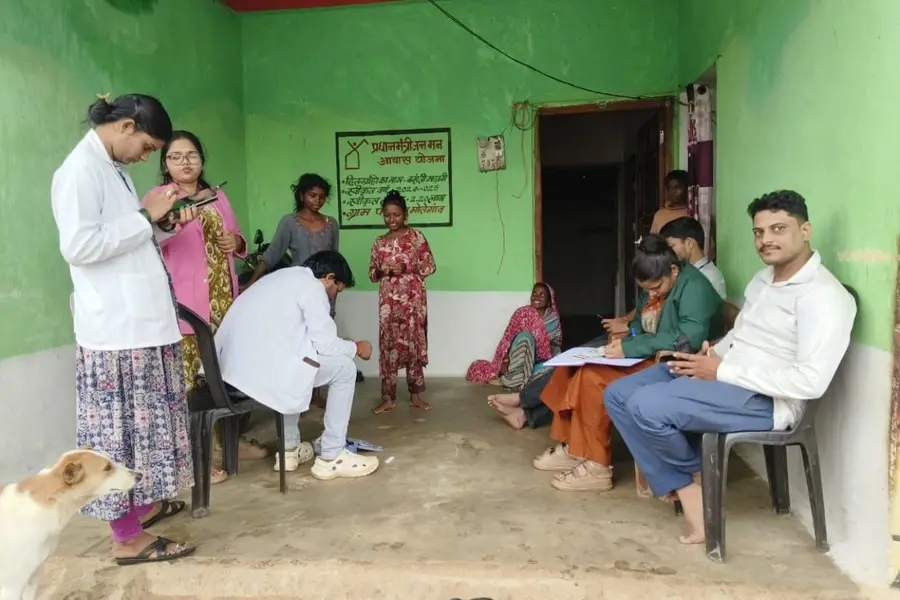
Reports of deaths among Baiga tribal children in Madhya Pradesh’s Balaghat district have triggered a major health response, political concern and demands for an investigation. Congress leaders have referred to the deaths of around 30 children, but the officially confirmed toll remains disputed.
Health authorities have also cautioned against attributing all the reported deaths to a single disease.
Also Read

What happened in Balaghat?
The health crisis has been reported from remote tribal habitations in the Birsa block of Balaghat, an area with a significant Baiga population. The Baiga community is classified as a Particularly Vulnerable Tribal Group (PVTG).
Reports of children falling ill and deaths began drawing attention from the second week of July. The illnesses have included fever and fever with rash, prompting health authorities to investigate possible infectious diseases while also examining underlying nutritional and healthcare vulnerabilities.
The situation has since led to an expanded response involving the Madhya Pradesh health department, the Centre, the Indian Council of Medical Research (ICMR) and other specialist teams.
ALSO READ | Tribal man’s death after consuming ‘arishtam’ sparks protests in Wayanad, police step in
Did 30 children die from one disease?
Authorities have not established that all the reported deaths were caused by a single disease.
Congress leaders have referred to the deaths of 30 tribal children, while authorities have maintained a lower officially confirmed number and continued case-by-case investigations. The Centre has adopted a cautious approach rather than attributing every death to one infection.
A retrospective review of the deaths has been undertaken, including examination of available medical records and verbal autopsies. Health authorities have found different clinical circumstances associated with the deaths, including measles, malaria, measles-malaria co-infection, respiratory distress, dehydration, malnutrition, anaemia and shock.
The available evidence therefore points towards multiple contributing illnesses and health vulnerabilities rather than one confirmed pathogen responsible for every reported death.
So, how did the children die?
The precise cause differs from case to case and remains under investigation.
Some children were affected by infectious diseases such as measles and malaria, while severe malnutrition, dehydration, anaemia and respiratory complications were also identified among children in the affected communities.
One major difficulty for investigators is that several early deaths reportedly occurred at home or before the children reached an appropriate healthcare facility. This meant that medical records and diagnostic samples were unavailable in some cases.
As a result, authorities have been conducting retrospective investigations rather than declaring one definitive cause for all the deaths.
Why are measles and malaria being investigated?
Health teams identified measles and malaria among the health risks in the region and intensified surveillance for both diseases.
Measles can cause serious complications, particularly in children who are undernourished or have limited access to timely medical care. Malaria can also become severe when diagnosis and treatment are delayed.
Authorities have therefore pursued measures against both diseases while simultaneously investigating other possible causes of illness. The response has included additional Measles-Rubella vaccination, malaria surveillance, vector-control measures and expanded medical screening.
ALSO READ | Madhya Pradesh farmers protest: Govt raises moong procurement limit to 60%, suspends e-token system
32,433 people screened
The Centre and Madhya Pradesh government have significantly expanded screening in the affected region.
According to the Health Ministry official cited in the report, 32,433 people have been medically examined. A total of 431 children requiring higher-level care were referred and admitted, of whom 379 were subsequently treated and discharged. Another 52 children remained under treatment and observation.
Surveillance was also expanded from three villages to around 50 villages. More than 10 doctors and 10 Community Health Officers have been involved in continuous screening and treatment.
The Centre deployed a National Joint Outbreak Response Team (NJORT) to Balaghat on August 12. An independent ICMR team has also been involved, alongside teams from ICMR Jabalpur and Netaji Subhash Chandra Bose Medical College in Jabalpur.
14,637 children receive additional measles-rubella vaccination
As part of the outbreak-response measures, 14,637 children aged between one and 10 years received an additional Measles-Rubella vaccine dose, irrespective of their previous vaccination status.
The additional vaccination was carried out as part of outbreak-response immunisation measures. Authorities said no new measles case had been reported in Balaghat during the seven days preceding the September 5 update, which they viewed as an indication that containment measures were beginning to have an effect.
Malnutrition emerges as another major concern
The investigation has also highlighted serious nutritional vulnerabilities among children in the tribal belt.
Health screening identified 7,711 children with severe acute malnutrition. Of these, 518 children required admission to Nutrition Rehabilitation Centres for treatment.
Authorities also identified and managed 13,406 children with diarrhoea and 274 children with severe pneumonia.
Under Dastak 2026, around 1.58 lakh children have been screened, with follow-up interventions including Vitamin A supplementation and other child-health measures.
These findings are significant because malnutrition can leave children more vulnerable to infections and increase the risk of complications when children become seriously ill.
Healthcare being taken to remote villages
The geography of Balaghat’s tribal belt has been a major challenge for healthcare delivery.
The Madhya Pradesh government has deployed six Mobile Medical Units in the Birsa and Baihar blocks to take healthcare directly to remote communities. The units are providing fever screening, outpatient consultations, maternal and child healthcare, tuberculosis screening, non-communicable disease screening, primary diagnosis and medicines.
Treatment infrastructure has also been strengthened at PHC Songudda and other treatment points. Additional beds, medicines, medical officers, laboratory support, infection-prevention measures and isolation facilities have been arranged.
Temporary treatment facilities and health camps have also been established or strengthened in affected areas, including Kundekasa. Referral and transport arrangements have also been reinforced to help seriously ill children reach higher-level healthcare facilities.
Water and malaria prevention measures
Authorities have also focused on environmental and preventive health measures.
More than 600 drinking-water sources have been purified. Insecticide spraying has been completed in 4,338 households, while fogging has been carried out in affected and adjoining areas as part of vector-control measures.
These interventions are intended to reduce the risk of waterborne and vector-borne illnesses while medical teams continue investigating the deaths.
Rahul Gandhi raises concern
Leader of Opposition in the Lok Sabha Rahul Gandhi expressed concern over reports that 30 tribal children had died in Balaghat.
Gandhi described the reported deaths as “extremely concerning and distressing” and linked the situation to alleged gaps in basic facilities, including drinking water, nutrition and timely medical treatment.
He called on Chief Minister Mohan Yadav to ensure an immediate investigation, treatment and relief in the affected area. His remarks came as health authorities were already intensifying surveillance and screening.
Madhya Pradesh Congress seeks high-level inquiry
Madhya Pradesh Leader of Opposition Umang Singhar also raised the issue, writing to Prime Minister Narendra Modi and seeking his intervention.
Singhar demanded a high-level medical inquiry into the reported deaths and argued that deaths from treatable illnesses raised questions about the implementation of welfare measures on the ground.
However, the reported death toll remains a point of disagreement, with Congress leaders citing a higher number while authorities have maintained a lower officially confirmed figure pending further investigation.
Mohan Yadav had visited Balaghat
Chief Minister Mohan Yadav visited Balaghat on August 30 and chaired a meeting with district officials to review developments in the district.
The health situation is unfolding in a wider region that has historically faced challenges linked to difficult terrain, remote settlements and access to healthcare.
Balaghat also borders Maharashtra and Chhattisgarh and has historically experienced Maoist activity in its remote forest areas. The state government has said the district is now free of Naxalism following security operations and development initiatives.
Why the 30-death figure needs context
The figure of 30 deaths should currently be presented as a reported or politically cited figure rather than an undisputed official death toll.
This distinction is important because the Centre’s investigation has not concluded that all reported deaths had the same medical cause.
The available findings indicate a combination of infectious diseases and serious health vulnerabilities, including measles, malaria, malnutrition, dehydration, anaemia and respiratory complications.
In some cases, children reportedly died before reaching healthcare facilities, making it difficult for doctors and investigators to obtain diagnostic samples or complete medical assessments.
Therefore, stating simply that “30 children died of measles” or that “30 children died from one outbreak” would go beyond the evidence currently described by authorities.
What happens next?
The Centre and Madhya Pradesh government are continuing surveillance, case investigations and treatment in the affected tribal belt.
The immediate focus is on identifying sick children early, ensuring rapid referral and treatment, continuing measles and malaria surveillance, expanding vaccination coverage and addressing severe malnutrition. Authorities are also focusing on improving access to healthcare in remote villages, ensuring safe drinking water and continuing vector-control measures.
A case-wise review of reported deaths remains important for establishing the most likely cause in each case. The central question is still the precise medical explanation for the reported deaths, and authorities are continuing their investigation rather than attributing the entire reported toll to one disease.
The bigger health concern in Balaghat
The Balaghat situation is not simply an infectious-disease outbreak. The health response has uncovered a combination of disease exposure, malnutrition, anaemia, difficult healthcare access and delays in reaching medical facilities.
The identification of thousands of children with severe acute malnutrition is particularly significant because nutritional deficiencies can increase vulnerability to infections and make otherwise treatable illnesses more dangerous.
At the same time, the presence of measles and malaria means disease-specific interventions remain necessary. Authorities have expanded surveillance to around 50 villages, deployed mobile medical units, sent national and specialist teams, intensified vaccination and carried out vector-control measures.
However, the disputed death toll and the absence of one confirmed cause for all reported deaths mean the situation requires continued epidemiological investigation before definitive conclusions can be drawn.
For now, the clearest picture is of a serious and multifactorial child-health crisis in remote tribal communities. Authorities are working to establish the causes of individual deaths while providing treatment, strengthening healthcare access and attempting to prevent further illness.
Published: 05 Sept 2026, 08:33 pm IST
ABOUT THE AUTHOR
Disclaimer: Kindly avoid objectionable, derogatory, unlawful and lewd comments, while responding to reports. Such comments are punishable under cyber laws. Please keep away from personal attacks. The opinions expressed here are the personal opinions of readers and not that of Mathrubhumi.