
Former CJI Chandrachud asserts bail before conviction should be a right, urging courts to protect undertrials.
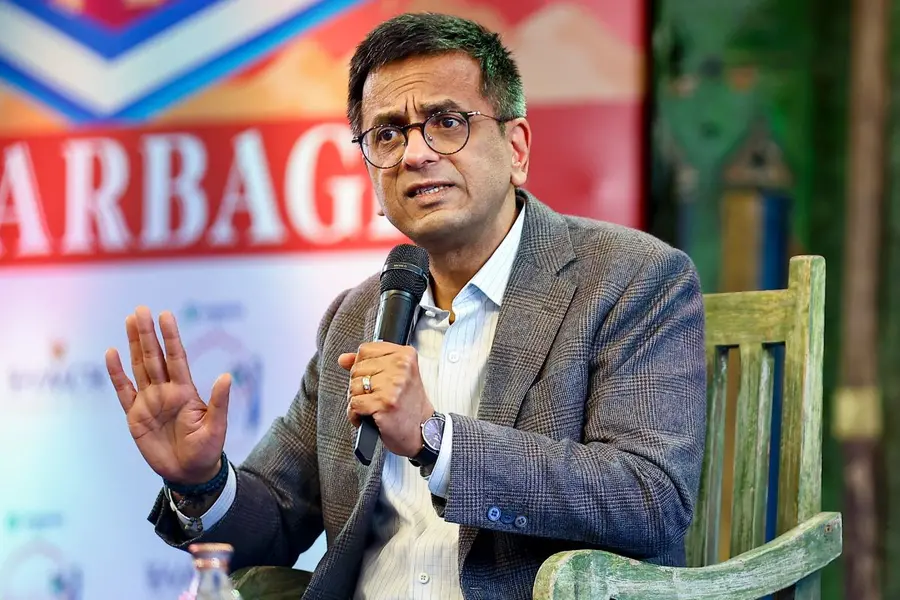
Jaipur (Rajasthan): Former Chief Justice of India D Y Chandrachud has emphasised that bail prior to conviction should be a matter of right. He was speaking at the Jaipur Literature Festival during a session titled ‘Ideas of Justice’ the other day. Chandrachud, however, stressed that courts must carefully examine cases involving national security before granting bail.
Chandrachud made the remarks in response to a question from senior journalist Vir Sanghvi about the Supreme Court’s recent denial of bail to activist Umar Khalid in connection with the 2020 Delhi riots conspiracy case. Khalid and fellow activist Sharjeel Imam have been in custody since 2020. Denying them bail on January 5, the court noted their alleged involvement in the “planning, mobilisation and strategic direction” of the northeast Delhi riots.
Addressing the audience, Justice Chandrachud said, “Bail before conviction should be a matter of right. Our law is based on a presumption, and that presumption is that everyone is innocent until proven guilty.” He added, “Because, if someone remains an undertrial prisoner for five or seven years and is finally proven innocent, how will you compensate for the time lost?”
The former CJI clarified that bail can be refused if the accused is likely to reoffend, tamper with evidence or exploit bail to evade justice. “If these three grounds are not present, then bail must be granted. I think that where national security is involved, it is the court's duty to examine the case in depth. Otherwise, what is happening is that people remain imprisoned for years,” he said.
Justice Chandrachud also raised concerns about lower courts denying bail due to fear of questioning their integrity, which often leads to cases reaching the Supreme Court. He criticised delays in the Indian criminal justice system, emphasising that the Constitution allows no exception: “If there is a delay in a speedy trial, the accused is entitled to bail.”
Reflecting on his tenure, he highlighted landmark Supreme Court decisions such as granting permanent commission to women in the armed forces, decriminalising homosexuality, and striking down the electoral bonds scheme.
On judicial appointments, Chandrachud suggested including eminent civil society members in the collegium for greater transparency and to strengthen public trust in the judiciary.
When asked about post-retirement roles, he said he is currently enjoying life as a private citizen. He also expressed regret that marital rape remains uncriminalised in India even after more than seven decades and advocated strongly for legal reform.
Chandrachud expressed satisfaction over initiatives to make the Supreme Court more accessible, including live telecasts of proceedings in Hindi and all Indian languages listed in the Eighth Schedule of the Constitution.
PTI
Published: 19 Jan 2026, 11:42 am IST
Related Topics
Disclaimer: Kindly avoid objectionable, derogatory, unlawful and lewd comments, while responding to reports. Such comments are punishable under cyber laws. Please keep away from personal attacks. The opinions expressed here are the personal opinions of readers and not that of Mathrubhumi.
