
Ayushman Bharat and national immunisation programmes are strengthening India’s healthcare, improving access, prevention, and overall public health outcomes.
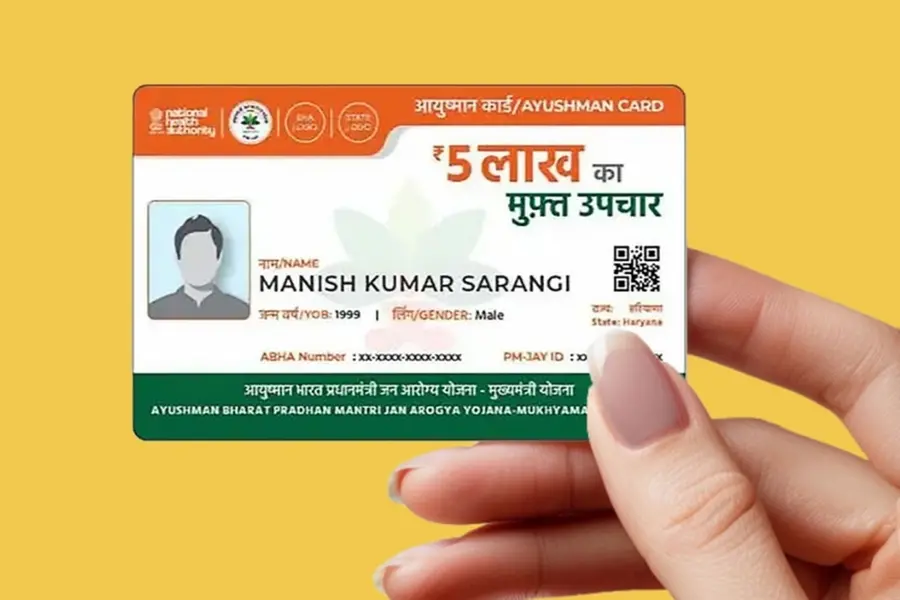
New Delhi: The government said flagship initiatives such as Ayushman Bharat and the Universal Immunisation Programme (UIP) are significantly strengthening India’s healthcare system, improving access to services and health outcomes across the country.
Ayushman Bharat operates through four key components: Ayushman Arogya Mandir (AAM), Ayushman Bharat Pradhan Mantri Jan Arogya Yojana (PM-JAY), the Pradhan Mantri Ayushman Bharat Health Infrastructure Mission (PM-ABHIM) and the Ayushman Bharat Digital Mission (ABDM).
According to the Ministry of Health, as of November 30, 2025, a total of 1,81,873 Ayushman Arogya Mandirs have been operationalised nationwide, offering an expanded package of 12 services along with teleconsultation facilities. These centres have recorded a cumulative footfall of 494.71 crore patients and facilitated 41.93 crore teleconsultations.
The ministry said large-scale screening under the programme has strengthened early detection of non-communicable diseases and cancers. So far, 39.50 crore screenings have been conducted for hypertension and 36.70 crore for diabetes. In addition, 32.40 crore oral cancer screenings, 15.23 crore cervical cancer screenings and over 8.37 crore breast cancer screenings among women have been carried out.
Under the PM-JAY health insurance scheme, about 42.48 crore Ayushman cards had been created as of December 1, 2025. The scheme has authorised 10.98 crore hospital admissions, involving expenditure of around Rs 1.60 lakh crore.
The Ayushman Bharat Digital Mission has also made significant progress, with 83.94 crore Ayushman Bharat Health Accounts created and around 7.47 lakh healthcare professionals registered on the platform.
Immunisation coverage above 90%
Under the Universal Immunisation Programme, India has achieved more than 90 per cent Full Immunisation Coverage (FIC), in line with the National Health Policy. The ministry said the national FIC for the period April to October 2025 stood at 98.6 per cent.
It also reported a 28 per cent reduction in measles cases during January–October 2025 compared with the same period last year.
Gains in TB and HIV control
Highlighting progress in disease control, the ministry said India has achieved a 90 per cent tuberculosis (TB) treatment success rate, with overall TB case notifications rising by 63 per cent over the past decade, from 2014 to 2024.
Treatment success rates improved steadily from 83 per cent in 2021 to 89 per cent in 2024, reaching 90 per cent during January–October 2025. During the same period in 2025, 22.64 lakh TB patients were notified.
Under Phase V of the National AIDS and STD Control Programme (NACP), around 1.5 crore people from high-risk and bridge population groups received prevention services through targeted interventions and link worker schemes in 2025.
The ministry said 5.29 crore HIV tests had been conducted up to October 2025, including around 2.08 crore tests among pregnant women. During 2025, about 2.09 crore syphilis tests were also conducted among pregnant women.
As of October 2025, a total of 838 anti-retroviral therapy centres were operational across the country. Around 19.15 lakh people living with HIV, including those in the private sector, were receiving anti-retroviral treatment.
The government said these initiatives have also contributed to improvements in maternal, child and adolescent health, family planning services and overall public health outcomes, reinforcing India’s progress towards universal healthcare coverage.
IANS
Published: 02 Jan 2026, 01:21 pm IST
Related Topics
Disclaimer: Kindly avoid objectionable, derogatory, unlawful and lewd comments, while responding to reports. Such comments are punishable under cyber laws. Please keep away from personal attacks. The opinions expressed here are the personal opinions of readers and not that of Mathrubhumi.
