
Axiom-4 astronauts conduct crucial experiments on the ISS, focusing on microalgae, eye movement, and radiation exposure before their return to Earth
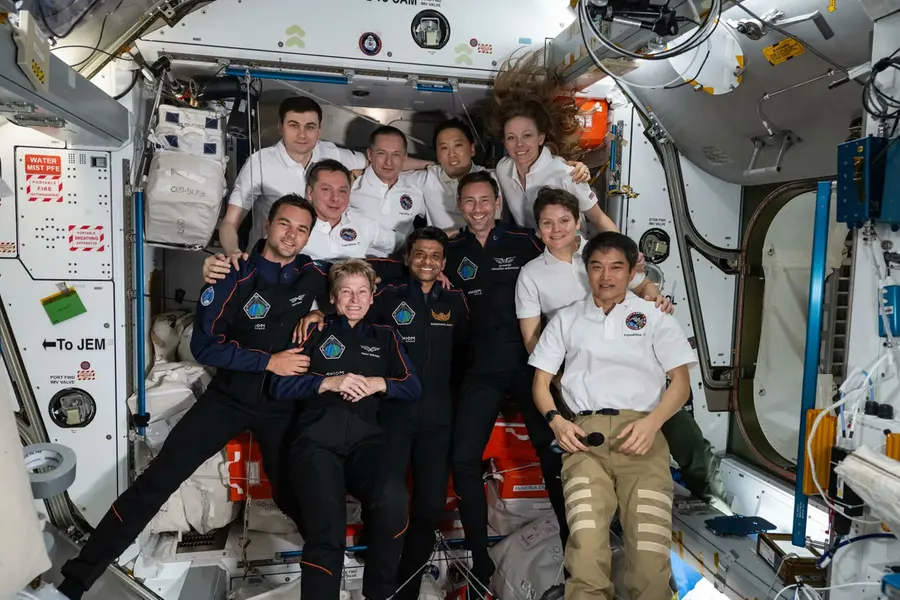
New Delhi: Astronaut Shubhanshu Shukla and other crew members of the Axiom-4 mission are making the most of their final days on the International Space Station (ISS), pushing forward a wide range of experiments that could shape the future of space exploration.
The SpaceX's Crew Dragon spacecraft, carrying the four-astronaut crew, reached the orbital outpost on June 26 and is scheduled to undock from the ISS on Monday, July 14, at 7:05 am ET (4:35 pm IST), according to an update on X by Axiom Space, which is spearheading the mission.
Shukla and the other three astronauts are expected to board the spacecraft about two hours before the undocking, wear their space suits and carry out the necessary tests before they begin their journey to the Earth.
The ISS is orbiting the Earth at a speed of 28,000 km per hour, and the spacecraft will initiate the autonomous undocking process to gradually slow down and re-enter the Earth's atmosphere for a splashdown off the coast of California.
Experiments conducted for astronaut health and future missions
"Exercise research and spacesuit maintenance topped the schedule for the Expedition 73 and Axiom Mission 4 (Ax-4) crews on Thursday," a NASA statement said.
Axiom Space said in a statement that Shukla worked on the microalgae experiment, deploying and stowing samples that could one day provide food, oxygen and biofuels for deep space missions.
The resilience of the microalgae makes them a promising asset for sustaining life beyond Earth, it said.
The crew also continued the Voyager Displays study, which examines how spaceflight affects eye movement and coordination.
The crew collected data for a study to explore how astronauts perceive and interact with their environment in orbit, which is critical for designing mentally supportive habitats for long-duration missions.
Another study focused on cerebral blood flow, investigating how microgravity and elevated carbon dioxide levels affect cardiovascular function, which could later benefit both astronauts and patients on Earth.
Radiation exposure was monitored using the compact Rad Nano Dosimeter, a tool for assessing astronaut safety.
Additionally, the crew took part in the Acquired Equivalence Test, a cognitive experiment that measures learning and adaptability in space and supported the PhotonGrav study by collecting brain activity data to explore neuroadaptive technologies for space and medical applications.
PTI
Published: 11 Jul 2025, 10:28 pm IST
Related Topics
Disclaimer: Kindly avoid objectionable, derogatory, unlawful and lewd comments, while responding to reports. Such comments are punishable under cyber laws. Please keep away from personal attacks. The opinions expressed here are the personal opinions of readers and not that of Mathrubhumi.
