
Arunachal Pradesh's proposed 11,200-MW Siang dam has triggered violent protests, with an NHPC office and police station torched. MLA Ninong Ering has called for dialogue and condemned looting.
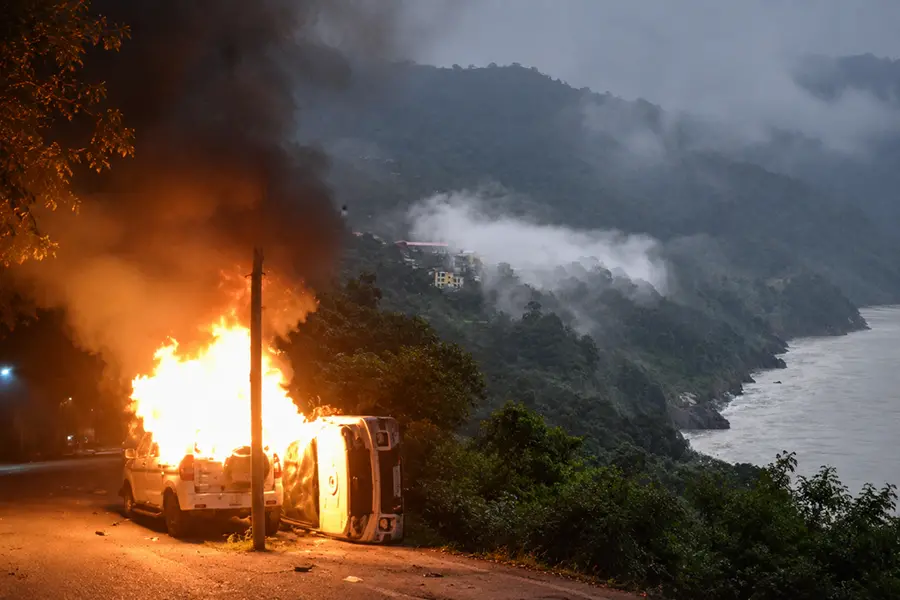
Pasighat: Protests against Arunachal Pradesh's proposed 11,200-MW Siang Upper Multipurpose Project (SUMP) descended into violence on October 23, with a National Hydroelectric Power Corporation (NHPC) office and a police station set ablaze, police vehicles damaged and the residences of political leaders, including state BJP president Kaling Moyong, vandalised.
Several police personnel were injured during clashes in East Siang district.
Reacting to the violence, Pasighat West MLA Ninong Ering called for dialogue and compromise, distinguishing peaceful protest from vandalism and looting.
Defending his position in favour of the proposed dam despite opposition from sections of the public, Ering said the project needed a wider discussion that considered both its potential benefits and its adverse consequences.
‘Many have asked me why I speak in favour of the dam, given that they are all opposed to it. Yet, I believe there must be a compromise; people need to come forward and engage in dialogue,’ Ering said.
He stressed that discussions about a project of this scale could not be reduced to compensation or promises of infrastructure development.
He said roads, bridges, and institutions such as medical colleges might be part of the broader development conversation, but the project's positive and negative implications also needed careful consideration.
‘Protesting does not mean looting someone’s home or causing harm to others,’ the MLA said, condemning the violence.
Declining to comment further on the course of action, he said the District Magistrate and Superintendent of Police would take the necessary steps. Ering described the incident as involving ‘theft, dacoity, and looting’, rather than merely a protest.
NHPC office and police station set on fire
The violence erupted in Pasighat, the headquarters of East Siang district, after a 12-hour bandh called by organisations opposing the proposed project ended at 5 pm on Friday.
According to district officials and police, some demonstrators continued their agitation and clashed with security personnel.
The NHPC office and a police station were set ablaze, while seven to eight police vehicles were reportedly damaged or torched. Authorities were assessing the full extent of the destruction in the initial reports.
The residences of BJP state president Kaling Moyong and legislators Ninong Ering and Oni Panyang were among the properties targeted. The office of Adi Bane Kebang, a prominent organisation representing the Adi community, was also ransacked.
East Siang Deputy Commissioner Jayanti Pertin said the administration and security forces had attempted to persuade protesters to disperse after the shutdown.
Tear gas shells were fired when the crowd did not clear the area, according to her account. Protesters allegedly pelted security personnel with stones, injuring several police officers and officials.
Pasighat Deputy Superintendent of Police Tony Tatak, who was also injured, confirmed that the NHPC office and police station had been attacked.
Tensions had flared earlier near Dite-Dime in Siang district, where demonstrators allegedly attempted to breach police barricades. Four women protesters were reported injured in that confrontation.
Why protesters oppose the Siang dam
The proposed Siang Upper Multipurpose Project is planned as a major hydropower and water-storage development on the Siang River.
Opposing organisations have raised concerns about the possible submergence of villages, displacement of residents, environmental damage and disruption to farming and other livelihoods.
The Adi community has longstanding cultural, social and economic ties to the river basin.
Opponents fear large-scale construction could threaten ancestral land and heritage and have demanded an immediate halt to pre-feasibility surveys and related activities until the state addresses their concerns.
The state government maintains that the project remains at the technical assessment stage. The pre-feasibility report is intended to establish viability and does not, by itself, amount to final approval for construction.
China factor adds to the debate
The Siang originates in Tibet, where it is known as the Yarlung Tsangpo, before entering Arunachal Pradesh and flowing into Assam as part of the Brahmaputra river system.
China's plans for a major hydropower project on the Yarlung Tsangpo have intensified Indian concerns about downstream water flows and the possible consequences of changes in river management.
Indian authorities have presented the proposed Siang project as a potential measure to strengthen water storage and regulate flows.
However, how much it could mitigate risks from upstream developments would depend on its design, operating arrangements, and broader river conditions.
Protesters demand release of detained activists
Organisations involved in the bandh included Adi Bane Kebang United, the SUMP Affected Area Youth Association, the Siang Indigenous Farmers' Forum Youth Wing and the Adi Galo Welfare Society.
Their demands included releasing 10 detained activists, reinstating suspended village headmen, withdrawing security forces, and immediately suspending pre-feasibility surveys and related activities in affected areas.
Following the violence, the district administration imposed prohibitory restrictions in Pasighat, Mebo and Ruksin, restricting unlawful assemblies, processions and gatherings.
Chief Minister Pema Khandu condemned the violence and appealed to those opposing the project to pursue dialogue rather than resort to destruction.
The administration's immediate challenge is to restore order while addressing concerns over land rights, displacement, livelihoods, and environmental consequences.
Ering's call for compromise underscores the divide between the government's development and water-security objectives and the apprehensions of communities living along the Siang River.
Published: 26 Oct 2026, 11:41 am IST
ABOUT THE AUTHOR

Related Topics
Disclaimer: Kindly avoid objectionable, derogatory, unlawful and lewd comments, while responding to reports. Such comments are punishable under cyber laws. Please keep away from personal attacks. The opinions expressed here are the personal opinions of readers and not that of Mathrubhumi.