
Anil Chakravarthy is set to take over as Adobe's CEO from Shantanu Narayen in December 2026. An IIT Varanasi and MIT alumnus, he has previously led Informatica and held senior positions at Symantec and Adobe. His appointment comes as the software giant accelerates its AI strategy.
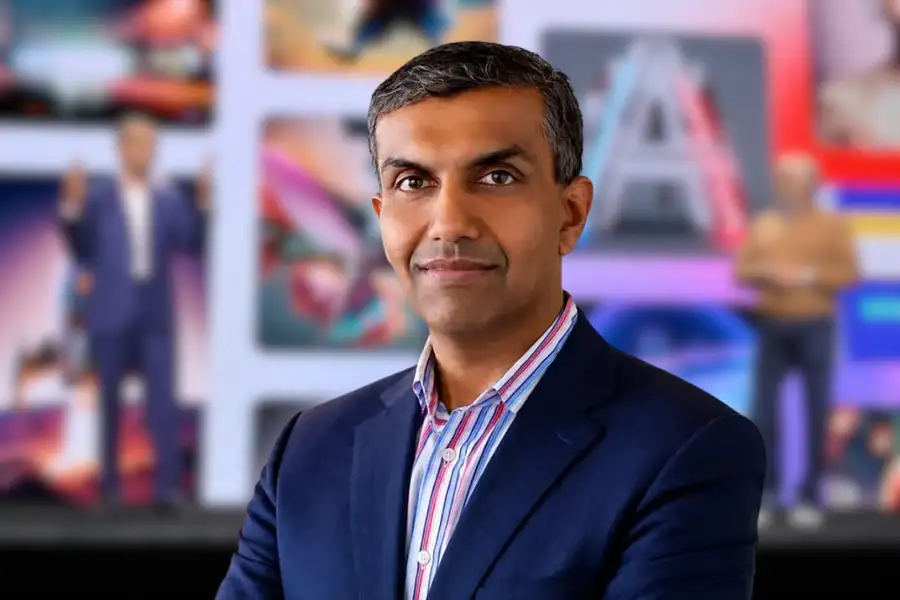
Adobe is preparing for a leadership change at a time when artificial intelligence is reshaping the software industry. Anil Chakravarthy, an Indian-origin technology executive with experience at Informatica, Symantec and Adobe, will become the company's president and CEO on December 1, 2026, succeeding Shantanu Narayen.
Chakravarthy currently leads Adobe's Customer Experience Orchestration business and worldwide field operations. He will also join the company's Board of Directors when he takes charge. Narayen, who has led Adobe for nearly two decades, will move into the role of Executive Chair.
But who is Anil Chakravarthy, and what has prepared him for one of the most prominent leadership positions in the global technology industry?
Who is Anil Chakravarthy?
Anil Chakravarthy is an India-born technology executive who has built a career spanning software, cybersecurity, enterprise data management and digital customer experience.
Before being selected as Adobe's next CEO, he served as president of the company's Customer Experience Orchestration business, overseeing its strategy, product development and operations. He was also responsible for worldwide field operations, including enterprise sales, professional services and customer success.
Chakravarthy joined Adobe in January 2020 and gradually took on greater responsibilities within the company. His appointment as CEO makes him the successor to Shantanu Narayen, another Indian-origin executive who has been associated with Adobe's transformation into a major global software company.
Education: From Varanasi to MIT
Chakravarthy holds a Bachelor of Technology degree in Computer Science and Engineering from the Institute of Technology, Varanasi, India. He went on to pursue higher education in the United States, earning a Master of Science degree and a PhD from the Massachusetts Institute of Technology (MIT).
His academic background in computer science and engineering laid the foundation for a career in technology, product development and business leadership.
Career before Adobe: McKinsey, VeriSign and Symantec
Chakravarthy began his professional career at McKinsey & Company, where he worked as an engagement manager and later became a co-leader of the firm's E-Business Practice in its Silicon Valley Business Technology Office.
He subsequently moved into the technology industry, taking up product management responsibilities at VeriSign, where he worked on enterprise security services.
He spent more than nine years at Symantec, holding several senior positions across its security and software businesses. His responsibilities included information security, engineering, product management and operations.
These roles gave him experience across different areas of the technology sector, including cybersecurity, enterprise software and the management of large product portfolios.
The Informatica chapter: His first CEO role
Before joining Adobe, Chakravarthy served as the chief executive officer of Informatica, an enterprise cloud data management company.
He joined the company in 2013 as executive vice-president and chief product officer, taking responsibility for product development, management and marketing. In August 2015, he became its CEO and held the position until January 2020.
During his tenure, he led the company's transition towards cloud-based and subscription services. This experience in managing a technology company's business transformation is particularly relevant as Adobe now navigates the shift towards AI-powered software and services.
His rise within Adobe
Chakravarthy joined Adobe in January 2020 as executive vice-president and general manager of its Digital Experience business. Later that year, he also took charge of worldwide field operations.
In December 2021, he was promoted to president of Digital Experience and worldwide field operations. The business subsequently evolved into what Adobe now calls Customer Experience Orchestration.
In this role, he has overseen products and platforms that help businesses manage customer data, create personalised digital experiences and coordinate marketing and customer engagement activities.
Adobe has credited him with helping expand its Customer Experience Orchestration business and supporting the development of AI-enabled products, including GenStudio and other enterprise solutions.
Why is Adobe changing its leadership now?
Chakravarthy's appointment comes at a significant moment for Adobe. The company is expanding its artificial intelligence capabilities as generative AI changes how people create images, videos, documents and other digital content.
Adobe's software portfolio includes widely used products such as Photoshop, Illustrator, Premiere and Acrobat. However, the growing availability of AI-powered creative tools has increased competition and put pressure on established software companies to adapt.
The company's expanded partnership with Google reflects this shift. The agreement will bring Google's AI models into Adobe's creative and productivity products, while making Adobe tools available across Google's platforms, including Gemini, Gmail and Google Drive.
The collaboration also includes plans to develop AI-powered image-editing capabilities, beginning with Photoshop. These developments underline the importance of AI in Adobe's next phase of growth.
What happens to Shantanu Narayen?
Narayen will step down as Adobe's CEO on December 1, 2026, after leading the company for nearly two decades. He will become Executive Chair and continue working with Chakravarthy during the transition.
Narayen joined Adobe in 1998 and became CEO in 2007. During his tenure, the company moved from selling packaged software to a subscription-based cloud model, while expanding its creative, document and digital experience businesses.
He will remain involved in the company's broader direction as it enters its next phase under Chakravarthy's leadership.
What Chakravarthy's appointment means for Adobe
Chakravarthy's elevation is an internal leadership transition, but it comes at a time when Adobe faces a major strategic challenge: maintaining its position in creative and productivity software as AI changes the way these products are developed and used.
Three areas are likely to shape his leadership:
- AI-led transformation: Adobe will need to integrate AI more deeply into its products while ensuring that its creative and professional tools remain competitive.
- Enterprise growth: Chakravarthy's experience in customer experience platforms, enterprise sales and cloud data management could help Adobe strengthen its relationships with large businesses.
- Competition in creative software: The expansion of generative AI tools has increased competition in image creation, video production and digital design. Adobe will have to demonstrate that its AI features offer value to both professional creators and everyday users.
His experience at Informatica and Adobe gives him a combination of technology and business leadership. However, the bigger test will be whether he can sustain Adobe's growth and protect its position in an increasingly competitive AI market.
Published: 12 Nov 2026, 01:53 pm IST


ABOUT THE AUTHOR

Related Topics
Disclaimer: Kindly avoid objectionable, derogatory, unlawful and lewd comments, while responding to reports. Such comments are punishable under cyber laws. Please keep away from personal attacks. The opinions expressed here are the personal opinions of readers and not that of Mathrubhumi.