
Rahul Gandhi criticizes the VB-G RAM G Bill, calling it an insult to Mahatma Gandhi and a threat to rural livelihoods
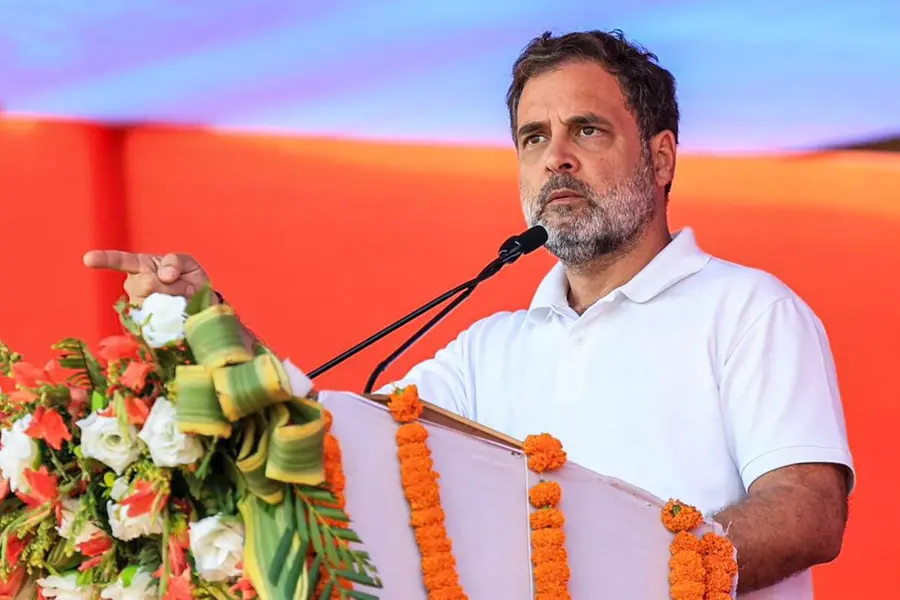
New Delhi: Congress leader Rahul Gandhi on Tuesday criticised the government’s new rural employment legislation, terming it an insult to the ideals of Mahatma Gandhi. He accused the Narendra Modi government of attempting to eliminate the secure livelihood of rural workers after allegedly destroying the future of India’s youth through high unemployment.
What are opposition leaders saying?
Several opposition MPs protested in the Parliament House complex on Tuesday over the VB-G RAM G Bill, which seeks to replace MGNREGA. They accused the BJP-led NDA government of insulting Mahatma Gandhi by attempting to remove his name from the scheme.
Rahul Gandhi, the leader of the opposition in the Lok Sabha, posted on X that Prime Minister Narendra Modi has always been opposed to Mahatma Gandhi’s ideas and has been trying to weaken the Mahatma Gandhi National Rural Employment Guarantee Act ever since coming to power. He added that the Congress will oppose any such move.
Gandhi said that Prime Minister Modi has a deep hatred for two things: the ideas of Mahatma Gandhi and the rights of the poor. He described MGNREGA as a living embodiment of Mahatma Gandhi’s dream of village self-rule and said it serves as a lifeline for millions of rural lives, providing economic security during crises such as the COVID-19 pandemic.
He added that Prime Minister Modi has been irritated by this scheme for the past ten years and alleged that the government is now determined to completely wipe out MGNREGA.
What changes does the VB-G RAM G Bill propose?
The Viksit Bharat Guarantee for Rozgar and Ajeevika Mission (Gramin) (VB-G RAM G) Bill, 2025, was introduced in the Lok Sabha by Union Minister Shivraj Singh Chouhan. The opposition objected strongly to the removal of Mahatma Gandhi’s name from the scheme.
According to Rahul Gandhi, the foundation of MGNREGA rests on three core principles: a right to employment for anyone who demands work, freedom for villages to decide their own development works, and full wage coverage by the central government along with 75 per cent of material costs.
He added that the new bill seeks to centralise all power in the hands of the Prime Minister. Under the proposed framework, the centre will decide budgets, schemes, and rules, while states will be forced to bear 40 per cent of expenses. Gandhi alleged that during times such as crop harvests or when budgets are exhausted, no work will be available for months, making the bill an insult to Mahatma Gandhi’s ideals.
He further criticised the government, saying it has already destroyed the future of India’s youth through unemployment, and now seeks to remove secure livelihoods for rural workers. Gandhi emphasised that the Congress will oppose the “anti-people” bill from village lanes to Parliament.
What does the bill offer?
A copy of the bill shows that it will provide a statutory guarantee of 125 days of wage employment per financial year to every rural household whose adult members volunteer to perform unskilled manual work. Within six months of the Act’s commencement, states will have to prepare a scheme consistent with the new law.
The Rural Development Ministry said the legislation aims to establish a modern statutory framework aligned with the vision of ‘Viksit Bharat 2047’. It added that the bill is intended to generate employment and create durable rural infrastructure through four priority areas: water security through water-related works, core rural infrastructure, livelihood-related infrastructure, and special works to mitigate extreme weather events.
PTI inputs
Published: 16 Dec 2025, 04:45 pm IST
Related Topics
Disclaimer: Kindly avoid objectionable, derogatory, unlawful and lewd comments, while responding to reports. Such comments are punishable under cyber laws. Please keep away from personal attacks. The opinions expressed here are the personal opinions of readers and not that of Mathrubhumi.
