
The ED claims these fake papers were used by entities linked to Al-Falah University Chancellor Javed Ahmed Siddiqui, now under arrest in the widening blast probe.
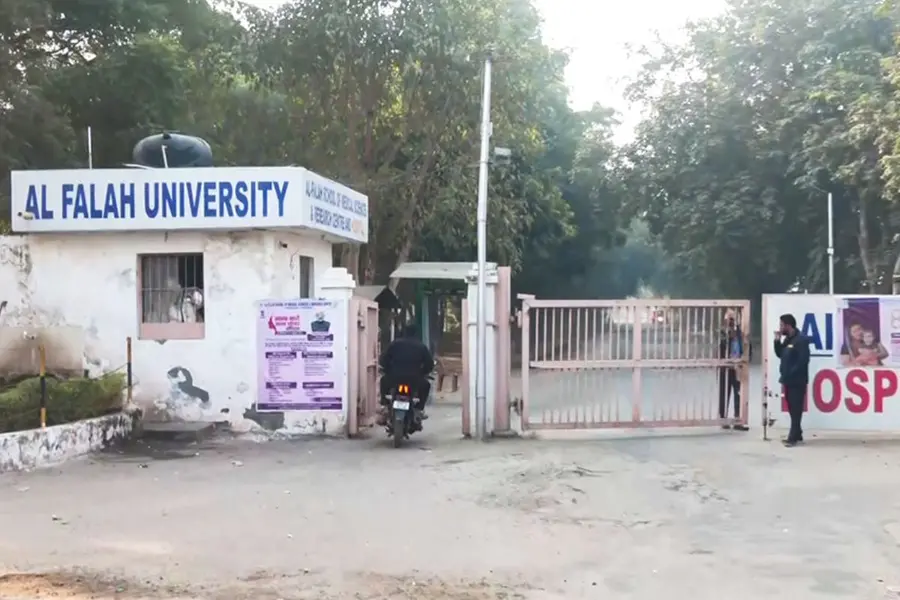
In a startling development that widens the scope of the car-blast investigation, the ED has formally accused Javed Ahmed Siddiqui — Chancellor of Al-Falah University — of fraudulently acquiring land in Delhi’s Madanpur Khadar by using forged documents in the names of deceased Hindu landowners.
According to the agency, a piece of land under Khasra No. 792 was transferred to Tarbia Education Foundation — a trust linked to Siddiqui — based on a General Power of Attorney (GPA) dated January 7, 2004.
However, the ED says the purported land-owners whose names appeared on the GPA had died between 1972 and 1998 — long before the GPA was allegedly drawn up.
The agency has labelled the entire transfer “fraudulent,” saying the forged documents formed the bedrock of the land acquisition. Siddiqui is currently in custody as investigations continue.
This money-laundering and land-fraud accusation comes as part of a broader ED probe — triggered by the November 10 car blast near the Red Fort that killed 15 people and left dozens injured.
Authorities are investigating a “white-collar terror module” linked to Al-Falah University, where several doctors allegedly involved in the blast plot were employed.
On November 18, the ED executed coordinated raids at over 25 locations across Delhi and Faridabad tied to the Al-Falah group — including the university offices, the residences of trustees, and administrative premises.
Investigators describe a complex network of nine suspected shell firms, all registered to a single address, showing minimal physical activity and dubious financial footprints, suggesting systematic money laundering and fund-diversion.
The land-fraud charges deepen the suspicion that proceeds from illicit land deals may have helped finance extremist activities. According to ED, funds flowing through the shell companies and entities like Tarbia Education Foundation may have been used to underwrite operations connected to the terror module.
Al-Falah University — which began as an engineering college in 1997 and gained university status in 2014 — is now at the centre of a two-pronged investigation: one into its alleged role in facilitating the 2025 Delhi plasma car-bomb attack, the other into long-standing financial and regulatory irregularities.
If proven, the charges could demonstrate a chilling overlap: fraudulent institutional practices, illicit money flows, and the usage of an educational institution as a front for terrorist activity. For investigators, the newly alleged land fraud widens the financial trail, potentially linking seemingly legitimate real-estate deals with the funding of extremist networks.
The unfolding case raises serious questions about how educational institutions can be misused — and how deep financial back-channels may be entwined with radicalisation and violence.
Published: 28 Nov 2025, 02:58 pm IST
Disclaimer: Kindly avoid objectionable, derogatory, unlawful and lewd comments, while responding to reports. Such comments are punishable under cyber laws. Please keep away from personal attacks. The opinions expressed here are the personal opinions of readers and not that of Mathrubhumi.
