
Google has been ordered to pay ₹10.8 lakh to an Argentine man after a Street View car captured and published an image of him fully naked in his backyard, triggering a legal battle over privacy and dignity
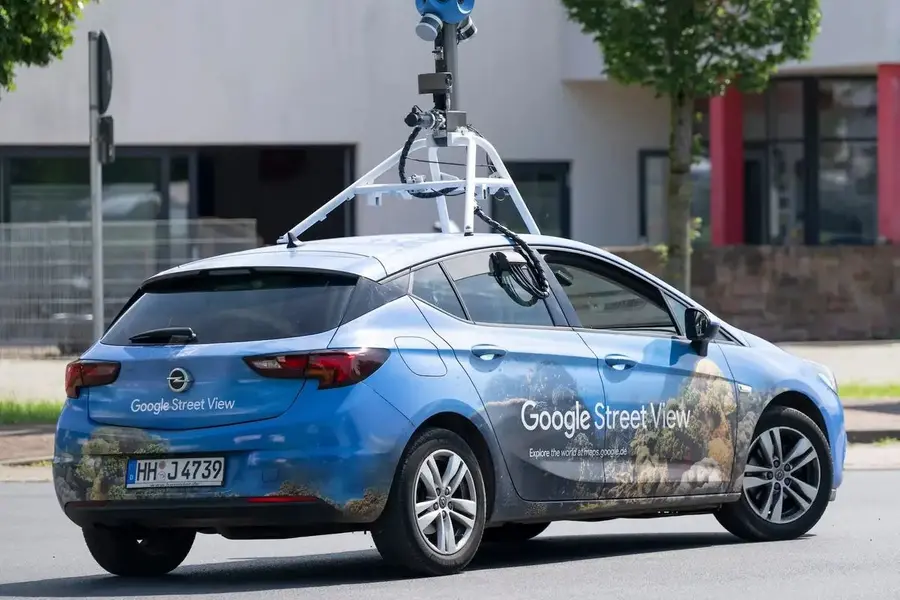
Buenos Aires: In a rare privacy breach case, Google has been ordered to pay approximately ₹10.8 lakh (around $12,500) to an Argentine man who was inadvertently photographed fully naked in his backyard by a Google Street View car.
The incident occurred in 2017 in a small town in Argentina, where the man, a police officer, was captured without clothes while standing behind a 6.5-foot wall at his residence. The image, which was later published on Google Street View, showed his entire naked body without any blurring. Even his house number and street name remained clearly visible, intensifying the public exposure.
According to CBS News, the man claimed the incident caused him severe embarrassment among his neighbors and colleagues, severely impacting his dignity and privacy. He filed a lawsuit against Google in 2019, but it was initially dismissed by a lower court that blamed him for being outside in an “inappropriate condition.”
However, a recent ruling by an appeals court reversed the decision, stating that the man was within the confines of his private home and that the wall was taller than an average person, contradicting Google’s defense that the perimeter wall wasn’t high enough.
“This involves an image of a person not captured in a public space, but within the confines of their home, behind a fence taller than the average-sized person,” the court said. “The invasion of privacy...is blatant.”
The judges emphasized Google’s own policy, which includes automatic blurring of faces and license plates, to argue that the tech giant is fully aware of its responsibility to protect individuals’ identities. In this case, they said, the image should have been flagged, especially as it featured someone “entirely naked.”
Quoting the judgment, the court remarked: “No one wants to appear exposed to the world as the day they were born.”
While Google promotes the use of its “Report a problem” tool for users to request blurring of houses, cars, or bodies, the court ruled that the onus remains on the company to prevent such violations before publication.
Published: 28 Jul 2025, 05:25 pm IST
Disclaimer: Kindly avoid objectionable, derogatory, unlawful and lewd comments, while responding to reports. Such comments are punishable under cyber laws. Please keep away from personal attacks. The opinions expressed here are the personal opinions of readers and not that of Mathrubhumi.
