
Born on January 8, 1953, in Manacaud, Thiruvananthapuram, Vijayasree entered the world of cinema as a teenager. Her debut was in the Tamil film Chitthi (1966), and she soon found herself getting offers from across South Indian film industries.
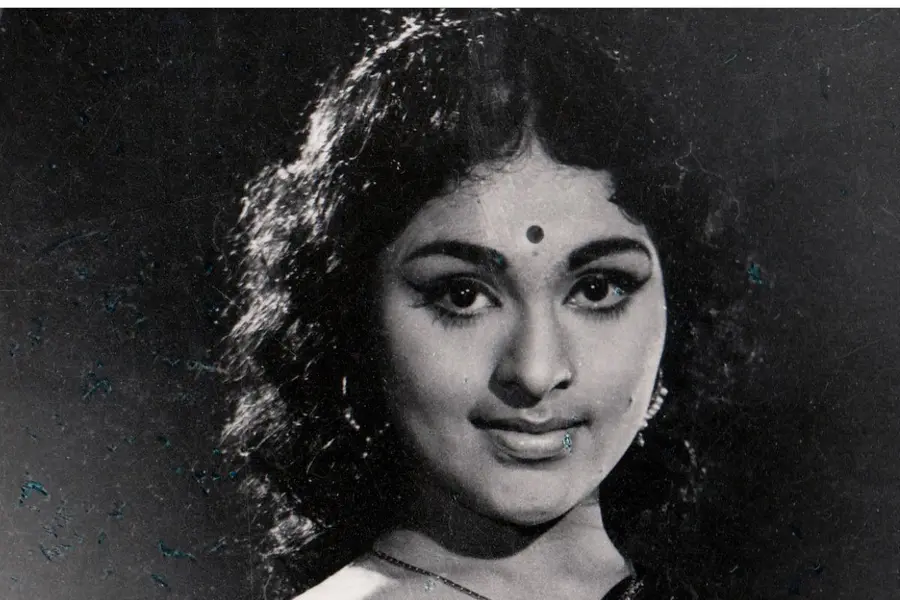
Often hailed as the “Marilyn Monroe of Malayalam cinema”, Vijayasree was a phenomenon who lit up the screen with her beauty and charm during the early 1970s. In a career that lasted just over five years, she acted in more than 60 films across Malayalam, Tamil, Telugu and Kannada, becoming one of the most sought-after female actors of her time.
Born on January 8, 1953, in Manacaud, Thiruvananthapuram, Vijayasree entered the world of cinema as a teenager. Her debut was in the Tamil film Chitthi (1966), and she soon found herself getting offers from across South Indian film industries. Her entry into Malayalam cinema came with a minor role in Poojapushpam (1969), but her breakout moment arrived with Rakthapushpam (1970), opposite the matinee idol Prem Nazir. The on-screen chemistry between the two became legendary, leading to a string of box office successes.
Despite her growing popularity, Vijayasree was often reduced to the status of a glam doll. Her striking appearance made her a box office draw, but it also made her vulnerable to typecasting and commodification. Directors and producers frequently used her image to market films, sometimes in ways that deeply upset her. One of the most cited examples is a film in which a molestation scene was not only left uncensored but was also used in promotional posters—something that reportedly caused her immense emotional pain.
What few knew was that beneath her dazzling screen persona was a young woman eager to break free from the exploitative trappings of fame. Reports from that time indicate that Vijayasree had plans to leave the industry and was preparing to marry a doctor settled abroad. Those close to her say she seemed happy and optimistic in the days leading up to her death.
On March 17, 1974, at the age of just 21, Vijayasree was found dead in her home in Madras. The cause: poisoning. A container was found in the prayer room, and the postmortem confirmed ingestion of a lethal substance. Her sudden demise shocked fans and colleagues alike. The circumstances raised unsettling questions, not just about what led to her death, but about the price paid by women in the film industry—emotionally, mentally and physically.
Long before the term #MeToo became part of public discourse, Vijayasree's experiences silently mirrored its themes. She never spoke publicly about the harassment she endured, but her actions and the private accounts that surfaced later reveal a woman who had grown weary of the industry's dark underbelly. In many ways, her untold story is an early—and heartbreaking—chapter in the long history of women in Indian cinema fighting for dignity and agency.
Even half a century later, Vijayasree remains an enigma. Her legacy is not just that of a star who dazzled briefly and vanished, but of a woman whose tragic end still echoes in conversations about gender, exploitation and justice in Indian cinema.
Published: 21 Jul 2025, 03:35 pm IST
Related Topics
Disclaimer: Kindly avoid objectionable, derogatory, unlawful and lewd comments, while responding to reports. Such comments are punishable under cyber laws. Please keep away from personal attacks. The opinions expressed here are the personal opinions of readers and not that of Mathrubhumi.
