
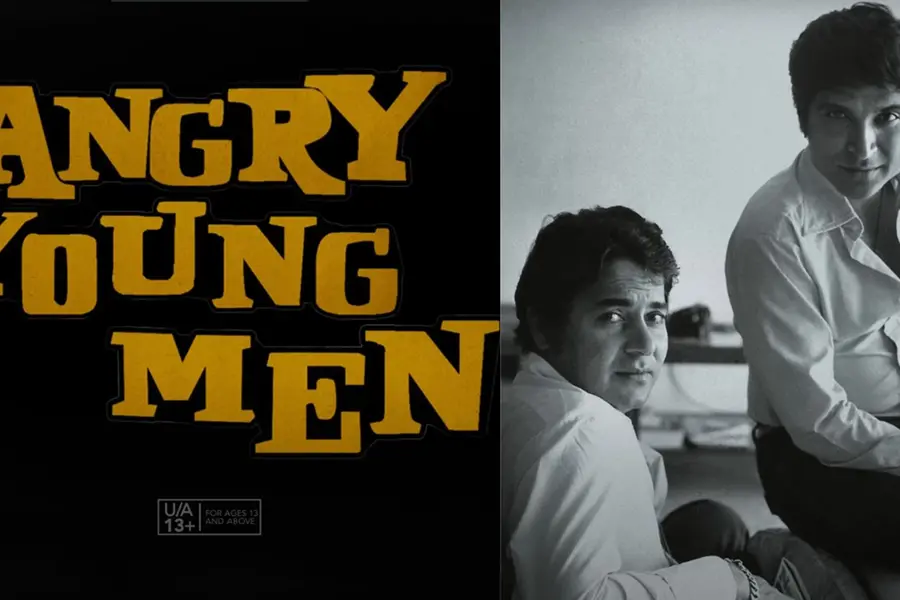
Indian cinema’s legendary screenwriting duo, Salim-Javed, aka Salim Khan and Javed Akhtar, crafted some of Hindi cinema’s most iconic films that continue to resonate with the audience even today. They wrote the screenplay for 24 films, of which 22 went on to become blockbuster hits that defined the cinematic landscape of Bollywood in the 1970s as well as capsulated Amitabh Bachchan to stardom. Their success story has made into Amazon Prime Video’s latest docuseries titled ‘Angry Young Men,’ which looks into the rise and fall of Salim-Javed. Available for streaming from Tuesday, we list you five reasons why the documentary series is a must watch.
It shows their individual struggles before they became the legendary Salim-Javed
Also Read

Success didn’t come easy to Salim or Javed. They both had their share of struggles and sleepless nights before they collaborated on ‘Zanjeer,’ their first work together. ‘Angry Young Men’ shows Salim and Javed talking about their early days in the industry. While Salim struggled as an actor, Javed also slept on an on an empty stomach for days. Success was far from them, but they never gave up!
How producer Prakash Mehra believed in them and their story
‘Zanjeer’ was the first film that was co-written by Salim-Javed. It was a film that didn’t have its lead actor perform any songs, an idea that wasn’t acceptable by any of the leading actors back then, including Dev Anand. However, film’s producer, Prakash Mehra, had full faith in the duo’s story and didn’t change it despite the script being rejected by the stars. It was his conviction and trust in Salim-Javed’s story that made ‘Zanjeer’ a cult classic. From there was the birth of Salim-Javed, and the rest is history.
The rise of Salim-Javed
After ‘Zanjeer’s blockbuster success, Salim-Javed delivered back-to-back hits. Their success could be mapped by Ramesh Talwar’s words, who, in the docuseries, said, “They used to refuse (films) like heroes. ‘We won’t write like this.’ They had so much attitude.” Many filmmakers also envied them for the tremendous record of successful films that they delivered. As Shyam Benegal said, “I admired their ability to draw audiences, and may be to some extent, even envied them.” The iconic duo also ensured they got their credits on every film’s poster and were also paid higher than the leading actor(s). “Writers typically used to get Rs. 5,000 or Rs. 10,000. Suddenly one day we heard (about) these writers who are taking Rs 2,50,000 to write a script,” said director Rahul Rawail.
How Salim-Javed’s personal lives influenced their films and characters
Those interviewed in the documentary series highlighted how the characters of Salim-Javed’s stories were deeply influenced by their personal lives. For instance, the Angry Young Man Vijay was born out of the anger inside them. Similarly, their films often had a strong mother, which reflected on how much they missed their own mothers, as both the writers lost their mothers at an early age. Also, their films were male-centric, as Javed said that they both grew up in all boys’ groups.
An insight into their friendship
Salim-Javed’s friendship grew with time after they started working together. They would visit each other’s house often, and so would their family members. Their bond was so close that Salman Khan recalls in the documentary series how he taught cycling to Farhan Akhtar and Zoya Akhtar. Javed also recalled his thick relations with Salim and his wife Salma, saying, “Salim Sahab and I, actually, we were never equals in a way. At work, yes. Otherwise, our relationship was one of a younger and older person. He was like an elder brother to me. My sister-in-law, Salma, Salim Sahab’s wife, in a way, had played a parent’s role in my life.”
Published: 20 Aug 2024, 06:00 pm IST
Related Topics
Disclaimer: Kindly avoid objectionable, derogatory, unlawful and lewd comments, while responding to reports. Such comments are punishable under cyber laws. Please keep away from personal attacks. The opinions expressed here are the personal opinions of readers and not that of Mathrubhumi.