
Lyricist and screenwriter Javed Akhtar has sparked fresh debate after a video of him questioning the logic behind face covering resurfaced and went viral on social media
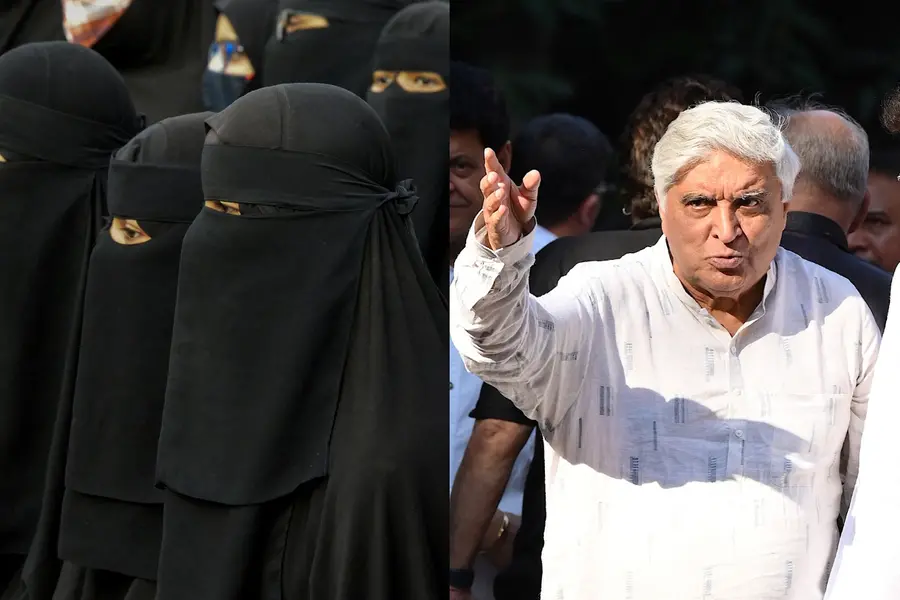
The video, recorded at the SOA Literary Festival 2025 in November, shows lyricist and writer Javed Akhtar responding to a question from a student about his views on the burqa and whether covering the face diminishes a woman’s strength.
The student asked why covering oneself would make a woman “less strong”. Akhtar replied calmly, saying the issue was not about strength but about the logic behind face covering.
Also Read

“I understand where you are coming from. It is not about being strong,” he said. “Why should you be ashamed of your face?”
Drawing a comparison with social norms around clothing, Akhtar added that both men and women should dress decently. “If a man comes to an office or college in indecent clothes, that is a problem. The same applies to women,” he said. “But why cover your face? What is so vulgar, obscene or undignified about a woman’s face?”
Questioning the reasoning behind face covering, Akhtar asked whether women felt compelled by social expectations rather than personal choice. “Is she ashamed of her face? Why?” he asked.
He went on to describe face covering as a result of social conditioning and peer pressure. “If someone says she is doing it by choice, I believe she has been brainwashed to think that way,” he said, arguing that social approval often plays a decisive role in such decisions.
Akhtar stressed that his remarks were aimed at examining societal norms imposed on women, not at attacking faith or personal belief. He argued that if such pressure did not exist, many women would not feel the need to cover their faces.
The clip gained renewed attention amid controversy involving Bihar Chief Minister Nitish Kumar, who faced criticism for pulling down the hijab of a Muslim woman doctor during a public event. As the video went viral, Akhtar issued a clarification on social media, strongly condemning the chief minister’s action.
“Everyone who knows me understands that I am against the traditional concept of parda,” Akhtar wrote. “But that does not mean I can accept what Mr Nitish Kumar did to a Muslim woman doctor. I condemn it strongly.”
He added that opposing a social practice does not justify humiliating or violating an individual’s dignity, stating that the chief minister owed the woman doctor an unconditional apology.
Published: 20 Dec 2025, 01:49 pm IST
Related Topics
Disclaimer: Kindly avoid objectionable, derogatory, unlawful and lewd comments, while responding to reports. Such comments are punishable under cyber laws. Please keep away from personal attacks. The opinions expressed here are the personal opinions of readers and not that of Mathrubhumi.