
Her breakthrough came with Thulabharam (1968), directed by A Vincent, a performance that earned her the first National Award for Best Actress in Malayalam cinema
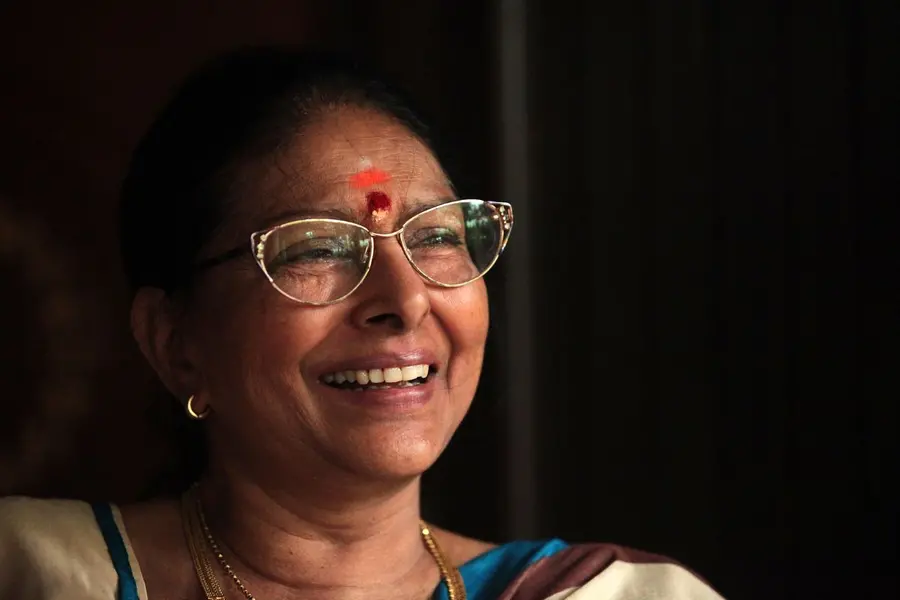
Saraswathi Devi, born on June 25, 1945, in Tenali, Andhra Pradesh, would go on to become known to the world as Sarada. She began her acting journey at just 10 years old with the Telugu film Kanyasulkam. Her entry into Malayalam cinema came in 1965, when Kunchacko, the founder of Udaya Studio, cast her in Inapraavugal, alongside legends Sathyan and Prem Nazir. Sarada was only 19 at the time.
Her breakthrough came with Thulabharam (1968), directed by A Vincent, a performance that earned her the first National Award for Best Actress in Malayalam cinema. In 1972, she brought the award back to Kerala once again for her role in Adoor Gopalakrishnan’s landmark film Swayamvaram--and the rest, as they say, is history.
Sarada later transitioned into politics through the Telugu Desam Party, and was elected to the Lok Sabha from her home constituency, Tenali. Reflecting on her journey, she says both cinema and politics offered her some of life’s most valuable lessons.
You’ve completed 80 years of life. Looking back, how do you feel about your journey?
I’d say I’m completely content. I always approached cinema as a job--something I did with sincerity and discipline. It’s just like any other profession, except it comes with a touch of glamour. Over the years, I had the opportunity to play a wide range of characters, travel to different places, and meet people from all walks of life. I learned from these experiences, kept what was meaningful, and left out the rest.
Back in our time, we didn’t have the facilities the industry enjoys today. But we were like a family on set. We’d bring food from home and share meals under the trees. There were no proper changing rooms-just cloth curtains for privacy. Yet nothing felt like a hardship. We worked with joy and camaraderie. Even with all the advancements today, I believe that sense of unity and mutual respect should be preserved. Cinema is a collective effort, not something done in isolation.
You entered politics with great expectations. Why did you later step away?
Cinema shaped my life, and the audience made me who I am. I stepped into politics with the belief that the people who supported me on screen would stand by me there too. For me, politics was about service. But I soon realised that many approached it as a business, chasing their own interests.
How did you manage the two worlds—cinema and politics?
They’re polar opposites in many ways. But both revolve around people. Just as cinema thrives on its audience, politics depends on public trust. In both fields, only a few endure over time. I’ve always spoken my mind and remained honest--even when it wasn’t the easiest path. Whether in cinema or politics, you must have the humility to recognise that your relevance comes from people’s acceptance.
Only a few of your colleagues—like Madhu and Sheela—are still around. Do you stay in touch?
Yes, my friendship with Madhu has lasted over four decades. He’s a pillar of Malayalam cinema. I consider myself lucky to have worked with legends like Sathyan, Prem Nazir, and Madhu. Even today, I make it a point to call Madhu at least once a month. I also keep in touch with Sheela and Jayabharathi. Sadly, many of my co-stars from Tamil and Telugu cinema are no longer with us. But I had a strong bond with actors like MGR and Sivaji Ganesan until the end.
Are there any unfulfilled wishes in your career?
I’ve never been someone with lofty ambitions. But I’ve sometimes thought about how I never got the chance to act with Mohanlal. I’ve only met him once, and he struck me as a warm, respectful person. I did act with Mammootty in Raappakal. He too has a dignified and caring personality.
What are your thoughts on how Malayalam cinema has changed?
As I said, cinema was always a profession for me. Believe it or not, I haven’t even watched many of the films I acted in. It’s been over 15 years since I saw a Malayalam movie--I can’t even remember which one. I never chased fame. Once you understand that many around you are far more extraordinary, ego fades.
Malayalam cinema has always told powerful stories--and I believe that still holds true. The methods and approaches have changed, but good artists continue to emerge. Yes, I’ve heard concerns about discipline and drug use on sets, but I don’t know much about it firsthand. Times change, and with them, so do people. I don’t think it’s fair to judge everyone based on a few individuals’ behaviour.
You were on the Hema Committee. What’s your take on the current issues in Malayalam cinema?
I thought this question might come up. But I prefer not to comment. Justice Hema is the right person to answer those questions. She is responsible for the report. I don’t wish to speak on the matter.
A bit about your family life?
I don’t believe the public needs to know every detail about my personal life. That’s private. I now live in Mahalingapuram, Chennai, with the family of my late brother. Though he’s no longer with us, his family remains mine.
Published: 29 Jun 2025, 10:57 am IST
Related Topics
Disclaimer: Kindly avoid objectionable, derogatory, unlawful and lewd comments, while responding to reports. Such comments are punishable under cyber laws. Please keep away from personal attacks. The opinions expressed here are the personal opinions of readers and not that of Mathrubhumi.
