
The court held that there was no prima facie evidence to establish that the Junior Dagar Brothers were the authors of the composition.
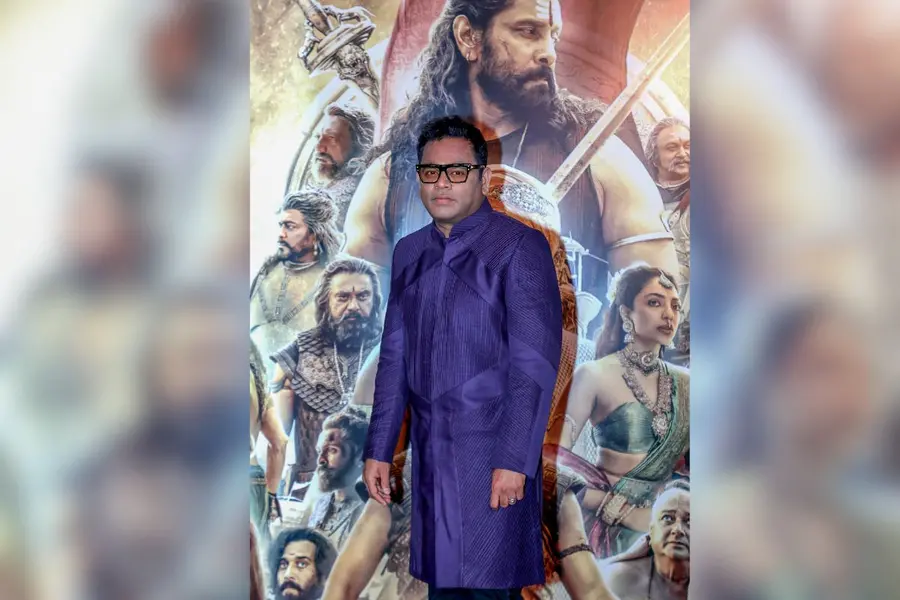
New Delhi: The Delhi High Court has granted relief to music composer A.R. Rahman and the makers of the film ‘Ponniyin Selvan 2’ by setting aside an order that had directed them to deposit ₹2 crore in a copyright infringement lawsuit.
The case concerns a classical rendition of the devotional composition ‘Shiva Stuti’, which was claimed to be authored by the Junior Dagar Brothers. However, the court noted that there was no prima facie evidence supporting the plaintiffs’ claim that the Dagar Brothers were the authors of the composition.
A division bench comprising Justices C Hari Shankar and Om Prakash Shukla stated that the single judge of the High Court had “erred” in principle by treating evidence of the Junior Dagar Brothers having rendered and performed the Shiva Stuti composition as prima facie proof of their having composed it.
“At a plain glance, it is apparent that the material on which the Single Judge has placed reliance, though considerable, only reflect the Junior Dagar Brothers as having rendered, or performed, the suit composition Shiva Stuti at various points of time. The Junior Dagar Brothers have never been named, shown or identified, in any jacket, literature or inlay card, as the composers of the suit composition,” the order stated.
The bench noted that the legal presumption of authorship under Section 55(2) of the Copyright Act was not applicable in this case.
“Material which indicates that an artiste rendered a musical work, howsoever voluminous, can never lead to a finding, even prima facie, that the artist is the composer of the musical work. Else, every singer would be entitled to claim herself, or himself, to be the composer of every song that she, or he, has rendered,” the bench added.
The evidence, according to the court, merely indicated that “they do not, in any manner of speaking, indicate that they composed the suit composition.”
In the absence of any prima facie case establishing authorship of copyright in the Shiva Stuti composition, the court held that the respondent did not, have a sustainable cause of action to proceed with the suit against the appellants.
Earlier, on April 25, Justice Prathiba M. Singh had ruled that, from a listener’s perspective, the essence of Rahman’s song Veera Raja Veera in the film was “not just inspired but is, in fact, identical” in terms of notes, emotion, and aural impact to the Shiva Stuti.
The judge found this to be a violation of the rights of the original composers of the musical homage to Lord Shiva.
The single judge had ordered the insertion of a credit slide in the film across all OTT and online platforms, giving due credit to the Junior Dagar Brothers—Late Ustad N. Faiyazuddin Dagar and Late Ustad Zahiruddin Dagar—for the composition. Additionally, ₹2 lakh was awarded as costs to a family member of the late artists.
Ustad Faiyaz Wasifuddin Dagar, son of Faiyazuddin Dagar and nephew of Zahiruddin Dagar, had argued in the lawsuit that he held the copyright in all original compositions by the Junior Dagar Brothers, including Shiva Stuti, and that the defendants had infringed these rights without authorisation.
In response, Rahman’s counsel argued that Shiva Stuti was based on the traditional dhrupad genre, which lies in the public domain, and that, since the mode of singing and the composition itself were not original, they were not eligible for copyright protection.
PTI
Published: 25 Sept 2025, 11:29 am IST
Disclaimer: Kindly avoid objectionable, derogatory, unlawful and lewd comments, while responding to reports. Such comments are punishable under cyber laws. Please keep away from personal attacks. The opinions expressed here are the personal opinions of readers and not that of Mathrubhumi.
