
On his birthday, we trace A R Rahman’s journey from Dileep Kumar to global icon, whose music blends faith, innovation and timeless creativity.
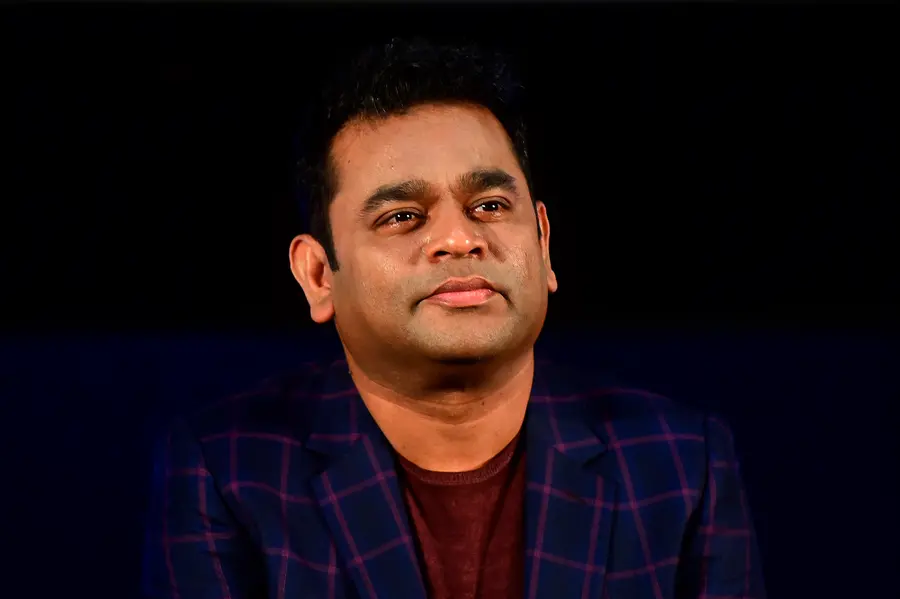
On January 6, AR Rahman, the “Mozart of Madras,” celebrates his birthday. From a young boy facing personal loss in Chennai to a global music icon, Rahman’s journey is one of resilience, faith, and extraordinary creativity.
From Dileep Kumar to AR Rahman
Born as Dileep Kumar, Rahman lost his father, R K Shekhar, a respected Tamil film composer, at just nine years old. The family’s financial struggles forced him to work professionally in music while still a teenager. Dropping out of school, he honed his skills in orchestration, keyboards, and sound design, laying the foundation for a revolutionary musical career.
Spiritual awakening and transformation
In his early twenties, Rahman converted to Islam, an experience that profoundly influenced his music. Compositions became meditative, soulful, and deeply spiritual, blending silence and sound in a way that set him apart in Indian and global music. Rahman's mastery in composing Sufi songs has now become a classic. Songs like 'Khwaja mere Khwaja' and 'Kun faya kun' are some to name in the genre.
Roja and the emergence of a 'Mozart'
Rahman’s breakthrough came in 1992 with Mani Ratnam’s 'Roja'. Its soundtrack redefined Indian film music, merging classical Indian melodies with electronic textures and global sensibilities. He followed this with landmark albums including 'Bombay', 'Dil Se', and 'Rangeela', each shaping new possibilities for Indian film scores.
Redefining Indian cinema’s soundscape
From 'Taal' to Swades and more, Rahman fused Carnatic, Hindustani, Western classical, folk, jazz, and Sufi influences, creating music that felt timeless rather than trendy. Each composition elevated films into poetic storytelling through sound. Another striking feature was the use of natural sounds throughout the music track.
Malayalam and A R Rahman
Though A R Rahman composed music for only one Malayalam film, Mohanlal-starrer 'Yoddha', his association with Malayalam artistes has been both extensive and iconic. Legendary singer Yesudas collaborated with Rahman across Tamil, Hindi and Telugu cinema, including the Malayalam song 'Kunu kune' in 'Yoddha'.
Unnikrishnan found lasting recognition through Rahman’s compositions, most notably 'Ennavale adi ennavale' from 'Kadhalan' and 'Uyirum neeye from 'Pavithra'. Srinivas lent his voice to several memorable tracks, including the popular Chale Chalo from Lagaan. Malayalam singer P Jayachandran also worked with Rahman in Hindi for the unreleased film 'Adaa' and later sang 'Oru daivam thantha poove' in 'Kannathil Muthamittal'. In addition, celebrated voices such as K S Chithra, Sujatha, and Minmini have rendered numerous songs for Rahman across languages. Together, these collaborations have ensured that Malayali audiences remain deeply connected to Rahman’s musical legacy, despite his limited Malayalam filmography.
Global recognition
Rahman’s international breakthrough came with 'Slumdog Millionaire', winning two Academy Awards and two Grammys. Beyond films, his music has reached Broadway, Olympic ceremonies, Nobel Peace Prize concerts, and collaborations with global artists, making each performance a spiritual and cultural experience.
Mentor role
Through the KM Music Conservatory and the Sunshine Orchestra, Rahman nurtures young talent, especially children from underprivileged backgrounds. He continues to experiment with technology, virtual reality, orchestral works, and international collaborations, demonstrating innovation without compromise and success without arrogance.
A legacy of inspiration
A R Rahman did not just compose music; he composed hope, healing, and humanity. His melodies comfort, uplift, and inspire across generations. On his birthday, we celebrate a living legend whose faith, resilience, and boundless creativity continue to shape music globally.
Published: 06 Jan 2026, 10:19 am IST
Disclaimer: Kindly avoid objectionable, derogatory, unlawful and lewd comments, while responding to reports. Such comments are punishable under cyber laws. Please keep away from personal attacks. The opinions expressed here are the personal opinions of readers and not that of Mathrubhumi.
