
Tiago Guedes' Aquí and Suzanne Andrews Correa's The Huntress explore family, freedom, gender violence and justice at IFFI 2026
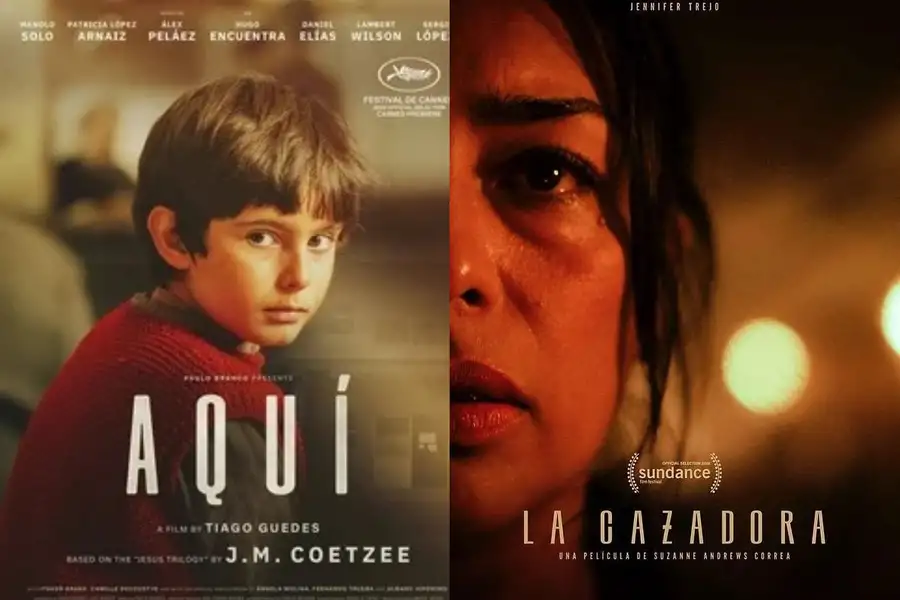
What makes a family? And how far can a person go when the system fails to protect them? These questions lie at the heart of two international films, ‘Aquí’ and ‘The Huntress’ (La Cazadora), which brought very different stories to the 57th International Film Festival of India (IFFI) in Goa.
While one is set in an imaginary society where people are expected to leave their past behind and conform, the other draws from the grim reality of gender-based violence in Mexico. Despite their contrasting settings, both films explore individuals who refuse to accept the circumstances imposed on them.
Directors Tiago Guedes and Suzanne Andrews Correa spoke about their films at a press conference on November 23, discussing their approaches to storytelling and their attempts to connect with audiences through emotions rather than conventional narrative techniques.
Aquí: Can a family exist without blood ties?
Portuguese filmmaker Tiago Guedes brings Nobel Prize-winning author J. M. Coetzee's Jesus trilogy to the screen with ‘Aquí’, a dystopian drama that premiered at the Cannes Film Festival in May 2026. The film is part of IFFI's International Competition section.
Starring Manolo Solo, Patricia López Arnaiz and Álex Peláez, the film imagines a strange new world where people arrive without memories of their previous lives. With no past to hold on to, they are expected to begin again and live by the rules of an unfamiliar society.
At the centre of the story is Simón (Manolo Solo), who takes responsibility for a young boy, David (Álex Peláez), whom he encounters during his journey to this new world. Convinced that the child needs a mother, Simón approaches Inés (Patricia López Arnaiz), who agrees to take on the role. The three gradually build a family, although none of them is connected by blood.
Their arrangement, however, is tested when David begins to question the rigid society around him. His imagination and refusal to follow established rules make him an outsider, forcing Simón and Inés to reconsider what it means to raise a child and protect his individuality.
Explaining his approach to adapting Coetzee's books, Guedes said he was more interested in capturing the emotions the writing evoked in him than reproducing its plot. He wanted those feelings to translate into a visual experience rather than simply retelling the literary work.
For the filmmaker, the idea of family in ‘Aquí’ goes beyond biological relationships. It is about people choosing to care for one another and building relationships through shared experiences. He also wanted to explore these questions without relying on religious interpretations.
The film's title means 'here' in both Spanish and Portuguese. Guedes uses the camera to bring viewers closer to the characters as their relationships develop, moving from wider frames to tighter shots. He has also deliberately retained silences and unanswered questions, allowing audiences to arrive at their own understanding of the film.
The Huntress: When a woman takes justice into her own hands
Moving from an imagined dystopia to a troubling social reality, The ‘Huntress’ (La Cazadora) examines violence against women and the desperation that can follow when victims find no justice.
The Spanish-language drama thriller marks the feature directorial debut of Mexican-American filmmaker Suzanne Andrews Correa. Starring Adriana Paz, Teresa Sánchez and Jennifer Trejo, the film is set in Ciudad Juárez, a Mexican border city with a history of violence against women.
Paz plays Luz, a factory worker and survivor of sexual assault who turns to vigilante justice after experiencing the failure of the system to protect women. The story draws inspiration from the 2013 case of an unidentified woman who called herself 'Diana, Hunter of Bus Drivers'. The mysterious figure claimed responsibility for shooting two bus drivers who had allegedly been involved in sexual violence against female passengers.
Rather than present the events as a straightforward revenge thriller, Correa uses the story to examine the fear, trauma and desperation that push a woman towards taking the law into her own hands. The film unfolds over 24 hours, following Luz's experiences and her growing determination to protect herself and others.
At the press conference, Correa said she wanted audiences to experience the protagonist's helplessness and desperation rather than simply observe her actions. The intention was to help viewers understand the circumstances that lead Luz to seek justice on her own when repeated attempts to get help fail.
The filmmaker also spoke about the long journey behind the project, revealing that it took her nearly ten years to bring the film to the screen. She said the experience taught her the importance of persistence, dedication and staying committed to a story, while also learning to communicate her vision to actors and crew members.
Having initially wondered whether audiences outside Mexico would connect with a story so closely tied to the country's social realities, Correa said she was moved by the response from viewers across different cultures. She found it both saddening and humbling that the protagonist's fear and emotional struggles resonated beyond geographical boundaries.
The film had its world premiere at the 2026 Sundance Film Festival and is making its India premiere at IFFI.
Two stories, one emotional connection
Although ‘Aquí’ and ‘The Huntress’ approach their subjects from very different perspectives, both filmmakers share an interest in placing the audience inside the characters' emotional worlds.
For Guedes, the questions revolve around family, freedom and the right to remain different. Correa, meanwhile, examines the consequences of a society that leaves women vulnerable and the difficult questions surrounding justice and revenge.
Their films also reflect the broader idea behind IFFI 2026's theme, 'Stories Without Borders'. Whether through a fictional world or a story inspired by real events, both demonstrate how deeply personal experiences can find connections with audiences far removed from the places in which they originate.
Published: 24 Nov 2026, 01:11 pm IST


ABOUT THE AUTHOR

Related Topics
Disclaimer: Kindly avoid objectionable, derogatory, unlawful and lewd comments, while responding to reports. Such comments are punishable under cyber laws. Please keep away from personal attacks. The opinions expressed here are the personal opinions of readers and not that of Mathrubhumi.