
Khan attended the screening along with the villagers, sitting among the local crowd as the film played on a temporary screen set up for the occasion.
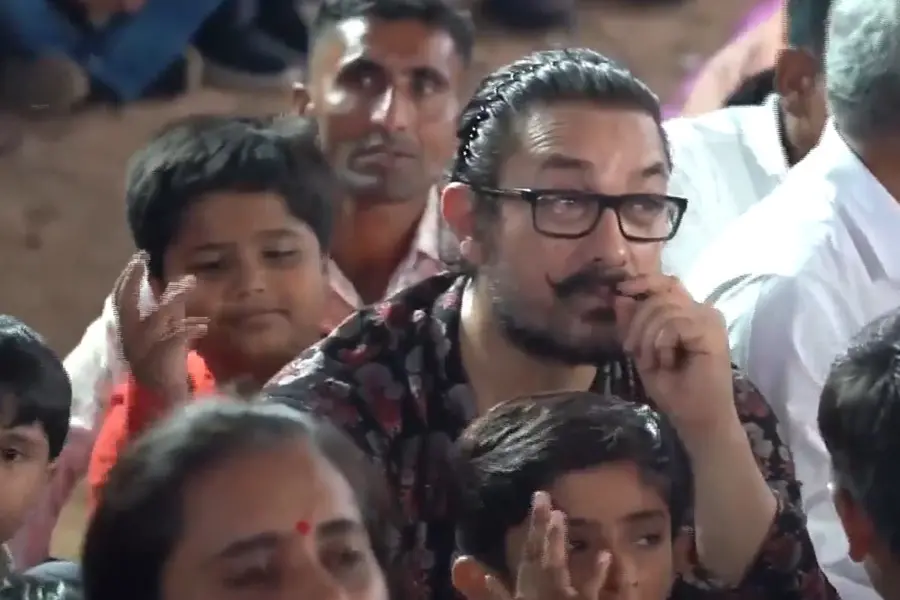
Actor Aamir Khan returned to the iconic village near Bhuj where his Oscar-nominated film Lagaan was shot over two decades ago, this time for a special screening of his latest film Sitaare Zameen Par.
Khan attended the screening amid the villagers, sitting among the local crowd as the film played on a temporary screen set up for the occasion. The initiative was part of his ongoing effort to bring cinema closer to rural audiences.
Speaking to reporters, Khan said, “My memories of Lagaan got refreshed today. I have a concern as there are fewer theatres in the rural areas, and the cinema should reach these areas... The UPI scheme brought by our government has proven to be very successful... I wanted my new movie, Sitaare Zameen Par, to reach every village of the nation... The entire village watched the movie by paying just ₹100... This movie delivers a very good social message... Every Indian should watch this movie... This is the first-ever screening in Kotai village of Gujarat.”
Released on June 20, 2025, the film is an official remake of the 2018 Spanish hit 'Champions.' The story follows a basketball coach who is sentenced to community service for punching the head coach and drunk driving.
The film was released on YouTube Movies on demand on August 1 at an accessible price, skipping other digital platforms entirely. It was priced at Rs 100 in India and is also available in 38 other countries, including the US, UK, and Australia, with prices tailored to local markets.
Speaking to ANI, Aamir shared the reason why he decided to launch a pay-per-view model through his new YouTube Channel and how it will be beneficial for the audience.
"It's my effort to reach as many people as possible in our huge country. Our films are released in theatres. The biggest hit of Hindi cinema is watched by 3-3.5 crore people in theatres. This 2-3 per cent of our population is seen in theatres. This is for our biggest hit. How will the rest of the population watch our films? We don't have that many theatres. Our country is huge. There are many areas with no theatres. This is a way to connect with the entire population. Our effort is to reach every house and village."
Published: 02 Aug 2025, 07:52 am IST
Related Topics
Disclaimer: Kindly avoid objectionable, derogatory, unlawful and lewd comments, while responding to reports. Such comments are punishable under cyber laws. Please keep away from personal attacks. The opinions expressed here are the personal opinions of readers and not that of Mathrubhumi.
