
A tribute to Deva and his Rajinikanth classics, from ‘Annamalai’ to ‘Baashha’ and ‘Arunachalam’, the songs and themes that made the Superstar’s entries legendary
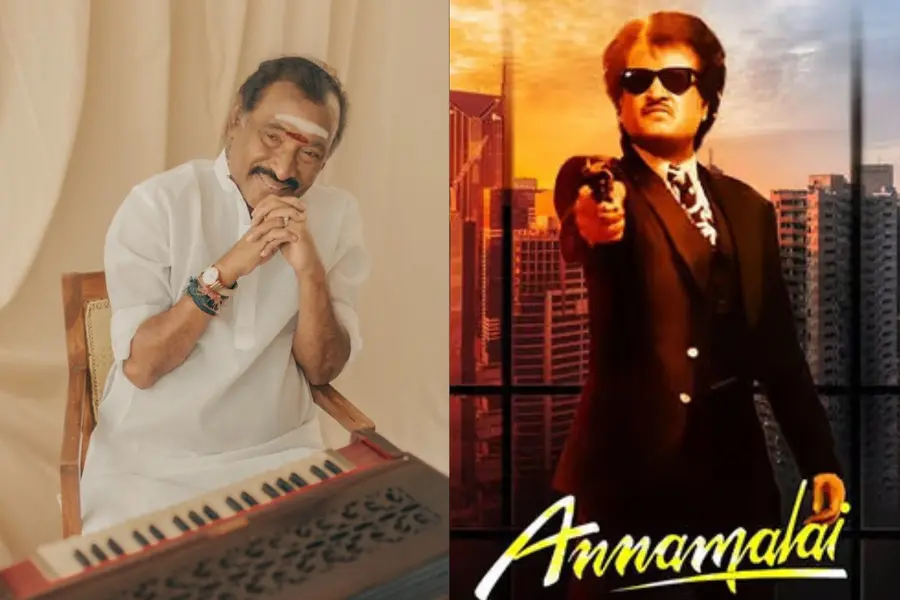
Picture a packed Tamil theatre in the 1990s. The lights drop, the screen flickers, and then a brassy fanfare tears through the dark. Before the hero has taken a single step, the crowd is already on its feet, whistling and showering the screen with paper. That jolt of pure anticipation owes a great deal to one composer. Deva, with his folk-rooted tunes and an instinct for the grand entrance, gave Rajinikanth a sound that audiences could recognise in a heartbeat.
When Tamil cinema changed its soundtrack
In 1992, Rajinikanth’s usual composer Ilaiyaraaja was not part of the plan. ‘Annaamalai’ marked the start of the Rajinikanth and Deva partnership, replacing Ilaiyaraaja as the actor’s regular composer, and even the star and his director were a little nervous about the choice. The film gave Rajini what is regarded as his first hero introduction song, “Vanthenda Paalkaaran”, a milkman’s swagger set to a tune with folk roots. The same album held “Vetri Nichayam”, a nearly five-minute montage song built to show the hero’s years-long climb to wealth, and the cheerfully cheeky “Rekkai Katti Parakudhu”.
Then there was the music that played over the name itself. The theme that accompanies the Super Star title card does not appear on the soundtrack album and was inspired by the James Bond Theme. The title sequence went on to outlive the film. Even ‘Muthu’, scored by AR Rahman, kept the Annamalai animation and its theme. Every time that trumpet blast rings out in a packed theatre, a bit of Deva walks in with the hero.
‘Baashha’, and the sound of an auto-rickshaw becoming a legend
Then came 1995. ‘Baashha’ opened on 12 January 1995 and ran for nearly 15 months, and the album powered much of that run. “Naan Autokaaran” gave fans a ready-made anthem, “Style Style Thaan” turned swagger into a chorus, “Ra Ra Ramayya” kept the energy high, and “Azhagu Azhagu” and “Thanga Magan” showed that Deva could do tenderness as well as thunder.
Years later, at a 2022 concert, the ‘Baasha’ theme thundered through the speakers as the audience rose to applaud. Nearly three decades on, the music still triggers goosebumps.
Arunachalam and the hat-trick
‘Arunachalam’, released in 1997 and directed by Sundar C, had both its songs and background score composed by Deva. The album was a feast: “Athanda Ithanda” was the swaggering opener, “Singam Ondru” rolled out like a drumbeat, “Nagumo” was a sweet melody, and “Mathadu Mathadu”, “Thalai Magane” and “Alli Alli” gave it variety.
Writers on his career have singled out the opening numbers from ‘Annamalai’, ‘Baashha’ and ‘Arunachalam’ as songs that helped Rajinikanth cement his Superstar image. The tally of Rajini films scored by Deva is small, three by one account, but the impact is out of all proportion to the count.
More than a hit-maker
It is easy to remember Deva only for the roar. But in 1997 alone he scored 29 Tamil films, while Rahman did four, and he kept the radio full of everything from gaana to romance. The Rajini albums showed that range at its most concentrated: a milkman, an auto driver and a prodigal heir, each given a sound that suited him exactly.
The farewell
Deva died in Chennai on Saturday, 17 October 2026, at the age of 75. He suffered a heart attack and was taken to a private hospital in the city. He is survived by his son Srikanth Deva, himself a composer.
Over his career he scored more than 400 films across Tamil, Telugu, Malayalam and Kannada. He was widely known as ‘Thenisai Thendral’, a title that suited a man whose melodies drifted into every tea shop, wedding hall and bus journey in Tamil Nadu.
For Rajinikanth’s fans in particular, it feels like losing the man who composed the sound of their hero’s arrival. The screen will go dark and the title card will come up, and the music that plays will be his.
Published: 17 Oct 2026, 01:45 pm IST
ABOUT THE AUTHOR

Disclaimer: Kindly avoid objectionable, derogatory, unlawful and lewd comments, while responding to reports. Such comments are punishable under cyber laws. Please keep away from personal attacks. The opinions expressed here are the personal opinions of readers and not that of Mathrubhumi.