
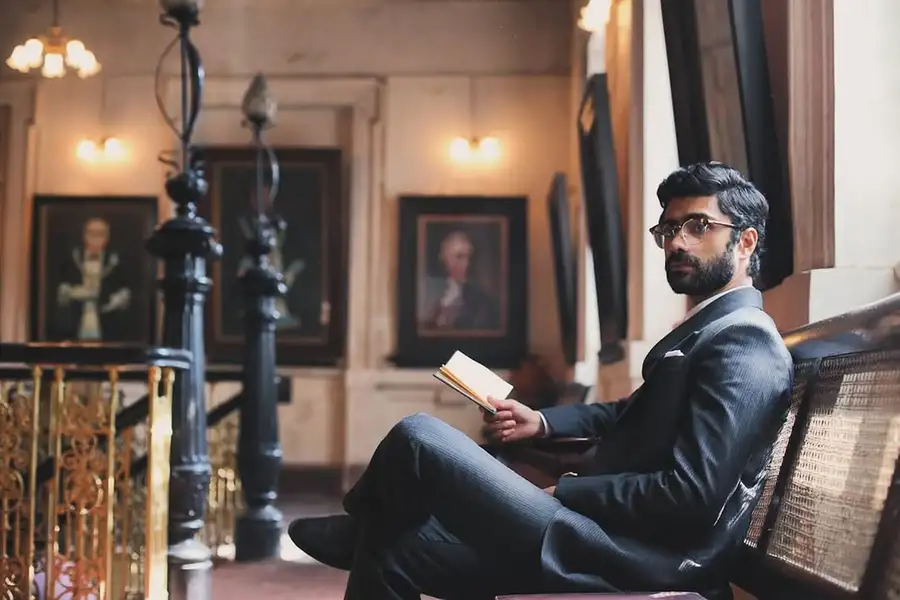
Actor Taaruk Raina, who first gained recognition with the series ‘Mismatched’, has been lately receiving critical appreciation for his performance as lawyer Kantilal Sharma in Ram Madhvani’s ‘The Waking of a Nation’. The series was released early this month on Sony LIV and revolves around the Jallianwala Bagh Massacre. In an exclusive conversation with Mathrubhumi, Taaruk opened up about the life-changing impact of OTT on his career, candidly admitting that without the platform, his journey in the entertainment industry would have been vastly different.
Delving deeper into his experiences, Taaruk also shared a poignant moment from the sets of the series, where he became so immersed in his character that the lines between reality and fiction blurred, leaving him with an unforgettable and haunting memory. Read excerpts:
‘The Waking of a Nation’ is based on one of the deadliest chapters of Indian history. Although the massacre hasn’t been shown in the series, while it was filming, was there a moment that deeply moved you?
There are only moments that move you deep inside. You are constantly being moved because of what you’re talking about and what you’re trying to show. This is an extremely sensitive thing. It’s one of the darkest days in our history. Obviously, we were very deep into it.
We had extensively long shoots; our one take varied from 60 minutes to 90 minutes. You kind of forget that you’re acting; you forget that you are in front of the camera because you start living the scene mentally and physically. You start believing that you are really in that world, and that’s what he (Ram Madhvani) wants to do – to capture life.
I remember there was this one scene where I was reading out the names of the people massacred, and in between, I read out my friend’s (in the series) name – Hari Singh. I looked around while we were still shooting, and I couldn’t see him. He was there on the sets, but I couldn’t see him. At that moment, while shooting the scene, my heart sank because I actually believed that I lost my friend.
If that happened to me in a hypothetical situation, I can only imagine what people went through when they lost their children, their wives, mothers and fathers, or their best friends. No words are enough to express what happened. It is probably the most brutal, coldest act in human history.
Actors often tend to take away something from the characters they play. Is there anything about ‘Kantilal Sahni’ that stayed with you?
We take away a little from every character that we play. If we play them with enough passion, then we do take away from every character we play, because they inherently become a part of ourselves. What we do as actors is we try to find a part of ourselves in the character we’re playing. It becomes kind of a mixed personality that we possess.
With this character that I played, what I liked to take away is the immense courage and bravery and the patience and composure that he has. An underdog has the most fight in him, and he (Kantilal) is an underdog. That’s something that I have always identified with because I have always been an underdog – I’ve not got any handouts… I’ve not got any chances… Even here, I saw that part of me with this character.
From Anmol in ‘Mismatched’ to Kantilal in ‘The Waking of a Nation’ – how do you look at your journey? Do you still consider yourself an underdog?
I would always want to consider myself an underdog; it’s a different kind of fun. When you approach something as if you have nothing to lose, there is a different kind of mojo to it; there’s a different kind of thrill. If tomorrow I behave as, ‘OMG, I’ve done so many things; I’m an actor, and I don’t do things this way or that way,’ it’s no fun. In fact, I’m actually setting limits for myself. If I am an underdog, I will probably try things that otherwise I won’t.
As far as my journey is concerned, it’s been an absolute whirlwind, a rollercoaster. Sometimes I think I’ve lived many lives. It’s been absurd, actually – from being an assistant to doing comedy, to being a TV host, voiceover artist, and audio drama creator, to theatre, singing, writing songs, composing music, and acting, of course. It’s like I’m still trying to do everything I can. I just feel like I want to do everything that I enjoy. It’s not like I want to focus on just one thing. If I have fun doing it all, then why not?
With your hands in so many things, especially acting and music, is it difficult to strike a balance?
100%. It is extremely difficult. In fact, balancing acting and music, people ask me how I do it. I don’t do it; I can’t do it. If I have time away from acting, I give all that time to music. I try and make as much music as I can. It's like if I get the concepts down (for a song), if I get the words down, and if I get the melodies down, I can always work on the artificial additions later. If I have the words and I have the melody for it, I still have a song. For me, a song is only strong if it sounds good on a piano and voice or a guitar and voice – if it’s good there, it’ll be good anywhere.
If I’m not acting, I’m giving all my time to music. And when I’m acting, it is not the easiest thing to do. Shooting is always hectic, and you’re always tired. You don’t want to exhaust yourself and have bad ideas, so I don’t even want to try working on music. If I’m that tired or engrossed in something, I don’t even try because I love my music too much to not be fair to it.
I hope I get better at managing both things together, but realistically, it’s the toughest thing to do.
It’s not easy to have good ideas. I don’t know when I will get a good idea. It’s not like I will sit down and have to churn out something amazing.
What are you more passionate about – acting or singing?
Music is something that transcends work. Acting is when you act when you have to. Music, on the other hand, is a part of my life, in the sense that every day, whatever I am doing, there is music. For me, personally in my life, I’d pick music. But as a craft, I can’t choose between the two. I just can’t.
Given Ram Madhvani’s line of work, how was your experience of working with him? Also, tell us about your reaction when you got to know that you’ll be playing the lead character.
My first reaction was denial. I just couldn’t believe it because I went to the audition thinking there was no way I would get the role. I did five to six rounds of auditions, and then I forgot all about it. A month and a half later, I got a call saying that they wanted to meet me. I met them, and then again a few days had passed since the meeting. Then I got a call from Ankita, one of our creative producers, saying that I’m on board. My first reaction to her was, ‘Are you sure?’. I, in fact, told my team that we should get this (confirmation) on the email before I’m happy. I just couldn’t believe it.
But yeah, I feel extremely blessed and fortunate because you don’t get opportunities to work with people like Ram Sir that often. It is also because he doesn’t do that many projects in terms of direction. Everyone is always waiting for him to do his next directorial.
Working with him is just like school – you’re constantly learning. I always feel that I have so much to gain from him.
Are you a person who chooses his scripts or somebody who grabs any opportunity that comes his way?
I always try to do good things. Having said that, I have never had the luxury to pick and choose. It’s not like I’m sitting with piles of scripts every day. I’ve never had that luxury, to be kind of set up by people. Now when it’s changing and I actually have choices sometimes, then also I want to pick something that I can do justice to and be part of good things. If it’s a commercial project or the most artsy film to do, if I know I can be honest about it, only then will I do the project.
How has OTT helped you with your career?
I wouldn’t have a career if it weren’t for OTT. Most of the work that I have done is for OTT. I feel like people are still talking about the rise of the OTT; I say it’s already risen. It will rise more, but it’s pretty up there. OTT is at par with everything. Today, people are watching content left, right, and centre.
Previously, films were the launching pad for stardom. Now, OTT platforms are emerging as a key catalyst for talent discovery. What's your take on this changing landscape?
To become a star, you have to do good things and do a lot of work. To become a star, you have to be loved. I never thought that a platform – be it the silver screen or OTT – was ever a criterion for it. What platform you’re working on has got nothing to do with becoming a star. It’s just about what you do.
Published: 22 Mar 2025, 09:48 am IST


Disclaimer: Kindly avoid objectionable, derogatory, unlawful and lewd comments, while responding to reports. Such comments are punishable under cyber laws. Please keep away from personal attacks. The opinions expressed here are the personal opinions of readers and not that of Mathrubhumi.
